02 Sep
A New Benchmark in Green Chemistry: GLDA – Reshaping a Sustainable Future for Industry and Daily Life
Amid the global shift toward green transformation in the chemical industry, tetrasodium glutamate diacetate (GLDA), as a new generation of bio-based chelating agents, is emerging as an innovative force in industrial cleaning, personal care, agriculture, and other fields, thanks to its exceptional performance and ecological value. Derived from plant-based raw materials, this innovative ingredient not only addresses the environmental pain points of traditional chelating agents but also redefines standards for cleaning and care through technological breakthroughs.
I. Environmentally Friendly Genes Rooted in Nature
L-glutamic acid, the core raw material of GLDA, accounts for 48% of its composition. Extracted from renewable crops such as corn and wheat through fermentation, half of the carbon atoms in its molecular structure originate from natural plants. This natural attribute endows it with excellent biodegradability – under OECD 301D testing, its 28-day biodegradation rate exceeds 80%, far surpassing the less than 10% of traditional chelating agent EDTA. In the production process, enterprises like Shandong Yuanlian Chemical Co.,ltd. adopt a closed-loop production system, increasing raw material utilization to 98%, reducing energy consumption by 30%, and obtaining ECOCERT sustainable agriculture certification to ensure environmental friendliness from the source.
II. Performance Breakthroughs and Application Innovations
GLDA exhibits strong chelating capacity for metal ions such as calcium, magnesium, iron, and copper, with a calcium chelating value of 294mg/g – 1.5 times that of EDTA. It remains stable across a wide pH range (2-12) and demonstrates high-temperature stability (molecular structure remains stable at 100°C), making it indispensable in high-temperature scenarios such as industrial cleaning and oilfield water treatment. After adopting a GLDA-containing cleaning agent, a automobile manufacturing enterprise saw a 60% reduction in equipment scaling rate and a 40% decrease in maintenance costs.

In the personal care sector, GLDA not only stabilizes formulation systems but also reduces irritation due to its mild properties. A high-end skincare brand replaced traditional preservatives with GLDA in its sensitive-skin facial cleanser; human patch testing showed a 70% reduction in irritation. In household cleaning, laundry detergents containing 0.5% GLDA saw a 25% improvement in stain removal power, with a biodegradation rate 50% higher than traditional products.
III. Synergistic Effects and Industry Practices
When compounded with fungicides, GLDA enhances permeability by chelating calcium and magnesium ions in bacterial cell membranes. Experiments show that adding 50ppm of GLDA can reduce fungicide usage by 60% while increasing killing efficiency by 4 times. In dishwasher detergents, the compound of GLDA and MGDA significantly improves cleaning performance, scoring 4.5/5 in tests – far exceeding traditional additives like sodium citrate.
In agriculture, GLDA enhances pesticide stability and reduces runoff; in soil remediation, it achieves over 80% removal rate for heavy metals such as copper and nickel. An international daily chemical giant launched a "zero-carbon series" of cleaning agents using GLDA, which obtained ECOCERT certification and saw a 120% sales growth within six months of launch.
IV. Market Trends and Policy Drivers
The global GLDA market reached $322 million in 2024 and is projected to exceed $479 million by 2033, with a compound annual growth rate (CAGR) of 4.7%. Policy-wise, the EU's Biocidal Products Regulation restricts EDTA usage, while China's Green Product Evaluation Standard for Detergents lists GLDA as a recommended ingredient. Consumer surveys indicate that 78% of environmentally conscious users prefer products containing GLDA.
V. Future Outlook: From Substitution to Leadership
With technological advancements, GLDA's application potential in pharmaceuticals, food processing, and other fields is gradually unfolding. Its antibacterial composition compounded with Magnolia officinalis extract has been patented, enhancing the bactericidal effect of oral care products. In food processing, GLDA acts as a natural chelating agent to prevent discoloration and oxidation caused by metal ions, improving product stability.
The emergence of GLDA marks a shift in the chemical industry from "conquering nature" to "coexisting with nature." This innovative ingredient, derived from plants and returning to nature, not only solves practical problems in industry and daily life but also redefines cleaning and care standards with its environmental genes. In the wave of sustainable development, GLDA is becoming a bridge connecting technology and nature, leading the industry toward a greener, healthier future.
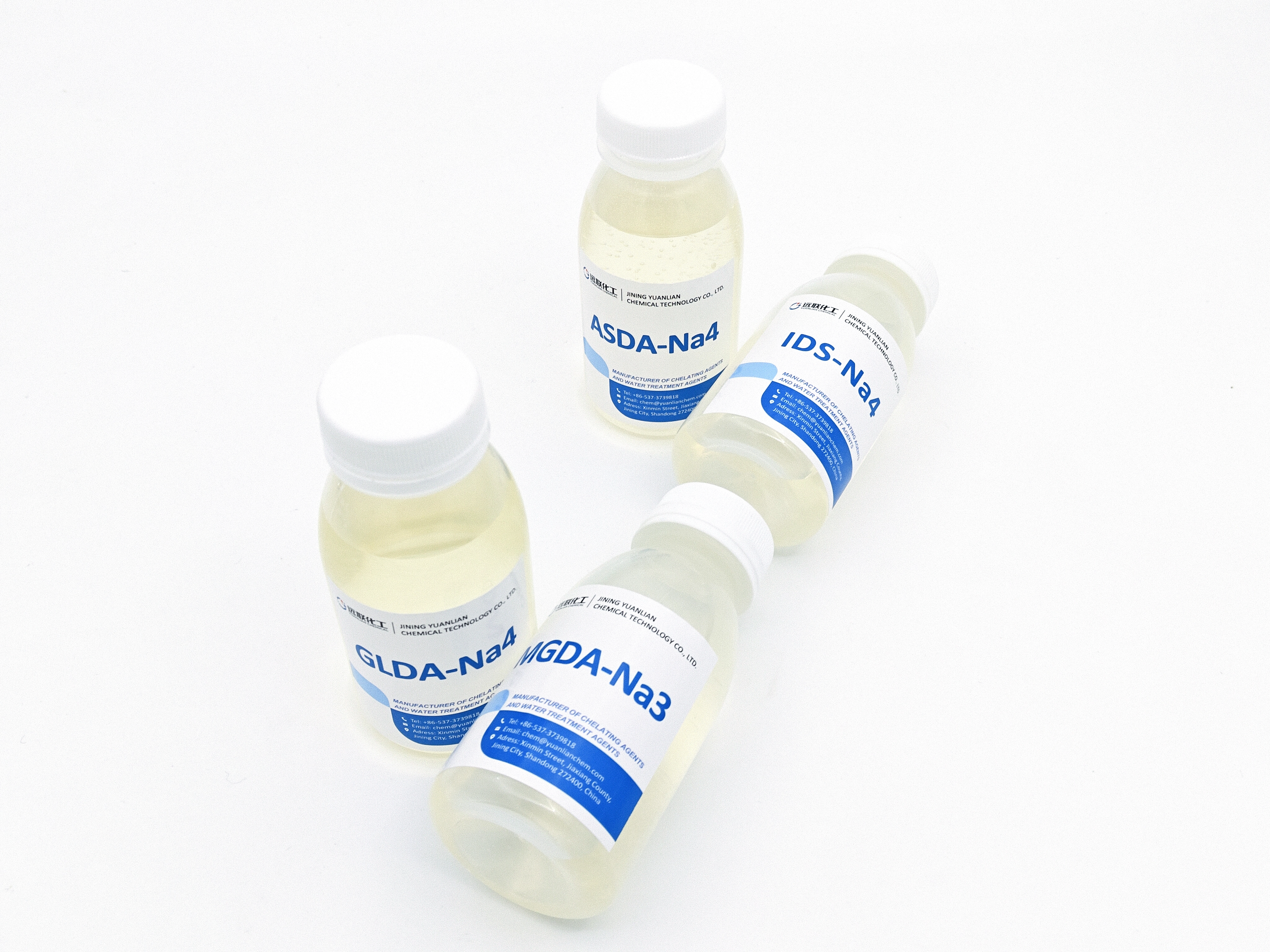
GLDA produced by Shandong Yuanlian Chemical Co.,ltd. , with its characteristics of "originating from nature and returning to nature", is reshaping the sustainable development model of multiple industries and becoming an important benchmark in the field of green chemistry.
Latest News


Need help
Prefer speaking with a human to filling out a form? call corporate office and we will connect you with a team member who can help.