24 Sep
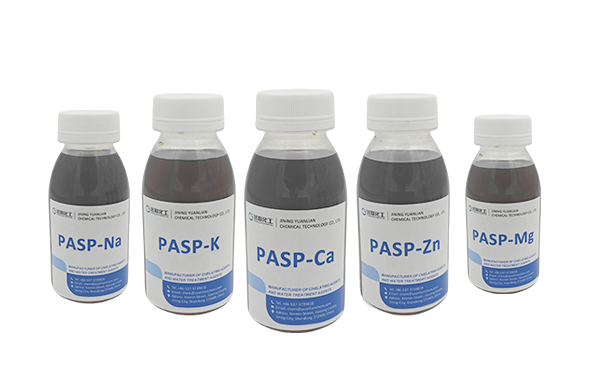
Advantages and disadvantages of Polyaspartic acid (sodium) (PASP)
Polyaspartic acid (sodium) (PASP) is a green and biodegradable water treatment agent with scale inhibition, corrosion inhibition and dispersibility. The following is a comprehensive analysis of its advantages and disadvantages and typical application suggestions:
I Core advantages of PASP
1. Outstanding environmental performance
Biodegradability:
The biodegradation rate within 28 days is >70%, which meets the OECD 301B standard and is far superior to traditional phosphorus-based agents (such as HEDP).
No phosphorus and no nitrogen:
Avoids the risk of eutrophication and is suitable for areas with strict environmental regulations (such as EU REACH).
2. Excellent high temperature resistance
Stable temperature range:
Short-term tolerance ≤120℃, long-term use ≤90℃ (better than PESA but slightly inferior to AA/AMPS).
High temperature scale inhibition mechanism:
The carboxyl group in the molecule forms a chelate with high thermal stability with the metal ion.
3. Broad-spectrum scale inhibition
Effective scale types:
CaCO₃, CaSO₄, BaSO₄ (weak effect on Ca₃(PO₄)₂, need to be compounded with phosphonates).
Low concentration and high efficiency:
5~10 ppm can achieve more than 80% scale inhibition rate (medium and low hardness water quality).
4. Compatibility and compounding
Synergy with a variety of agents
Compounded with AA/AMPS to improve salt tolerance (applicable to TDS > 10,000 mg/L);
Compounded with zinc salts to enhance corrosion inhibition effect (such as Zn²⁺+PASP corrosion inhibition rate increased by 30%).
II The main disadvantages of PASP
1. High cost
Raw materials and processes:
Synthesis requires aspartic acid monomers, the price is 1.5~2 times that of AA/AMPS, which restricts large-scale application.
2. Limited ability to resist high-valent ions
Ca²⁺/Mg²⁺ tolerance
When Ca²⁺ > 800 mg/L, the scale inhibition rate drops significantly (sulfonic acid copolymers need to be compounded).
3. Narrow pH application range
Optimal pH range: 7~9, easy to precipitate and fail under strong acid (pH<4) or strong alkali (pH>11) conditions.
4. Poor calcium phosphate scale inhibition effect
Limitations: Almost no inhibitory effect on PO₄³⁻, needs to rely on phosphonates or polycarboxylic acids for compounding.
III Comparison of PASP with other scale inhibitors, application scenario recommendations
1. PASP Recommended use scenarios
Environmentally sensitive fields; Seawater desalination, ecological protection area circulating water system (biodegradability required); Medium-high temperature and low hardness water quality; Geothermal reinjection water (80~100℃); food industry cooling water.
2. Scenarios that require caution or compounding
High calcium/high phosphate water quality, need to compound HEDP or AA/AMPS.
Strong acid/base system, use sulfonated copolymer or phosphinocarboxylic acid instead.
IV Performance optimization scheme
1. Compounding and enhancing efficiency
PASP + AA/AMPS (3:1): Improve salt tolerance to TDS > 20,000 mg/L.
PASP + sodium molybdate: Corrosion inhibition rate increased to 90% (60℃ carbon steel system).
2. Process adjustment
Move the addition point forward in the high temperature section (>100℃), and use corrosion inhibitor to extend the action time.
Summary
Polyaspartic acid (sodium) (PASP) is a benchmark product for green water treatment, suitable for environmental protection priority, medium and low temperature, medium and low hardness water quality, but it needs to rely on compounding technology under high calcium, high phosphate or extreme pH conditions. The cost problem can be alleviated through large-scale production or compounding with cheap agents.
Latest News



Need help
Prefer speaking with a human to filling out a form? call corporate office and we will connect you with a team member who can help.