16 Jan
Boost Crop Yields by Over 40%: The Power of Modified Polyaspartic Acid in Modern Agriculture
In the face of rising fertilizer costs and increasing environmental regulations, farmers and agricultural enterprises are searching for ways to maximize efficiency. Traditional fertilizers often suffer from runoff, leaching, and volatilization, leading to wasted resources and soil degradation.
The solution lies in advanced fertilizer synergists. Recent agricultural trials have highlighted Modified Polyaspartic Acid (PASP) as a game-changer for economic crops, offering a biodegradable and highly effective way to enhance nutrient uptake.
Why Traditional Fertilizers Fall Short
Standard fertilizers often lose a significant portion of their nutrients to the atmosphere or water bodies before the plant can even absorb them. This doesn't just hurt the environment through soil acidification and eutrophication; it directly impacts your bottom line. To promote sustainable development, the industry is shifting toward "fertilizer reduction and synergistic technologies"—doing more with less.
What is Modified Polyaspartic Acid (PASP)?
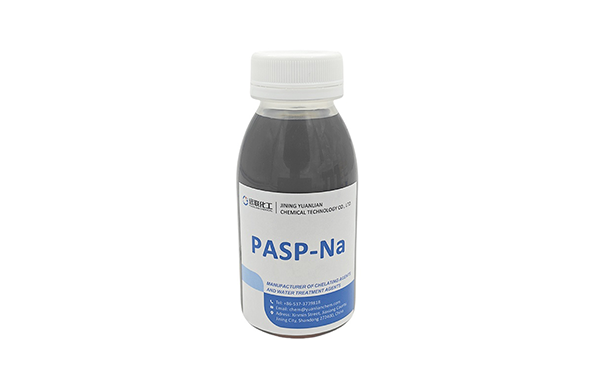
Polyaspartic acid is a naturally occurring, biodegradable polymer. Its molecular structure is rich in active groups like hydroxyl and carboxyl groups, which give it incredible chelation, adsorption, and dispersion capabilities.
While ordinary PA has a limited molecular weight, Modified PASP features:
Higher Molecular Weight: Extended chains and three-dimensional network structures.
Stronger Chelation: It "grabs" nutrients and concentrates them around the root system.
Enhanced Conductivity: It helps plants absorb nitrogen, phosphorus, potassium, and trace elements more efficiently.
Proven Results: Significant Yield Increases in Economic Crops
While the benefits of PASP on food crops like corn and wheat are well-documented, recent pot experiments conducted on high-value economic crops—cherry radish, lettuce, and green radish—have shown even more impressive results.
When compared to equal nutrients from ordinary compound fertilizers, crops treated with Modified Polyaspartic Acid showed:
| Crop Type | Fresh Weight Increase | Rhizome Diameter Growth |
| Cherry Radish | +21.94% | +11.41% to 32.14% |
| Lettuce | +35.97% | +11.41% to 32.14% |
| Green Radish | +42.65% | +11.41% to 32.14% |
Key Biological Advantages Observed:
Enhanced Photosynthesis: The relative chlorophyll content (SPAD value) in lettuce leaves increased by 18.1%, leading to greener, healthier plants.
Robust Root Systems: The modified PA penetrates the soil to promote deeper, stronger root growth.
Economic Gains: The study reported net income increases of up to 1,353.8 yuan per mu for green radish.
The Future of Sustainable Farming
Adding modified polyaspartic acid to your fertilizer regimen is not just an investment in your current harvest; it is an investment in your land. By reducing nutrient loss, you protect the soil from compaction and acidification while achieving significant social and environmental benefits.
Partner with the Leaders in Fertilizer Synergists
Are you ready to improve your fertilizer utilization efficiency and see a measurable increase in crop yield? Yuanlian Chemical specializes in high-performance modified polyaspartic acid synergists designed for modern, green agriculture.
Contact us today for technical data and ordering information:
Email: [email protected]
Phone: +86 537 3739818
Website:www.yuanlianchelating.com
Latest News



Need help
Prefer speaking with a human to filling out a form? call corporate office and we will connect you with a team member who can help.