20 Mar
Evolution of PASP Scale Inhibitors: Advanced Modification Techniques for Green Water Treatment
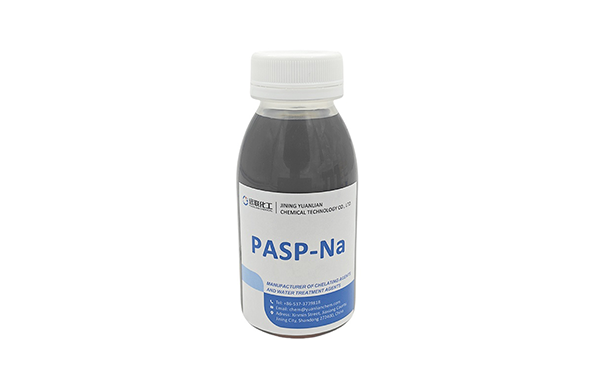
Polyaspartic acid (PASP) scale inhibitor is a premier green scale inhibitor that is non-polluting, non-toxic, harmless, and easily biodegradable. PASP features α and β structures and contains active carboxyl groups. The carboxyl anions generated by ionization chelate with metal ions such as Ca2+ and Mg2+, increasing their solubility and achieving effective scale inhibition.
The standard synthesis route involves creating the intermediate polysuccinimide (PSI), followed by alkaline hydrolysis to obtain PASP, using either L-aspartic acid (L-Asp) or maleic anhydride (MA) with ammonium salts as raw materials.
1. Enhancing Performance: Introduction of Functional Groups
To meet the demands of modern industrial systems, researchers introduce specific functional groups to enhance the adsorption, dispersion, and chelation capabilities of the PASP molecule.
A. Boosting Chelation with Amide Groups (—CO—NH—)
The introduction of —CO—NH— enhances the adsorption and solubilization capabilities of the scale inhibitor. For example, Histidine-polyaspartic acid (His-PASP), synthesized via ring-opening modification of PSI, achieves 100% scale inhibition efficiency against CaCO3 at a dosage of only 6 mg/L. The lone electron pairs in the amide group form strong bonds with scale crystals, ensuring they remain evenly dispersed and reducing crystal-to-crystal contact.
B. High-Temperature Resistance via Sulfonic Acid (—SO3H)
Scale inhibitors containing —SO3H are essential for oilfield downhole applications due to their excellence in high-salinity environments. The PASP/ASA graft copolymer can achieve a 100% inhibition rate for CaSO4 at 80°C. As a strong organic acid, the sulfonic group helps maintain the chelating and dispersing ability of the molecule even under extreme thermal stress.
C. Improving Adsorption with Hydroxyl Groups (—OH)
By using L-threonine (L-THR) to modify PSI, hydroxyl-containing PASP derivatives can reach a 99.3% inhibition rate for CaCO3. Similarly, Serine-polyaspartic acid (Ser-PASP) disrupts crystal growth habits, causing lattice deformation that prevents scale from adhering to surfaces. This dual-action (—OH and —COOH) significantly enhances calcium ion adsorption.
2. Advanced Copolymer Modifications and Nanotechnology
Beyond simple group introduction, the integration of complex organic and inorganic materials has redefined the limits of PASP performance.
PASP/Oxidized Starch (PASP/OS)
The integration of oxidized starch increases the number of polar carboxyl groups. Compared to standard PASP, this copolymer offers:
Lower Dosage: 100% inhibition at 8 mg/L.
Thermal Stability: Maintains 80.93% inhibition after 18 hours at 80°C.
Alkaline Resistance: Effective at pH 12, making it ideal for high-alkali industrial cycles.
Nanosilica and Graphene Oxide (SiO2-NH2 / GO)
SiO2-NH2/PASP: Utilizing the high surface area and numerous reaction sites of nanosilica, this modification achieves nearly 100% inhibition against CaSO4 and significantly improved high-temperature stability.
PASP/GO: Graphene oxide’s oxygen-containing groups (—COOH, —OH) allow this amphoteric copolymer to achieve 100% inhibition against both CaCO3 and CaSO4 across varying temperatures and pH levels.
3. The Future of Smart Water Treatment: Fluorescent Labeling
Modern water systems require real-time monitoring. For the first time, researchers have prepared an environmentally friendly Curcumin-Citric Acid-Aspartic Acid Polymer (PCCA) using a solvent-free, green synthesis method.
PCCA not only provides exceptional scaling properties for high-hardness and high-sulfate environments but also features fluorescent labeling. This allows facility managers to monitor inhibitor concentrations in real-time, ensuring optimal dosage and preventing the long-term accumulation of calcium sulfate scale.
Conclusion: Engineering a Sustainable Aquatic Future
The continuous modification of Polyaspartic Acid proves that green chemistry can match, and even exceed, the performance of traditional phosphorus-based inhibitors. From oilfield extraction to high-end industrial cooling, modified PASP is the key to high-efficiency, zero-pollution water management.
At Shandong Yuanlian Chemical, we specialize in providing high-purity PASP and customized green chelating solutions. Contact our technical team for detailed performance data and sample formulations.
Email: [email protected]
Website: www.yuanlianchem.com
Latest News



Need help
Prefer speaking with a human to filling out a form? call corporate office and we will connect you with a team member who can help.