16 Jul
Formulation Stability in Green Chemistry: Technical Evaluation of GLDA-Na4 as an EDTA Alternative
European regulators have steadily tightened the framework around persistent chelating agents. The EU Detergents Regulation amendments restrict phosphates, and EDTA faces increasing scrutiny for its environmental persistence—degradation rates below 10% under OECD 301B testing. NTA carries a GHS Category 2 carcinogen classification, placing it under even tighter restrictions. Simultaneously, China's dual carbon targets and the broader push toward green chemistry in the Asia-Pacific region are accelerating the search for bio-based alternatives across the global chemical supply chain.
For formulators across home care, personal care, and industrial processing, the challenge is practical: replace these legacy chelates without sacrificing hard water performance, formulation stability, or preservative efficacy.
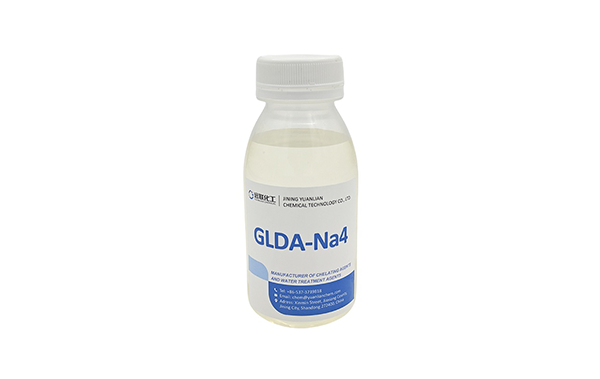
Tetrasodium glutamate diacetate (GLDA-Na4) offers a technical path through this transition. Derived from L-glutamic acid—a naturally occurring amino acid—it provides the chelation performance required for demanding applications while meeting the biodegradability and ecotoxicological standards now expected under EU Ecolabel criteria and comparable sustainability frameworks globally.
1. Regulatory Drivers Reshaping Global Chelation Chemistry
The regulatory pressure on persistent chelating agents is not hypothetical. Across multiple jurisdictions, restrictions are tightening.
European regulatory framework:
EU Detergents Regulation (EC 648/2004) —phosphorus limits; persistent chelates face substitution pressure
EU Ecolabel criteria —explicitly prohibit EDTA and NTA in certified products
REACH authorisation and restriction processes —ongoing assessments of EDTA and NTA under SVHC (Substances of Very High Concern) pathways
EU Chemicals Strategy for Sustainability —part of the broader Green Deal, explicitly targets persistent substances for restriction
Retailer procurement policies —major European supermarket chains increasingly require "EDTA-free" and "readily biodegradable" claims on product packaging
Asia-Pacific regulatory trends:
China's dual carbon targets —carbon peaking by 2030 and carbon neutrality by 2060 are driving green chemistry adoption across the chemical sector
China's Water Pollution Prevention and Control Action Plan —mandates total phosphorus control in industrial wastewater, pushing water treatment operators toward phosphorus-free formulations
Japan's Chemical Substances Control Law —classifies EDTA as a "difficult-to-test substance" due to its chelating properties and potential for heavy metal remobilisation
Korea's Act on Registration and Evaluation of Chemicals (K-REACH) —parallels EU REACH requirements, requiring registration and hazard assessment for imported chemicals
The shift toward bio-based chemical building blocks is not merely regulatory—it reflects a broader industrial realignment toward renewable feedstocks. GLDA-Na4, synthesised from plant-derived L-glutamic acid, sits at the intersection of both trends.
2. Physico-Chemical Properties and Sequestration Dynamics of GLDA-Na4、
Core Parameters
| Parameter | Value |
|---|---|
| CAS number | 51981-21-6 |
| Molecular formula | C₉H₉NNa₄O₈ |
| Molecular weight | 351.1 g/mol |
| Active content (standard liquid grade) | 47% |
| pH (1% w/v dilution) | 11.0–12.0 |
| Density (47% grade) | 1.40–1.44 g/cm³ |
| Crystallisation point | < -15°C |
Chelation Mechanism
The tetracarboxylic structure of GLDA-Na4 coordinates with divalent and trivalent metal ions through three carboxylate groups and one tertiary amine, forming 1:1 metal-to-ligand complexes. This pentadentate coordination geometry maintains system clarity and prevents salt precipitation across a wide range of conditions.
Sequestering values on a dry basis:
| Metal ion | Sequestration value (mg/g) |
|---|---|
| Ca²⁺ | 45 |
| Cu²⁺ | 72 |
| Zn²⁺ | 73 |
| Fe²⁺ | 63 |
| Mg²⁺ | 27 |
| Mn²⁺ | 62 |
pH and Thermal Stability
GLDA maintains chelation performance across pH 2–13, with no precipitation of metal complexes under alkaline conditions. This broad stability window distinguishes it from citrate, which loses chelation efficiency above pH 8 as carboxylic acid groups become deprotonated.
Thermal stability is equally robust. Thermogravimetric analysis shows no decomposition after 6 hours at 170°C or after one week at 150°C. For automatic dishwashing applications—where wash temperatures reach 60–70°C and drying cycles run hotter—this stability translates directly to sustained performance.
Solubility and Compatibility
GLDA is fully miscible with water at any ratio. In high-electrolyte systems, it remains clear and stable without crystallisation—a critical property for concentrated liquid detergents and unit-dose formats. The product remains fluid below -15°C, facilitating handling across diverse climatic conditions.
3. Key Application Matrices: From Home Care to Cosmetics
A. Personal Care and Cosmetic Preservation Synergy
In shampoos, body washes, and liquid soaps, GLDA-Na4 serves as both a metal ion stabiliser and a preservative booster. Because GLDA contains natural amino acid components, it binds more effectively to bacterial cell walls than conventional chelates, disrupting cellular electrolyte balance and inhibiting microbial activity.
Laboratory data indicates that GLDA, when combined with conventional preservatives, can reduce biocide requirements by 20–80%. In one study, imidazolidinyl urea usage against Pseudomonas aeruginosa was reduced by 50% when compounded with GLDA.
For products targeting "mild" or "sensitive-skin" claims, GLDA is classified as non-irritating to skin and eyes, and it contains no genetically modified components. The INCI name is Tetrasodium Glutamate Diacetate.
B. Sustainable Detergency and Hard Water Control
In automatic dishwashing and industrial cleaning, hard water calcium and magnesium ions cause multiple problems: surfactant deactivation, spotting and filming on glassware, and scale deposition in equipment.
GLDA addresses these effects by sequestering hardness ions throughout the wash and rinse cycles. Typical use levels range from 2–8% of total formulation, often combined with MGDA and dispersing polymers to achieve scale-free, spot-free results.
Glass corrosion inhibition: In machine dishwashing, GLDA formulations can be structured to work alongside zinc-based corrosion protection systems without interfering with filming control.
C. Industrial Processing and Textile Auxiliaries
In textile bleaching and pulp processing, trace transition metals (iron, manganese, copper) catalyse hydrogen peroxide decomposition, reducing bleaching efficiency and damaging fibre strength. GLDA stabilises peroxide systems by sequestering these catalytic metals—a critical function for formulations containing sodium percarbonate or hydrogen peroxide.
The stabilisation effect protects fibre mechanical strength while improving whiteness, making GLDA suitable for bleaching applications in both textile processing and commercial laundry.
4. Technical Benchmarks: Performance and Environmental Profiles
| Technical Characterisation | GLDA-Na4 | EDTA-Na4 | NTA-Na3 |
|---|---|---|---|
| Origin / Synthesis Precursor | Plant-derived (L-glutamic acid) | Fossil-fuel based | Fossil-fuel based |
| Ultimate Biodegradability (OECD 301B) | Readily biodegradable (>60% in 28 days) | Persistent (<1% degradation) | Biodegradable but restricted |
| Stability Window (pH range) | Wide (2.0–13.0) | Wide (4.0–11.0) | Moderate (3.0–9.0) |
| Thermal Stability (6h at 170°C) | No decomposition | Partial decomposition | Limited |
| Regulatory Risk Classification (GHS) | Non-hazardous / Safe | Suspected carcinogen (Category 2) | Carcinogen (Category 2) |
| Preservative Synergy | Strong (20–80% reduction) | Moderate | Limited |
| EU Ecolabel Compliance | Yes | No | No |
What the comparison demonstrates: EDTA and NTA work. That is not the question. The question is whether their environmental persistence (EDTA) and carcinogen classification (NTA) are acceptable in a regulatory environment that is moving decisively toward renewable, biodegradable alternatives. GLDA matches their chelation performance while eliminating the regulatory liability and environmental accumulation risk.
5. Securing Supply Chain Stability for International Markets
For formulators making the transition from EDTA to GLDA-based chelates, supply chain consistency is a practical concern. Batch-to-batch variation in chelation value, free amino acid residuals, or colour clarity can disrupt formulation performance and trigger costly rework.
Quality Specifications for the 47% Liquid Grade
| Parameter | Specification |
|---|---|
| Appearance | Clear liquid |
| Active content | 46.5–47.5% |
| Colour | ≤250 APHA |
| pH (1% solution) | 11.0–12.0 |
| NTA content | 0% |
| Chloride | ≤1.7% |
| Density (20°C) | 1.40–1.44 g/cm³ |
| Heavy metals (as Pb) | ≤10 ppm |
Supply Chain Considerations
The liquid grade eliminates dusting hazards in compounding facilities and simplifies pumping and blending. For solid formulations—tablets, granules, or dry blends—powder grades (≥85% active) are also available, though liquid is the predominant commercial form.
Traceability and compliance documentation:
REACH registration confirmation
OECD 301 biodegradability test results
Certificate of analysis with heavy metal limits
Safety Data Sheet (SDS)
Batch-to-batch consistency records
For buyers sourcing from outside the EU, confirming that the importer has fulfilled REACH obligations is essential. For the Chinese market, compliance with relevant national standards and registration requirements under China REACH (MEE Order No. 12) is equally important for market access.
6. Collaborative Formulation Support and Verification
GLDA-Na4 represents a practical path for formulators navigating the transition away from phosphates, EDTA, and NTA. It offers the chelation performance required for hard water applications while meeting the environmental standards now expected across global markets.
The technical case for GLDA-Na4:
Readily biodegradable under OECD 301D—meets EU Ecolabel criteria
Stable across pH 2–13—outperforms citrate and matches EDTA in alkaline conditions
Preservative synergy reduces biocide loads in personal care formulations
Complete water miscibility enables high-concentration liquid formulations
Thermal stability >100°C for automatic dishwashing and industrial cleaning
Plant-derived from L-glutamic acid (58% biobased content, USDA BioPreferred)
Non-irritating to skin and eyes—suitable for sensitive-skin applications
To verify the synergistic performance or pH compatibility thresholds of GLDA-Na4 within your custom formulations, standard laboratory samples, comprehensive Technical Data Sheets (TDS), and Safety Data Sheets (SDS) are accessible through our application engineering group. The technical team provides compatibility assessments tailored to specific surfactant systems, water chemistry profiles, and formulation conditions.
Latest News


Need help
Prefer speaking with a human to filling out a form? call corporate office and we will connect you with a team member who can help.