10 Apr
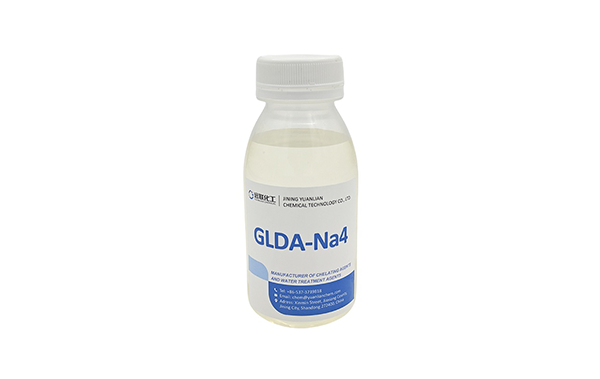
Green Chelating Agents in Detergent Industry: The Preferred Choice of GLDA and MGDA
I. Industry Transformation Background: Environmental Dilemma of Traditional Chelating Agents and Demand for Green Alternatives
In the detergent industry, chelating agents serve as core additives that lock calcium, magnesium, and heavy metal ions to prevent soap scum formation with surfactants, thereby ensuring cleaning efficiency. However, traditional chelating agents face severe environmental challenges: phosphorus-containing additives (e.g., STPP) cause eutrophication and have been restricted in many countries; EDTA and similar chelating agents have a biodegradation rate of less than 6%, with long-term residues re-releasing heavy metals and causing secondary pollution, listed as Substances of Very High Concern (SVHC) under EU REACH regulation. Driven by stricter global environmental regulations and growing consumer health awareness, green chelating agents represented by GLDA (Tetrasodium Glutamate Diacetate) and MGDA (Trisodium Methylglycine Diacetate) have become the core choice for industry transformation due to their dual advantages of high efficiency and environmental friendliness.
II. GLDA: An All-Round Green Chelating Agent Derived from Nature
(1) Core Characteristics and Advantages
GLDA is an amino acid-derived chelating agent made from L-glutamic acid fermented from renewable plant raw materials (e.g., molasses, starch). Its molecular design achieves a perfect balance between performance and environmental protection. In terms of environmental friendliness, GLDA demonstrates disruptive advantages: according to OECD standard tests, its 28-day biodegradation rate reaches 80%-98%, rapidly decomposing into water, carbon dioxide, and trace sodium salts without environmental residues; it contains no phosphorus, avoiding eutrophication at the source and exhibiting low toxicity to aquatic organisms. In terms of performance, GLDA's chelating capacity surpasses traditional citrates and phosphates, even outperforming EDTA. It maintains stability over a wide pH range of 2-12 and temperatures above 80℃, while boasting excellent dispersion and scale inhibition to prevent soil redeposition. Regarding safety, it has low irritation to skin and eyes and low oral toxicity, suitable for sensitive skin care formulations.
(2) Typical Application Scenarios
GLDA excels in high-end laundry detergents and automatic dishwasher detergents: in hard water areas, it significantly enhances the removal efficiency of sebum, protein stains, tea stains, and coffee stains, preventing clothes from graying and hardening and tableware from water spots; in industrial cleaning, it can be used for descaling metal parts, food processing equipment, and boiler pipes, balancing cleaning efficiency with environmental compliance. Additionally, GLDA acts as a stabilizer in shampoos and body washes, shielding active ingredients from metal ion damage, extending product shelf life, and improving user experience.
III. MGDA: A Precise and Efficient Green Cleaning Solution
(1) Core Characteristics and Advantages
MGDA is chemically modified from L-glycine, an essential amino acid, with the molecular formula C₇H₈NNa₃O₆, also offering excellent environmental performance: its 28-day biodegradation rate exceeds 80%, certified by EU ECOCERT as a preferred alternative; it contains no phosphorus or nitrogen that cause eutrophication, reducing wastewater treatment costs by 25%. In terms of performance, MGDA's chelating values for calcium and magnesium ions reach 60mg/g and 36mg/g respectively, comparable to EDTA. It rapidly forms soluble complexes at a 1:1 molar ratio, effectively softening hard water; it maintains activity over a pH range of 3-12 and high temperatures, making it stable in the high-temperature rinsing environment of dishwashers—an advantage unattainable by traditional chelating agents. Furthermore, MGDA exhibits strong compatibility with common surfactants such as AES and LAS, reducing surfactant dosage by 10%-15% and optimizing formulation costs.
(2) Typical Application Scenarios
In the daily chemical field, MGDA is an ideal additive for high-end laundry detergents, enhancing decontamination power and preventing gray deposition while protecting clothing dyes from heavy metal ions to maintain vivid colors; in dishwashing liquid formulations, it solves the problem of water scale in hard water areas. A catering chain reported a 30% increase in tableware brightness and a 50% decrease in customer complaints after application. In industrial settings, MGDA is suitable for cleaning food processing equipment and metal rust removal, with large-scale production available in liquid (≥40% content) and solid (≥76% content) forms to meet diverse formulation needs. Its low irritation has enabled successful application in infant tableware cleaners, helping products pass strict EU certifications and enter international markets.
IV. Decision-Making Reference for Choosing GLDA and MGDA
Both chelating agents effectively replace traditional phosphorus-containing additives and EDTA. The choice depends on specific needs: GLDA is preferred for ultimate environmental friendliness and broad applicability (e.g., both daily chemical and industrial scenarios) due to its high degradation rate and wide pH adaptability; MGDA excels in hard water cleaning, high-temperature applications (e.g., dishwasher detergents), or formulation cost optimization, thanks to its precise chelating capacity and compounding flexibility. Regardless of the choice, attention should be paid to raw material purity (e.g., no NTA carcinogen residues) and batch stability, prioritizing products from ISO9001-certified suppliers.
V. Industry Future Trends
With the deepening of green chemistry concepts, market demand for GLDA and MGDA will continue to grow rapidly. In the future, they will further replace phosphates and EDTA, with accelerated substitution in European and American markets; meanwhile, multi-functionalization will be achieved through compounding with enzymes and antioxidants, expanding into water treatment, personal care, and other fields. The widespread application of these green chelating agents not only drives the detergent industry's transformation from "effective cleaning" to "sustainable cleaning" but also contributes to global ecological protection and improvement.
Latest News


Need help
Prefer speaking with a human to filling out a form? call corporate office and we will connect you with a team member who can help.