The hair care industry has undergone a fundamental shift in raw material selection over the past decade. Consumers increasingly scrutinise ingredient lists for environmental credentials, and retailers across Europe now require proof of biodegradability for private-label formulations. The EU Ecolabel for rinse-off products sets clear criteria for environmental performance, and major supermarket chains have established "EDTA-free" as a baseline expectation rather than a differentiator.
For formulators of shampoos and conditioners, the practical challenge is specific: maintain product stability, preservative efficacy, foam performance, and colour protection while eliminating persistent chelating agents that accumulate in aquatic environments. The transition from first- and second-generation chelates to readily biodegradable alternatives represents a technical evolution that addresses both regulatory requirements and consumer expectations
1. The Strategic Role of Chelation in Modern Hair Care Synthesis
Chelating agents perform multiple essential functions in shampoo formulations. Their primary role is to sequester metal ions that would otherwise interfere with product stability, preservative efficacy, and sensory performance .
Metal ion sources in hair care systems:
Process water — calcium, magnesium, iron introduced through manufacturing water
Consumer tap water — hardness cations (Ca²⁺, Mg²⁺) that interact with surfactants during washing
Pipeline corrosion — trace copper and iron from distribution systems
Raw material impurities — transition metals introduced through plant extracts or natural oils
Negative effects of uncontrolled metal ions:
Surfactant deactivation — hardness cations form insoluble salts with anionic surfactants (AES, amino acid surfactants), reducing foam volume and cleansing efficacy
Preservative degradation — metal ions catalyse oxidation of preservatives, reducing antimicrobial efficacy
Oxidative damage — copper and iron catalyse free radical generation, leading to lipid peroxidation in formulations
Colour and fragrance instability — metal-catalysed oxidation causes yellowing, off-odours, and loss of sensory properties
2. Legacy Chelates (1st & 2nd Generation): Performance Profiles and Ecological Constraints
First Generation: Inorganic Polyphosphates (STPP)
Sodium tripolyphosphate (STPP) served as the original chelating builder in detergents and personal care products. Its primary limitation—contributing to eutrophication in receiving waters—led to phase-out across Europe from the 1990s onward . The EU Detergents Regulation imposed phosphorus limits, and STPP is now rarely found in European hair care formulations.
Second Generation: Synthetic Aminocarboxylates (EDTA, NTA)
Disodium EDTA and tetrasodium EDTA became the industry standard due to their high stability constants and low cost. The ethylenediamine structure binds metal ions with exceptional strength—log K values for Ca²⁺ reach 10.7, for Fe³⁺ 25.1 .
Why EDTA became dominant:
Excellent metal-binding capacity across a wide pH range
Cost-effective synthesis from petrochemical feedstocks
Proven compatibility with surfactants and preservatives
Established regulatory history
Current constraints:
Environmental persistence — EDTA passes through wastewater treatment plants largely unaltered, with OECD 301B degradation rates below 10% over 28 days
Heavy metal remobilisation — persistent EDTA can remobilise heavy metals from sediments in receiving waters
Regulatory pressure — ECHA continues to evaluate EDTA under SVHC pathways; EU Ecolabel explicitly prohibits EDTA in certified products
NTA, while more biodegradable than EDTA, carries a GHS Category 2 carcinogen classification that has further restricted its use in rinse-off personal care products .
3. The New Paradigm (3rd Generation): Readily Biodegradable Chelating Additives
The current generation of chelating agents for hair care is defined by three key attributes: readily biodegradable profiles (OECD 301B >60% in 28 days), plant-derived feedstocks, and proven performance in rinse-off formulations.
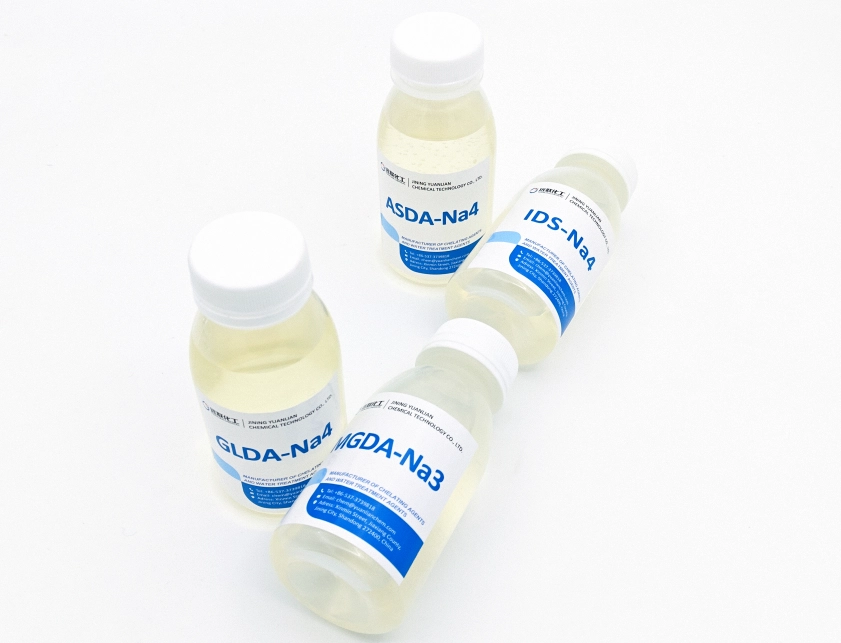
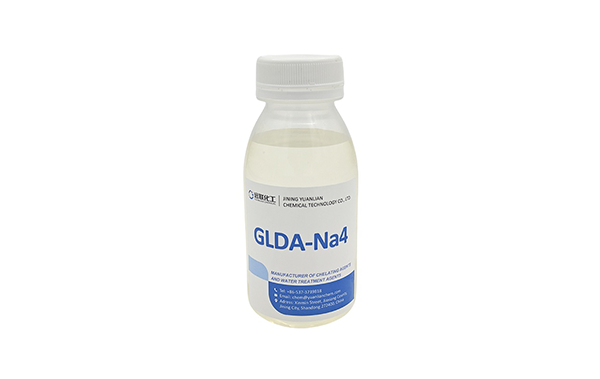
GLDA (Tetrasodium Glutamate Diacetate)
Derived from L-glutamic acid, a naturally occurring amino acid . GLDA offers excellent skin compatibility and effective chelation across the mildly acidic pH range typical of modern shampoos (pH 5.0–6.5).
Key characteristics for hair care:
Readily biodegradable under OECD 301B
Stability constant (log K Ca²⁺): 6.4
Non-irritating to skin and eyes
INCI name: Tetrasodium Glutamate Diacetate
58% biobased carbon content (USDA BioPreferred)
MGDA (Trisodium Methylglycine Diacetate)
Derived from alanine, MGDA exhibits high chelation performance across a broad pH range—from mildly acidic to highly alkaline systems. This makes it suitable for anti-dandruff shampoos and specialty treatments requiring higher pH .
Key characteristics for hair care:
Readily biodegradable under OECD 301B
Excellent performance at pH 10–12
INCI name: Trisodium Methylglycine Diacetate
Non-hazardous profile
ASDA (Tetrasodium Aspartate Diacetate)
Derived from L-aspartic acid, ASDA offers favourable ecotoxicological characteristics and mild skin compatibility. It is particularly suitable for premium scalp care formulations targeting sensitive skin .
Key characteristics for hair care:
Readily biodegradable profile
Plant-derived feedstock
Low irritation index
4. Technical Comparison Matrix: Cross-Generational Properties in Hair Care
| Characterisation Parameter | 3rd Gen: GLDA / MGDA / ASDA | 2nd Gen: Disodium EDTA | 1st Gen: Phosphate Builders |
|---|---|---|---|
| Primary Material Base | Plant-derived (amino acids) | Fossil-fuel (petrochemical) | Mineral / Inorganic |
| Ultimate Biodegradability (OECD 301B) | Readily biodegradable (>60% in 28 days) | Persistent in environment (<10%) | Non-applicable (inorganic load) |
| Preservative Synergy Profile | High (excellent booster traits) | High | Low |
| Skin & Scalp Irritation Index | Extremely low (hypoallergenic) | Low | Moderate |
| Aquatic Toxicity Classification | Non-hazardous | Evaluated / restrictive | Triggers eutrophication |
| pH Compatibility Range | 4–13 (MGDA); 5–11 (GLDA) | 4–10 | Narrow |
| EU Ecolabel Compliance | Yes | No | No |
What the comparison demonstrates: EDTA offers strong chelation at low cost—but its environmental persistence is increasingly unacceptable under European regulations. Third-generation chelates match or exceed the functional requirements of hair care formulations while delivering the readily biodegradable profiles required by EU Ecolabel criteria and consumer expectations for sustainable cosmetics.
5. Application Matrix: How Modern Chelates Optimize Shampoo Quality
A. Preservative Efficacy Enhancement
GLDA, MGDA, and ASDA function as preservative boosters through a specific mechanism: they chelate divalent cations—Mg²⁺ and Ca²⁺—that are essential for maintaining the structural integrity of bacterial cell envelopes . In Gram-negative bacteria, these cations form ionic bridges between lipopolysaccharide molecules in the outer membrane.
By sequestering these cations, green chelates disrupt membrane integrity, increasing permeability and making microorganisms more susceptible to preservatives. For formulation chemists, this means:
Reduced preservative loads — lower required concentrations of sensitive preservatives such as phenoxyethanol or organic acids
Enhanced antimicrobial efficacy — synergistic effect with conventional preservatives
Extended shelf life — maintained product preservation without increasing irritancy risk
B. Foam Maximisation and Hard Water Shielding
During consumer use, hardness cations in tap water react with anionic surfactants—AES, amino acid surfactants—to form insoluble calcium and magnesium salts. These salts reduce foam volume and leave a dry, tight post-wash feel on hair and scalp.
Third-generation chelates address this by competitively binding hardness ions before they can interact with surfactants . The chelating action maintains surfactant performance and foam density across varying water hardness conditions.
Copper chelation for colour protection: Green chelates also bind trace copper ions (Cu²⁺) present in tap water. Copper catalyses free radical generation under UV exposure, leading to colour fading in dyed hair and oxidative damage to keratin protein. By sequestering copper, modern chelates provide colour protection benefits that extend beyond surfactant performance .
C. Oxidation Prevention & Odour Stabilisation
Trace transition metals—iron and copper—introduced through plant extracts, natural oils, or process water catalyse oxidative degradation of unsaturated fatty acids and fragrance components. This results in yellowing, off-odours, and loss of sensory properties over shelf life .
Green chelates sequester these catalytic metal ions, effectively inhibiting metal-catalysed oxidation kinetics. For formulations containing botanical extracts, essential oils, or natural fragrance systems, this stabilisation effect extends product shelf life while preserving colour and fragrance integrity.
6. Aligning Global Supply Chains with Quality Standards
For formulators and procurement teams making the transition from EDTA to third-generation chelates, supply chain consistency is a practical concern. Variation in active content, free impurities, or colour clarity can disrupt formulation performance.
Quality parameters to verify:
| Parameter | GLDA (47% liquid) | MGDA (40% liquid) |
|---|---|---|
| Appearance | Light yellow clear liquid | Clear to light yellow liquid |
| Active content | 46–48% | 39–41% |
| pH (1% solution) | 11.0–12.0 | 10.0–12.5 |
| NTA content | None / below detectable limit | <0.10% |
| Heavy metals | Within specification limits | Within specification limits |
Supply chain considerations:
Liquid grades eliminate dusting hazards and simplify pumping and blending
Full REACH registration and OECD biodegradability documentation are baseline requirements
The synthesis route avoids formaldehyde, cyanide, and other toxic alkylation reagents
Shelf life of 12 months under proper storage conditions
7. Collaborative Engineering Support and Product Verification
The transition from EDTA to third-generation chelates represents a technical evolution that addresses both regulatory requirements and consumer expectations. GLDA, MGDA, and ASDA offer effective metal sequestration, preservative synergy, and foam stabilisation while delivering the readily biodegradable profiles required by EU Ecolabel criteria.
The technical case for third-generation chelates in hair care:
Readily biodegradable under OECD 301B—meets EU Ecolabel criteria
Effective chelation for calcium, magnesium, iron, copper
Preservative synergy reduces biocide loads in formulations
Prevents metal-catalysed oxidation—extends shelf life
Plant-derived feedstocks—renewable carbon sources
Non-irritating to skin and scalp—suitable for sensitive applications
To evaluate the electrolyte compatibility, foam density variations, or antioxidant stabilisation efficiency of biodegradable chelates within your trial hair care systems, standard evaluation samples, comprehensive Technical Data Sheets (TDS), and Safety Data Sheets (SDS) are accessible through our application engineering group. The technical team provides compatibility assessments tailored to specific surfactant systems, preservative combinations, and product claim requirements.