18 Sep
IDS Chelating Agent for Agriculture & Heavy Metal Treatment
Tetrasodium iminodisuccinate is a chemical substance. Its solution tends to crystallize at temperatures below or equal to 5°C, but it exhibits good stability in strong alkaline media. Under strongly acidic conditions, IDS acid crystals may precipitate, but dissolving the crystals with alkali will not affect the product's use.
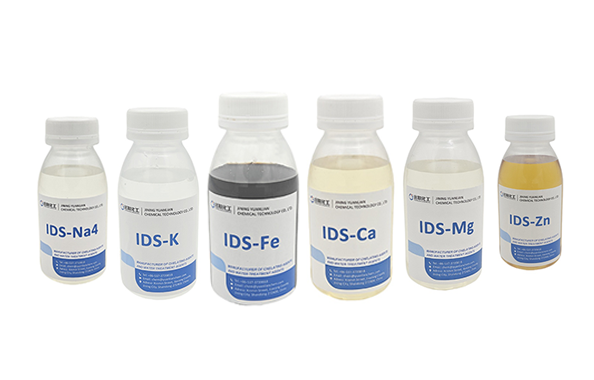
IDS is an innovative, green, and environmentally friendly chelating agent belonging to the aminopolycarboxylic acid family, similar to EDTA, DTPA, and NTA. It is phosphate-free, non-toxic, and readily biodegradable. At room temperature, it is a colorless or light yellow, transparent liquid. Crystallization occurs at temperatures below 5°C for extended periods. The anion of IDS forms a coordinated geometry with metal cations, resulting in a strong chelating ability for calcium, magnesium, zinc, and other transition metal ions. In particular, its chelating ability for heavy metals such as copper, iron, manganese, and nickel surpasses that of traditional chelating agents such as EDTA, and it also exhibits enhanced synergistic effects with other chelating dispersants.
IDS is a chelating agent widely used in fertilizers and pesticides. Compared to citric acid, amino acid, and humic acid-based chelate fertilizers, IDS significantly increases the bioavailability of trace elements to crops and is considered an extremely effective supplement, helping to increase agricultural yield and improve quality. Furthermore, IDS can replace aminopolycarboxylic acid chelating agents such as EDTA, DTPA, and NTA. It is favored for its environmentally friendly, high efficiency, water solubility, ease of absorption, and lack of antagonistic effects.
As a chelating agent, IDS can effectively improve the utilization efficiency of fertilizers and pesticides, reducing environmental pollution. Its high efficiency enables farmers to use fertilizers and pesticides more precisely, avoiding waste and overapplication. Antagonism refers to competition or interference between different elements, which limits the absorption and utilization of some elements. The use of IDS can avoid this, ensuring that crops can fully absorb and utilize trace elements and promote healthy growth.
Compared to existing soil heavy metal ion chelators, IDS chelate salts have unique advantages: First, IDS has a moderate chelating capacity, making it relatively easy to separate from heavy metal ions during post-processing. This means that during the treatment process, IDS can effectively separate heavy metal ions from the soil, making it easier to handle and recycle.
In summary, as a chelating agent, IDS has broad applicability in fertilizer and pesticide applications. Due to its high bioavailability, environmental friendliness, and high efficiency, IDS is an ideal choice for improving agricultural yield and quality. Furthermore, as an alternative to aminopolycarboxylic acid chelating agents, IDS is readily soluble in water, easily absorbed, and non-antagonistic, making it more convenient for farmers to use. By adopting IDS, we can achieve sustainable agricultural development and bring greater benefits to agricultural production.
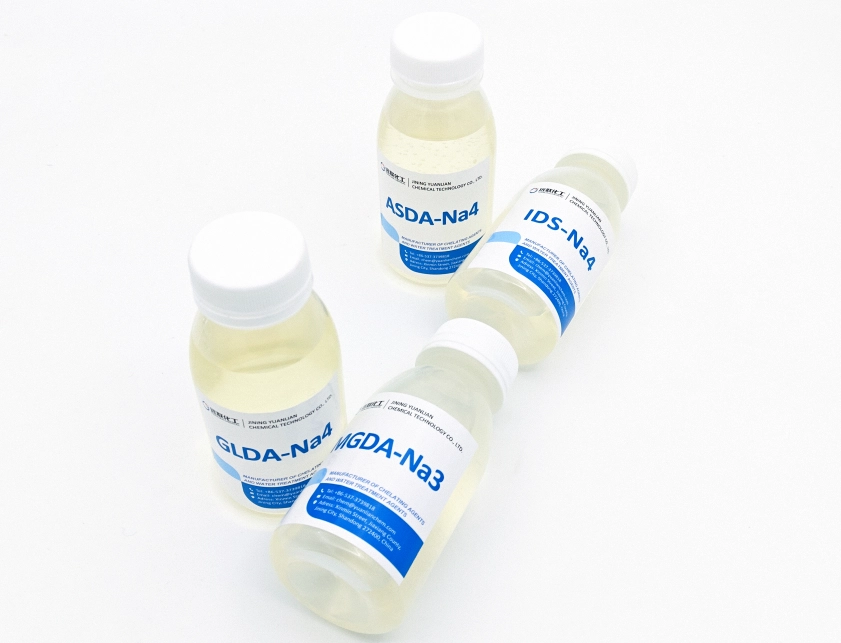
Jining Yuanlian Chemical Technology Co.,ltd, is a global leading manufacturer of Tetrasodium iminodisuccinate (IDS 4Na), if any needs, welcome inquiry by [email protected].
Latest News



Need help
Prefer speaking with a human to filling out a form? call corporate office and we will connect you with a team member who can help.