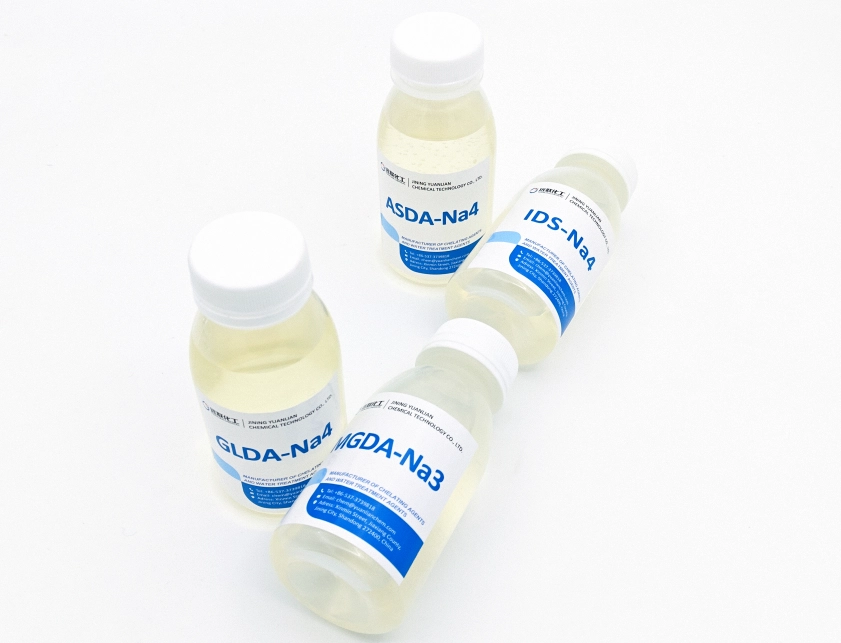
For decades, European formulators have relied on EDTA and phosphonates. These chelators work, but their environmental persistence is no longer acceptable. The European Green Deal, EU Ecolabel, and REACH are all pushing toward biodegradable, bio-based alternatives.
Tetrasodium Glutamate Diacetate (GLDA) is the answer. Plant-based, fully biodegradable, and effective across pH 2–13.5, GLDA is already replacing persistent chelators in detergents, water treatment, agriculture, personal care, and industrial cleaning.
What Is GLDA? Plant-Based Chemistry
GLDA is built on L-glutamic acid – an amino acid produced via fermentation of plant-based sugars (maize, cassava, or sugar beet). Two acetate groups are attached to the glutamate backbone, creating a molecule with five carboxyl groups for strong metal binding.
Bio-based carbon content: >80% (ASTM D6866 / CEN 16640)
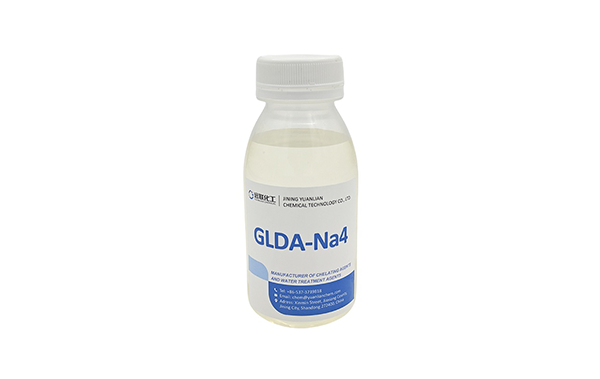
| Property | Value |
|---|---|
| CAS number | 51981-21-6 |
| Appearance | Clear, slightly yellowish liquid |
| Active content | 38–40% |
| pH (1% solution) | 10.5–12.5 |
| Phosphorus content | 0% |
Biodegradability: Data That Matters for Europe
Persistent chemicals are the primary target of EU chemical regulation. GLDA is different.
OECD 301D (28 days): >98% degradation – far exceeding the 60% threshold for "readily biodegradable" classification under EU Detergents Regulation (EC) No 648/2004.
| Chelator | 28-day Biodegradation | Persistence Concern |
|---|---|---|
| EDTA | <20% | High |
| Phosphonates | <10% | High |
| GLDA | >98% | None |
GLDA also shows excellent marine biodegradability – critical for Nordic Swan and Blue Angel ecolabels.
Chelation Performance: Technical Data
| Metal Ion | Chelation Capacity (mg/g active) |
|---|---|
| Calcium (Ca²⁺) | ~45 mg/g |
| Magnesium (Mg²⁺) | ~27 mg/g |
| Copper (Cu²⁺) | ~72 mg/g |
| Iron (Fe³⁺) | ~85 mg/g |
Stability constants (log K): Cu²⁺ 13.8, Fe³⁺ 12.5, Ca²⁺ 6.4. GLDA forms particularly strong complexes with copper and iron – the metals most problematic for bleach stabilisation and discolouration prevention.
Stability Across pH and Temperature
pH range: 2 to 13.5 – effective in acidic descalers, neutral personal care, and alkaline detergents
Thermal stability: >150°C – withstands dishwashing, industrial boiling, and steam cleaning
No special handling or cold-mix restrictions.
Toxicology and Safety Profile
| Endpoint | Result |
|---|---|
| Acute oral toxicity | LD50 >2000 mg/kg (low toxicity) |
| Skin irritation | Non-irritant |
| Skin sensitisation | Non-sensitiser |
| Mutagenicity (Ames test) | Negative |
| Reproductive toxicity | No adverse effects |
| Repeated dose toxicity (90-day) | NOAEL = 300 mg/kg/day |
CLP classification (EC 1272/2008): Not classified as hazardous for any endpoint. Simplifies SDS preparation and transport.
European Regulatory Status
REACH: Fully registered, not an SVHC
EU Detergents Regulation (EC 648/2004): Permitted as readily biodegradable chelator
EU Ecolabel: Listed as preferred chelator for detergents and cleaners (EDTA excluded, phosphonates restricted)
Nordic Swan & Blue Angel: Accepted
ZDHC MRSL: Fully compliant
Major Application Areas
| Industry | Typical Dosage | Key Benefits |
|---|---|---|
| Detergents (ADW, laundry, hard surface) | 0.5–15% | Scale prevention, bleach stabilisation |
| Water treatment | 1–10 mg/L | Scale inhibition, metal ion control |
| Agriculture (micronutrient chelation) | 0.5–5% of formulation | Fe, Zn, Cu bioavailability |
| Personal care (shampoos, serums, baby products) | 0.05–0.5% | Foam stability, preservative boosting |
| Industrial cleaning (CIP, oilfield) | 0.1–2% | Metal ion control, equipment protection |
Packaging and Storage
| Container | Net Weight |
|---|---|
| HDPE drum | 25 kg |
| HDPE drum | 250 kg |
| IBC tote | 1250 kg |
| Bulk tanker | Custom |
Storage: 5–40°C, avoid freezing. Shelf life: 24 months. Non-hazardous for transport under ADR.
Why Choose Yuanlian Chemical for GLDA?
Yuanlian Chemical manufactures high-purity GLDA meeting European specifications:
Active content ≥38% (HPLC verified)
Bio-based carbon >80%
Heavy metals: Pb <5 ppm, Cd <1 ppm, Hg <0.1 ppm, As <2 ppm
REACH registered, full batch traceability
Technical support for formulation trials
FAQ (Quick Answers)
Is GLDA truly plant-based?
Yes. >80% bio-based carbon from fermented plant sugars.
How does GLDA compare to EDTA?
Equivalent
performance for most applications. Slightly higher dosage may be needed
for very high calcium hardness. No environmental persistence.
Is GLDA EU Ecolabel approved?
Yes. Preferred chelator for detergents and cleaners.
What is the shelf life?
24 months in sealed container at 5–40°C.
How to request a sample?
Contact Yuanlian Chemical directly.
Conclusion: The Green Formulation Revolution Starts with GLDA
Europe is moving away from persistent chemicals. GLDA is not a compromise – it is a high-performance, plant-based, fully biodegradable chelator that meets technical demands and environmental standards.
Next steps:
Download technical datasheet
Request a sample
Contact technical team for formulation support
Yuanlian Chemical – Your partner for high-purity, EU-compliant GLDA.