05 Feb
The Evolution of Chelating Agents: From Warfare to Welfare
The term "chelate" (from the Greek chēlē, meaning "crab's claw") was first coined in 1920. However, the true industrial revolution for chelating agents began post-WWII.
The Early Era: Initially developed as medical antidotes for heavy metal poisoning, compounds like BAL (Dimercaprol) paved the way.
The Synthetic Boom (1950s): The discovery of EDTA (Ethylenediaminetetraacetic acid) changed everything. Its ability to bind metal ions with unprecedented stability made it the gold standard for decades in textiles, detergents, and agriculture.
The Shift in Focus: While effective, the 1990s brought a realization: traditional chelators like EDTA and DTPA are not easily biodegradable, leading to persistence in aquatic environments.
Current Mainstream: Power vs. Responsibility
Today, the European market is at a crossroads. While traditional agents still hold a share due to cost-effectiveness, "Green Chelators" are rapidly becoming the industry standard.
1. Traditional Stalwarts (EDTA / DTPA)
These remain the most powerful sequestering agents for high-temperature and extreme pH applications. However, their use is increasingly restricted by European environmental regulations (such as REACH) due to their low biodegradability.
2. The New Mainstream: GLDA and MGDA
These are the current "stars" of the European detergent and cleaning sectors.
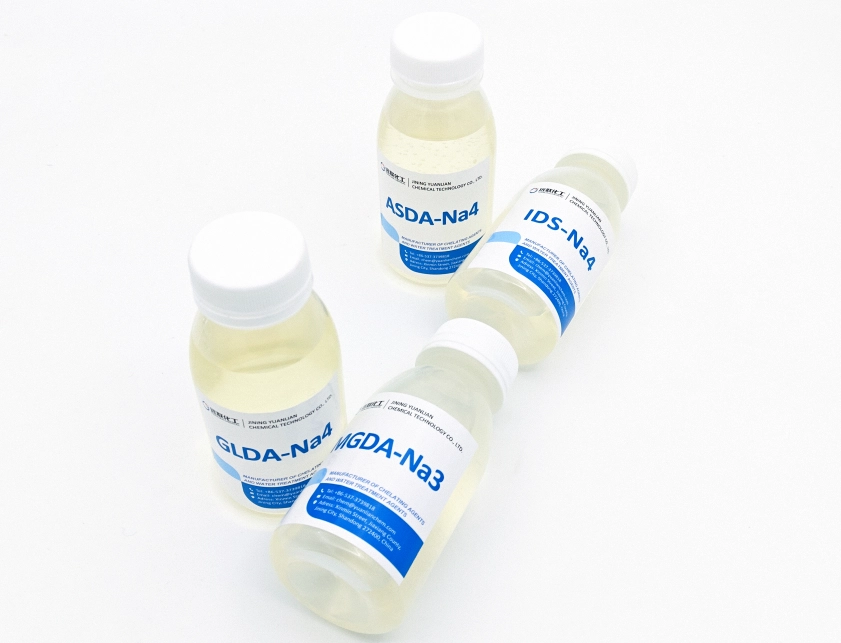
GLDA (Tetrasodium Glutamate Diacetate): Primarily bio-based (often derived from sugar beet), it offers excellent solubility and high performance in personal care and household cleaning.
MGDA (Methylglycinediacetic Acid): Known for its rapid biodegradability and stellar performance in automatic dishwashing (ADW) detergents as a phosphate replacement.
Comparison Table: Mainstream Chelating Agents
| Agent | Biodegradability | Source | Primary Use |
| EDTA | Poor | Synthetic | Industrial cleaning, metal finishing |
| MGDA | Excellent | Partially Bio-based | Dishwashing, I&I cleaning |
| GLDA | Excellent | Mostly Bio-based | Personal care, Green detergents |
| PASP | Superior | Bio-based | Water treatment, Agriculture |
Future Trends: The Rise of Biopolymers and Circular Chemistry
The future belongs to chelating agents that offer Zero Environmental Footprint. We are seeing a massive shift toward:
PASP (Sodium Polyaspartate): A biodegradable functional polymer that mimics the proteins found in oyster shells. It’s an exceptional scale inhibitor and dispersant.
IDS (Iminodisuccinic Acid): A medium-strength chelator that breaks down completely into harmless components.
Smart Formulations: Moving away from "one-size-fits-all" to customized blends that reduce chemical waste.
Why Choose Yuanlian Chemical for Your Chelating Solutions?
As a leader in the R&D and production of green chemical auxiliaries, Yuanlian Chemical bridges the gap between high-performance industrial needs and European environmental standards.
Sustainability First: Our focus on PASP-Na and other green chelating agents ensures your formulations comply with the strictest ecological labels.
Global Quality, Local Compliance: Our products are designed to meet the rigorous demands of the European market, ensuring safety, stability, and efficiency.
Innovation-Driven: With an annual capacity of 12,000 tons, we provide the scale and technical support needed for global supply chains.
Whether you are looking to replace EDTA in your textile process or seeking a biodegradable stabilizer for liquid fertilizers, Yuanlian Chemical provides the molecular precision your brand deserves.
Optimize Your Formula Today
Are you ready to transition to a greener, more efficient chemical profile? Contact Yuanlian Chemical’s technical team to receive a comprehensive comparison of biodegradable alternatives for your specific application.
Latest News



Need help
Prefer speaking with a human to filling out a form? call corporate office and we will connect you with a team member who can help.