06 May
The Ultimate Guide to EDTA Alternatives: Why Trisodium Ethylenediamine Disuccinate (EDDS) is the Gold Standard for Green Chemistry
In the 2026 chemical landscape, the phase-out of traditional aminopolycarboxylates—specifically EDTA (Ethylenediaminetetraacetic acid)—is no longer a trend, but a regulatory and environmental mandate. While EDTA has served as the industry workhorse for decades, its environmental persistence and role in heavy metal remobilization have rendered it incompatible with modern ESG (Environmental, Social, and Governance) standards.
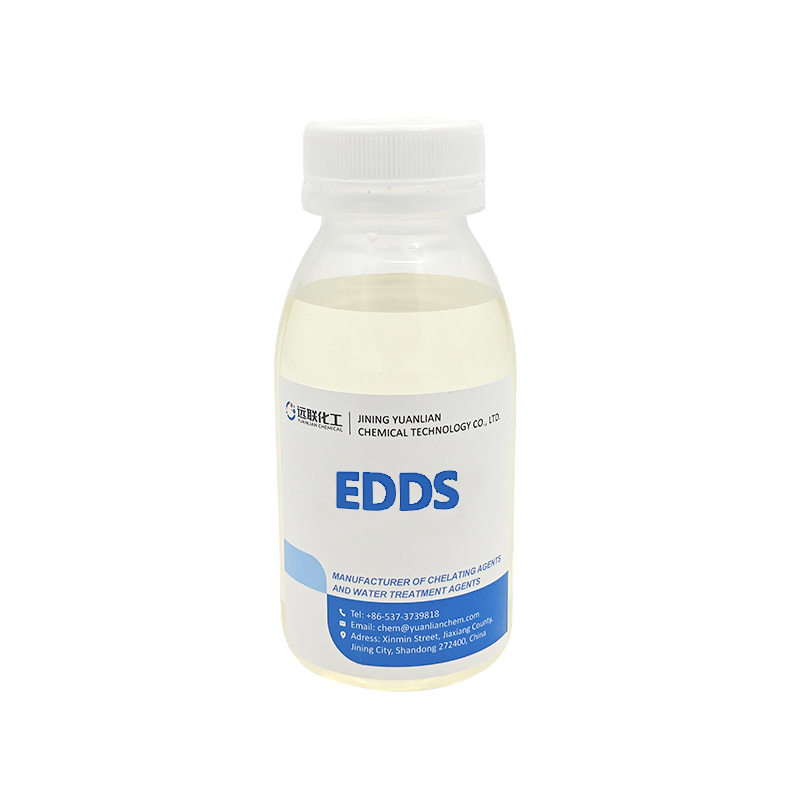
Among the various contenders for the "Green Chelate" throne, Trisodium Ethylenediamine Disuccinate (EDDS) has emerged as the clear victor. This guide explores the chemical superiority, environmental benefits, and industrial versatility that make EDDS the gold standard for sustainable chemistry.
1. The EDTA Legacy: Why the Industry is Moving On
EDTA's strength is its greatest weakness. Its exceptional stability means it does not degrade in wastewater treatment plants or natural aquatic environments.
Environmental Persistence: EDTA is classified as a persistent organic pollutant in many jurisdictions, leading to accumulation in the global water cycle.
Metal Remobilization: Because it does not break down, EDTA "scavenges" heavy metals from river sediments, carrying toxic lead and cadmium into drinking water sources.
Regulatory Pressure: REACH (Europe) and other global frameworks have placed EDTA under intense scrutiny, driving brands to find "Clean Label" alternatives to protect their market access.
2. The EDDS Breakthrough: A Biomimetic Solution
EDDS is a structural isomer of EDTA, but with a fundamental difference: it is a naturally occurring amino acid derivative.
The [S,S]-Isomer Advantage
While there are three isomers of EDDS, only the [S,S]-isomer is readily and completely biodegradable. Yuanlian Chemical utilizes a specialized biosynthetic pathway to ensure that our EDDS-Na3 is composed of the high-purity [S,S] form, ensuring maximum environmental compliance without sacrificing chelating power.
Ready Biodegradability
Under OECD 301B testing, [S,S]-EDDS achieves over 80% biodegradation within 20 days. It breaks down into simple, non-toxic components, ensuring that your formulation’s lifecycle ends safely at the wastewater treatment plant.
-EDDS]
3. Comparative Performance: Chelating Strength ($Log K$)
A common misconception is that "green" means "weak." The stability constants ($Log K$) of EDDS demonstrate its high affinity for the transition metals most critical to industrial processes:
| Metal Ion | EDTA (LogK) | EDDS (LogK) | Industrial Significance |
| Copper ($Cu^{2+}$) | 18.8 | 18.4 | Prevents oxidation in cosmetics/hair care. |
| Zinc ($Zn^{2+}$) | 16.5 | 13.5 | Essential for micronutrient delivery in Ag. |
| Iron ($Fe^{3+}$) | 25.1 | 22.0 | Stabilizes bleaches and prevents staining. |
| Calcium ($Ca^{2+}$) | 10.7 | 4.6 | Critical for hard water management. |
While EDTA is slightly stronger on calcium, EDDS is exceptionally effective at sequestering transition metals ($Cu, Zn, Fe, Mn$). This makes it a superior "preservative booster" in personal care and a premier "bleach stabilizer" in laundry detergents.
4. Primary Industrial Applications for 2026
A. Personal Care and Cosmetics
In the "Blue Beauty" movement, EDDS is the preferred chelant. It prevents the catalytic oxidation of fragrances and oils, boosting shelf life while maintaining a non-irritating, eco-friendly profile for sensitive skin formulations.
B. High-Performance Detergents
EDDS-Na3 is the secret to high-performance, phosphorus-free laundry pods. It prevents the "redeposition" of dirt and stabilizes percarbonate bleaches, ensuring that whites stay bright even in cold-water cycles—a key 2026 energy-saving trend.
C. Precision Agriculture
In soil remediation and micronutrient fertilizers, EDDS acts as a "smart" carrier. It delivers essential metals to the plant and then biodegrades, preventing the unwanted leaching of heavy metals into deeper soil layers.
5. Strategic ROI: The Economics of Switching
The transition to EDDS-Na3 offers a dual return on investment:
Regulatory Future-Proofing: Eliminates the risk of sudden EDTA bans or "Hazardous" labeling requirements.
Brand Equity: Allows products to carry the EU Ecolabel, Nordic Swan, or EPA Safer Choice seals, which are proven to increase consumer conversion rates in 2026.
Performance Efficiency: In many transition-metal-sensitive formulas, EDDS can be used at lower dosages than organic acids like citrates or gluconates to achieve the same stability.
Conclusion: Lead the Change with Yuanlian Chemical
The evidence is undeniable: Trisodium Ethylenediamine Disuccinate (EDDS) provides the most robust pathway for industries to achieve high-performance results within a sustainable framework. As a leading producer of high-purity [S,S]-EDDS, Yuanlian Chemical is committed to helping global brands navigate the transition from legacy synthetics to the gold standard of green chemistry.
Latest News


Need help
Prefer speaking with a human to filling out a form? call corporate office and we will connect you with a team member who can help.