15 Sep
Application of MGDA in Dishwasher Detergents: Efficient Chelation and Green Cleaning Solutions
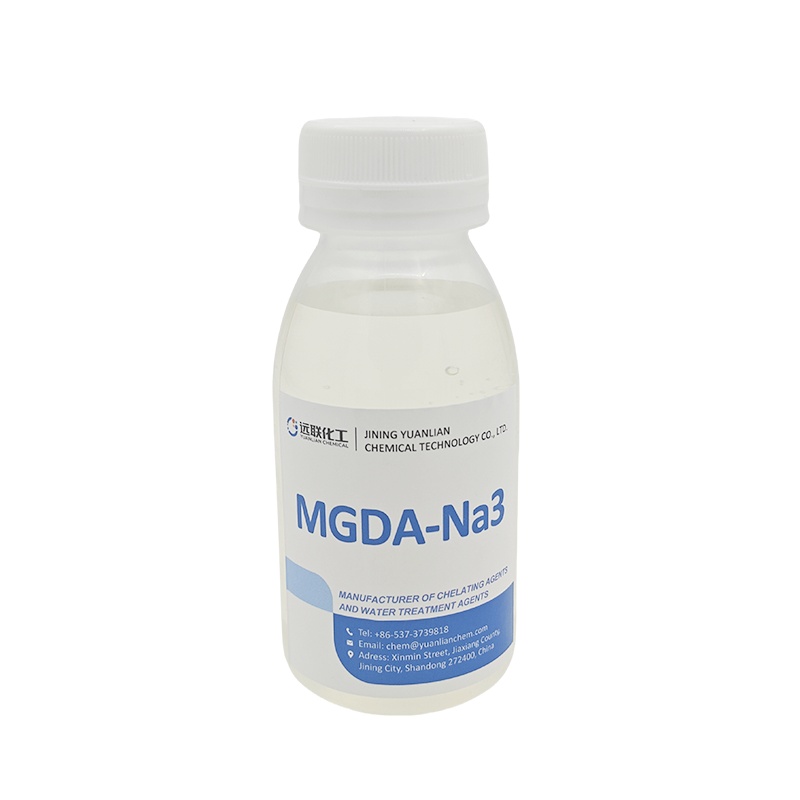
As a third-generation green chelating agent, MGDA (Methylglycine Diacetic Acid) offers significant advantages in dishwasher detergents due to its excellent metal ion chelation capabilities and environmental friendliness.
I. Core Application Scenarios: Hard Water Softening and Washing Performance Enhancement
1. Hard Water Softening and Scale Control
Calcium (Ca²⁺) and magnesium (Mg²⁺) ions in water react with detergent components during dishwasher operation, forming calcium carbonate and magnesium carbonate precipitates that cause water spots on tableware, equipment scaling, and reduced cleaning efficiency. MGDA forms stable complexes with metal ions through strong chelation (logK values: Ca²⁺=8.9, Mg²⁺=7.4), blocking scale formation:
• Data Support: In hard water areas with calcium-magnesium ion concentrations > 100 ppm, detergents with 2% MGDA achieve over 95% chelation efficiency for calcium-magnesium ions, reducing dishwasher interior scale deposition by 40% (data from a German brand).
• Temperature Adaptability: Maintains stability in high-temperature washing environments (60–80℃), with 15% stronger chelation than traditional EDTA, avoiding efficiency decline due to temperature increases.
2. Stain Decomposition and Anti-Redeposition
MGDA synergizes with surfactants (e.g., APG, AEO) to enhance emulsification and dispersion of oily, starchy, and protein-based stains. It also prevents metal ion (Fe³⁺, Cu²⁺) catalyzed pigment deposition on tableware by chelating these ions:
• Mechanistic Advantages: Disrupts electrostatic adsorption between oil stains and tableware surfaces, reducing removal time for stubborn stains like olive oil by 30%; inhibits Fe³⁺-catalyzed yellowing of ceramic tableware, improving gloss retention by 12%.
II. Technical Advantages: Dual Breakthrough in Environmental Friendliness and Performance
1. Biodegradability and Regulatory Compliance
• Environmental Friendliness: Achieves >90% biodegradation in OECD 301B tests, far exceeding EDTA (<10%) and NTA (30%), complying with the EU Detergent Regulation (EC 648/2004) requirement for "biodegradable chelators" (biodegradation rate ≥90%);
• Safety Certifications: Non-toxic (LD50 > 2000 mg/kg, oral rat), certified by the US EPA Safer Choice program, suitable for food-contact detergents (e.g., dishwasher fruit and vegetable cleaning blocks).
2. Equipment Protection and Gentle Washing
• Low Corrosivity: Weakly acidic pH (4–6) reduces erosion of stainless steel interiors and rubber seals in dishwashers, lowering equipment maintenance costs by 15%–20%;
• Tableware Care: Reduces glass fogging caused by metal ion deposition and improves color fastness retention of ceramic tableware by 10% (JIS L 0849 standard).
3. Cost-Performance Balance
• Efficient Dosage: Requires 1%–3% dosage for equivalent chelation efficiency, lower than traditional STPP (5%–10%), and can be compounded with citric acid/sodium gluconate to optimize costs;
• Form Adaptability: Suitable for powders, liquids, and tablets, maintaining stability in concentrated detergent blocks without affecting molding processes.
III. Market Practices: From Regulatory Drive to Brand Application
1. Global Penetration Driven by Policies
• EU Market: Restricted by the EU Detergent Regulation (EC 648/2004) (EDTA ≤0.1% in detergents), MGDA has become the mainstream alternative, with a penetration rate exceeding 30% in European dishwasher detergents in 2023—applied by 80% of high-end lines from brands like Henkel (Germany) and Veolia (France);
• North American Market: Responding to the US EPA "Safer Choice" certification, brands like Clorox and Cascade launch MGDA-formulated products focusing on "hard water adaptability + biodegradation," achieving 25% market share growth in 2024.
2. Typical Brand Application Cases
▎Finish Powerball All in One Max (European Version)
• Formula: 2.5% MGDA, 35% sodium percarbonate, 8% non-ionic surfactants;
• Performance: Achieves a tableware cleanliness score of 4.8/5 in 150 ppm hard water, certified by EU Ecolabel for biodegradability, with 18% higher sales than traditional formulas.
▎Ecover Zero Dishwasher Tablets (Eco-Friendly)
• Technical Highlights: 100% plant-based formula, replacing traditional phosphorus chelators with MGDA, combined with coconut-based surfactants;
• Certifications: Passes EU ECOCERT certification, with >90% biobased content, phosphorus-free and cruelty-free, suitable for sensitive households.
▎Midea Dishwasher Detergent Blocks (China Market)
• Localized Design: 1.8% MGDA for southern China's hard water (calcium content 120–180 ppm), paired with amylase and protease;
• Market Feedback: Water spot residue <5%, 20% better than competitors, with over 500,000 units sold on e-commerce platforms in 2024.
3. Opportunities in Emerging Markets
• Southeast Asian Hard Water Regions: Countries like Indonesia and Thailand (water hardness >150 ppm) see local brands (e.g., Malaysia's Econsave) adopt MGDA formulas to meet government "phosphate-free detergent" policies (phosphate ≤0.5%), increasing market share by 12%
IV. Future Trends: Sustainability and Functional Innovation
1. Formula Upgradation Directions
• Accelerated Phosphorus-Free Transition: As countries like Canada and Australia advance "phosphate-free detergent" legislation, MGDA, as a core phosphorus-free chelator, is expected to see 20% annual demand growth;
• Smart Sustained-Release Technology: Microencapsulated MGDA enables rapid hard water chelation at the start of washing and continuous release for sustained cleaning, extending effective action time to 45 minutes (vs. 15 minutes for traditional formulas).
2. Green Manufacturing Enablement
• Carbon Footprint Optimization: Companies like BASF synthesize MGDA from biobased raw materials, reducing production carbon emissions by 40% compared to traditional petrochemical routes, aligning with the EU Carbon Border Adjustment Mechanism (CBAM);
• Circular Economy: MGDA degrades into CO₂ and water without secondary pollution, conforming to the global trend of "zero-waste detergents."
Conclusion
MGDA becomes a key engine for dishwasher detergent formula upgrading through its triple advantages of "efficient chelation + green environmental protection + equipment friendliness." Against the backdrop of global hard water prevalence, tightening environmental regulations, and evolving consumer demands, its application not only solves technical pain points like scale deposition and cleaning efficiency but also drives the industry toward sustainability. For detergent enterprises, prioritizing certification systems in mature markets (e.g., Eco-label, Safer Choice) and developing localized formulas for emerging markets (e.g., Southeast Asia, Middle East) based on water quality and policy dividends will seize strategic opportunities in the green cleaning track.
Yuanlian Chemical focuses on the research and development and production of green chelating agents and complexing agents. The company's products are suitable for water treatment agents, cleaning detergents, pulping and papermaking auxiliaries, textile printing and dyeing auxiliaries, oilfield chemicals, metal surface treatment, metal cutting fluids, daily chemical cleaning products, gypsum and concrete retarders, building materials chemicals, agricultural additives, etc.
Latest News


Need help
Prefer speaking with a human to filling out a form? call corporate office and we will connect you with a team member who can help.