15 Sep
Laundry Revolution: GLDA – Ushering in a New Era of Green Efficiency for Detergents
Amid the global shift toward sustainable development in the daily chemical industry, tetrasodium glutamate diacetate (GLDA), as a new generation of bio-based chelating agents, is redefining the cleaning standards for detergents with its exceptional performance and eco-friendly properties. This innovative ingredient, derived from plant fermentation processes, not only addresses the environmental pain points of traditional chelating agents but also achieves a dual leap in stain removal power and ecological value through technological breakthroughs, emerging as a core innovative force in products such as laundry detergents, dishwasher cleaners, and dishwashing liquids.
I. Precision Chelation: Solving the Problem of Excessively Hard Water
GLDA's molecular structure endows it with strong metal ion chelating ability, boasting a calcium chelating value of up to 294mg/g, 1.5 times that of the traditional chelating agent EDTA. During washing, it can quickly capture metal ions such as calcium, magnesium, and iron in water, preventing them from combining with surfactants in detergents to form soap scum. Experimental data shows that laundry detergent containing 0.5% GLDA increases stain removal power by 25% in 150ppm hard water, with the removal rate of stubborn stains like tea and coffee stains improving by 40%. This characteristic makes GLDA particularly important in areas with hard water. A consumer survey in a northern city revealed that households using GLDA-containing laundry detergent saw a 70% reduction in clothing yellowing.
GLDA's high-temperature stability (molecular structure remains stable at 100°C) further expands its application scenarios. In dishwasher detergents, GLDA can effectively prevent the deposition of calcium and magnesium ions at high temperatures. After a food processing plant adopted a GLDA-containing cleaning agent, the equipment scaling rate decreased by 60%, and maintenance costs dropped by 40%. Its stability across a wide pH range (2-12) also makes it suitable for various detergent formulations, from acidic to strongly alkaline.
II. Synergistic Enhancement: Restructuring Detergent Formulation Logic
The value of GLDA lies not only in its individual performance but also in its synergistic effect with other ingredients. In laundry detergents, when compounded with bioenzymes such as proteases and lipases, it can relieve the inhibitory effect on enzymes by chelating metal ions, increasing the enzyme activity retention rate by 30% and significantly enhancing the removal of blood and oil stains. In dishwashing liquids, the compound of GLDA and surfactants can reduce the critical micelle concentration, decreasing surfactant usage by 15%; meanwhile, it inhibits microbial growth by chelating copper and iron ions, reducing preservative dosage by 60%.
This synergistic effect is particularly prominent in industrial cleaning agents. After a car manufacturing enterprise added GLDA to the cleaning fluid for metal parts, the emulsification rate of the cleaning agent on oil stains increased by 50%; at the same time, it prevented equipment corrosion by chelating metal ions, extending the service life of the production line. Experiments show that when GLDA is compounded with fungicides, it can increase fungicide permeability by 4 times and improve killing efficiency by 4 times, thereby reducing fungicide usage by 60%.
III. Eco-Pioneer: Leading the Green Upgrade of Detergents
GLDA's eco-friendly properties make it a core driver of industry transformation. 48% of its production raw materials come from renewable crops such as corn and wheat, with a biodegradation rate exceeding 80% (OECD 301D test), far higher than EDTA's less than 10%. The EU's Biocidal Products Regulation has listed GLDA as a recommended ingredient, and China's Green Product Evaluation Standard for Detergents has explicitly designated it as a green raw material. An international brand launched a "phosphate-free formula" dishwasher detergent, which obtained ECOCERT certification due to the use of GLDA, with sales growing by 120% within six months of launch.
In the wave of sustainable development, GLDA is driving the detergent industry to shift from "function first" to "balancing function and environmental protection". A daily chemical giant's "zero-carbon series" laundry detergent, by using GLDA and optimizing production processes, reduced its carbon footprint by 35%, becoming the world's first detergent product certified by the Science Based Targets initiative.
IV. Market Trends: Industrial Transformation from Substitution to Leadership
The global GLDA market reached $322 million in 2024, with the detergent sector accounting for over 40%. It is projected to exceed $479 million by 2033, with a compound annual growth rate (CAGR) of 4.7%. Behind this growth is the dual drive of policies and consumer demand: the EU's Detergent Regulation explicitly restricts the use of STPP, and China's 14th Five-Year Plan for Ecological and Environmental Protection lists GLDA as a key promoted technology. A consumer survey shows that 78% of users with strong environmental awareness prefer detergents containing GLDA.
In brand practices, GLDA is becoming a key to differentiated competition. A domestic brand launched a "plant enzyme laundry detergent", which, through the compound of GLDA and plant extracts, maintained high-efficiency stain removal while achieving a 50% higher biodegradation rate than traditional products, successfully entering the high-end market. Another international brand's "baby-specific dishwashing liquid", which reduced preservative dosage by using GLDA, obtained the EU Ecolabel certification with a premium rate of 30%.
Conclusion: A Paradigm Shift from Cleaning to Sustainability
The emergence of GLDA marks a leap in the detergent industry's philosophy from "conquering nature" to "coexisting with nature". This innovative ingredient, derived from plants and returning to nature, not only solves the cleaning problems caused by water hardness but also redefines the value boundaries of detergents with its eco-friendly properties. When every wash embodies the wisdom of nature, GLDA is reshaping the future of the detergent industry – it is not just a tool for stain removal, but a bridge connecting technology and ecology, leading the industry toward a greener and more efficient new era. On the journey of sustainable development, GLDA is writing a new chapter for the detergent industry, making cleaning and environmental protection no longer a choice, but an inevitable answer.
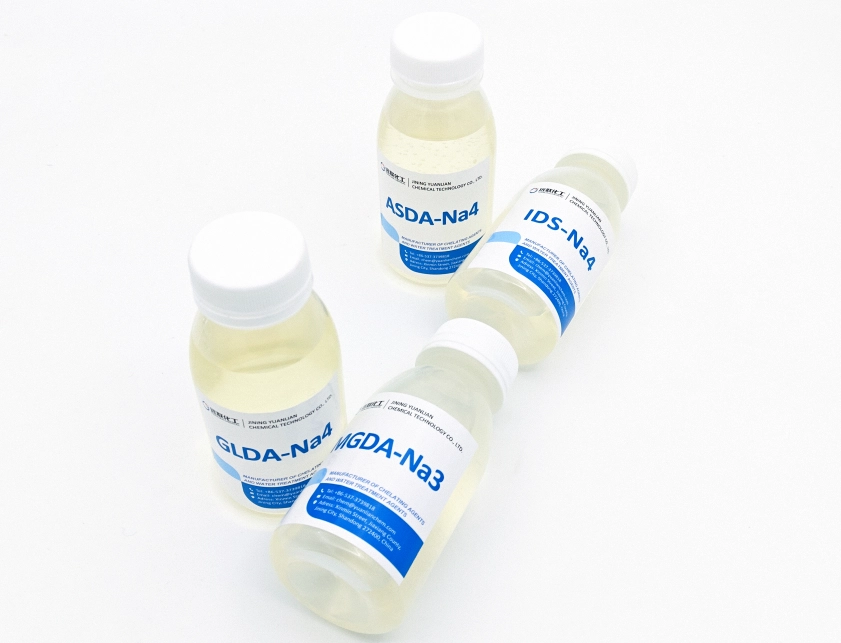
GLDA produced by Jining Yuanlian Chemical has reshaped the value standards of the detergent industry with its high efficiency, cleaning, synergistic efficiency, and environmental sustainability, and has pushed the industry from "conquering nature" to "coexisting with nature", opening a new era of green and high efficiency.
Latest News


Need help
Prefer speaking with a human to filling out a form? call corporate office and we will connect you with a team member who can help.