03 Aug
EDDS-Na3 for Personal Care: The Chelating Agent That Fixes Iron Problems Without Touching Your Formula's Mineral Balance
Personal care formulators spend an unreasonable amount of time fighting metal ions. Iron in tap water darkens shampoo colours over shelf life. Copper traces from storage tanks accelerate fragrance oxidation. Calcium and magnesium kill foam and leave residue on hair. The standard fix throws in EDTA and hopes for the best. But EDTA grabs everything — including zinc and magnesium you might want to keep in the formula. EDDS-Na3 for personal care formulations takes a more targeted approach. Its INCI name, Trisodium Ethylenediamine Disuccinate, appears on cosmetic ingredient labels across Europe and North America without raising the regulatory questions that follow EDTA.
The molecular formula C10H13N2Na3O8 puts EDDS in the same structural family as EDTA. But the difference in biodegradability changes everything for brands pursuing clean beauty positioning or meeting retailer restricted substance lists.
Why Iron Selectivity Changes the Game in Personal Care
Most chelating agents work like a wide-net fishing operation. They catch iron, yes, but they also pull in calcium, magnesium, zinc, copper, and manganese indiscriminately. In a shampoo or body wash, this broad-spectrum binding can strip beneficial minerals from the formula or create unintended interactions with other active ingredients.
EDDS chelates iron selectively. It binds ferric and ferrous ions even when calcium and magnesium saturate the surrounding solution. This matters in three specific ways for personal care products.
First, iron causes colour shift in formulations over time. A shampoo that starts pale yellow can turn dark amber within months if dissolved iron catalyses oxidation reactions. EDDS locks up the iron before these reactions start, protecting product appearance through the full shelf life.
Second, free iron accelerates the breakdown of fragrance compounds. The olfactory profile of a shower gel at month six should match what the consumer smells at week one. Iron chelation helps deliver that consistency.
Third, iron feeds microbial growth in water-rich formulations. By depriving microorganisms of this essential nutrient, EDDS creates an environment where preservatives work more effectively. The practical outcome: many formulators report being able to reduce preservative concentrations when EDDS is part of the chelating system. Lower preservative levels mean shorter INCI lists and fewer potential irritants — both commercial advantages in the current market.
Two Forms for Different Product Types
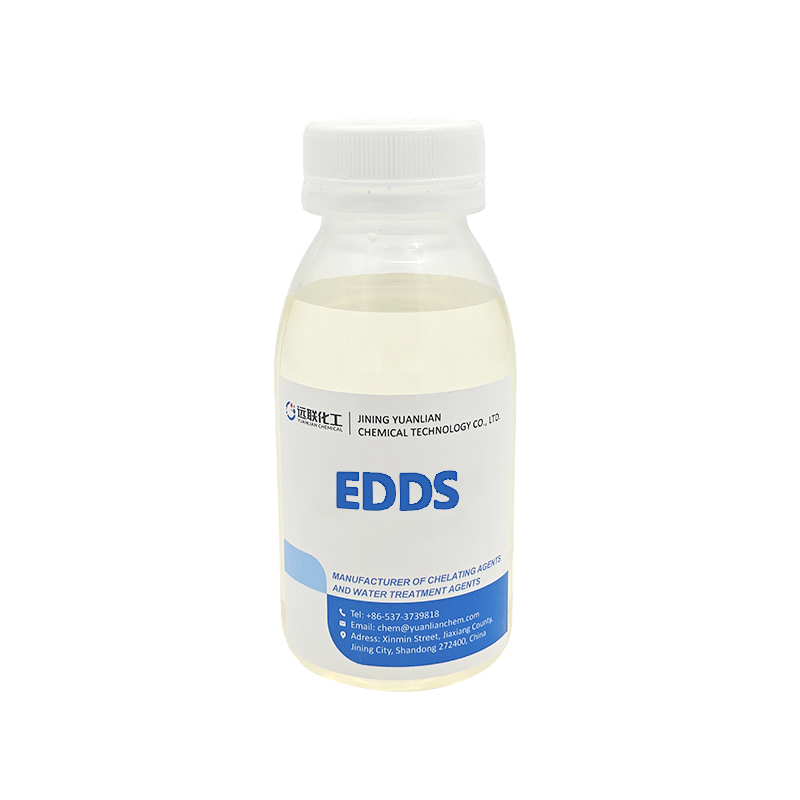
EDDS-Na3 ships in two physical formats that match the two main categories of personal care manufacturing. The liquid grade carries 37 per cent minimum active content as a colourless to light yellow solution. Its density stays at or above 1.20 grams per cubic centimetre at 20 degrees Celsius. Shampoo, shower gel, and liquid soap production lines handle this form without additional dissolution steps. The pH of 9.0 to 10.0 integrates smoothly into most surfactant-based formulations.
The powder grade delivers 80 per cent minimum active content as a white solid. Its apparent density of approximately 0.4 grams per cubic centimetre makes it suitable for powdered bath products, solid shampoo bars, and effervescent bath formulations where liquid ingredients complicate the manufacturing process. Both forms carry the same INCI name and chemical profile, so switching between liquid and powder during scale-up requires only normal pH adjustment.
The recommended use level stays consistent across personal care applications at 0.3 to 1.0 per cent of the final formulation. Most products find their optimal chelation balance within this range during stability testing.
Specific Personal Care Applications
Shampoos and Hair Cleansers
Hard water minerals deposit on hair during every wash cycle. Over time, this buildup makes hair feel rough, look dull, and resist colour treatment. EDDS in the shampoo formula binds calcium and iron from the rinse water, keeping these minerals in solution rather than on the hair shaft. Users notice softer, shinier hair without the formulator needing to increase surfactant loading or add silicone deposition agents to mask the problem.
Shower Gels and Body Washes
The combination of warm water temperature and metal ion catalysis creates ideal conditions for fragrance degradation in body wash formulations. EDDS intercepts the metal catalysts that drive this process. The result: fragrance stays true through the product lifecycle, reducing the need for fragrance overages that inflate raw material costs.
Hair Dyes and Oxidative Colour Products
Hydrogen peroxide serves as the developer in most permanent and demi-permanent hair colour systems. Trace metals trigger premature peroxide decomposition, which reduces colour development and can create uneven results across different sections of the hair. EDDS stabilises the peroxide by chelating these metal catalysts. The peroxide stays active through the full processing time, giving more predictable and uniform colour results.
Facial Cleansers and Sensitive Skin Formulations
Products marketed for sensitive skin need the gentlest possible preservative system. The iron-chelating action of EDDS creates preservative synergy that lets formulators reduce the concentrations of conventional preservatives. Shorter INCI lists and fewer potential irritants directly support the claims that sensitive skin products make to their target consumers.
Compatibility and Formulation Notes
EDDS works alongside common personal care surfactants without phase separation or viscosity changes. Anionic, nonionic, and amphoteric surfactant systems all show good compatibility in standard stability testing. For formulators building phosphate-free and sulphate-free product lines, EDDS fits cleanly into the ingredient philosophy without forcing compromises elsewhere in the formulation.
When blended with other chelating dispersants, EDDS can extend the metal ion coverage of the overall chelating system. A small amount of EDDS targeting iron alongside a broader-spectrum chelator for calcium and magnesium often gives better overall stability than either agent used alone at a higher concentration.
The INCI directory entry for Trisodium Ethylenediamine Disuccinate on the Personal Care Products Council website provides the full regulatory classification and permitted use concentrations for cosmetic applications globally.
Storage and Shelf Life
Both liquid and powder forms require storage in a cool, dry place away from direct light. Containers should stay sealed when not in active use to prevent moisture uptake in the powder grade. The 12-month shelf life from the date of manufacture allows standard inventory management without special handling requirements.
Standard packaging includes 25-kilogram drums for R&D and pilot batches, 250-kilogram drums for mid-scale production, and 1,250-kilogram IBC containers for full manufacturing volumes.
Request a free evaluation sample at [email protected] or call +86-537-3739818. Include your target application and formulation type when you reach out. Our application lab can provide starting-point formulations and compatibility guidance for your specific product category.
Latest News




Need help
Prefer speaking with a human to filling out a form? call corporate office and we will connect you with a team member who can help.