03 Aug
EDDS Biodegradable Chelating Agent: A Structural Isomer of EDTA That Actually Breaks Down
Most formulators hear "isomer of EDTA" and immediately worry about the same biodegradability problem. EDDS flips that assumption on its head. As an EDDS biodegradable chelating agent, it shares EDTA's molecular backbone. But it takes a different structural path. That path lets microorganisms break the molecule down in weeks rather than decades. For personal care brands and detergent manufacturers facing tightening EU regulations, this difference matters more than most technical data sheet comparisons suggest.
The molecule carries CAS number 178949-82-1 and goes by the INCI name Trisodium Ethylenediamine Disuccinate. Its formula reads C10H13N2Na3O8. On paper, the structure looks close enough to EDTA that you could mistake one for the other. In practice, the biodegradability gap between them changes which formulations can carry an eco-label and which cannot.
How EDDS Differs from EDTA Where It Counts
EDTA binds metal ions broadly. It grabs calcium, magnesium, iron, copper, and zinc with roughly equal enthusiasm. This broad-spectrum approach works fine in many applications. But it creates a problem when you want to target specific metals without tying up others. EDDS solves this through selective iron chelation. It binds iron even when calcium and magnesium ions saturate the solution. This selectivity opens up formulation possibilities that EDTA cannot deliver.
The stability profile tells a similar story of practical differences. EDDS holds up under high temperatures and strong alkaline conditions. This thermal and pH tolerance makes it reliable in hot-fill manufacturing lines. It also works well in cleaning products that operate at pH levels where many chelating agents lose activity.
Property | EDDS-Na3 | EDTA | Practical Impact |
Biodegradability | Readily biodegradable (OECD) | Persistent (<10% in 28 days) | EU Ecolabel eligible vs restricted |
Iron selectivity | Binds Fe even with Ca/Mg present | Non-selective | Preservative boost in personal care |
Heavy metal chelation (Cu, Fe, Mn, Ni) | Comparable to EDTA | Comparable | Direct replacement possible |
Phosphorus content | Zero | Zero | No eutrophication risk |
Chlorine content | Zero | Zero | Safe for chlorine-sensitive formulations |
pH (as supplied) | 9.0-10.0 | 10.5-11.0 | Gentler handling |
Two Product Forms for Different Formulation Needs
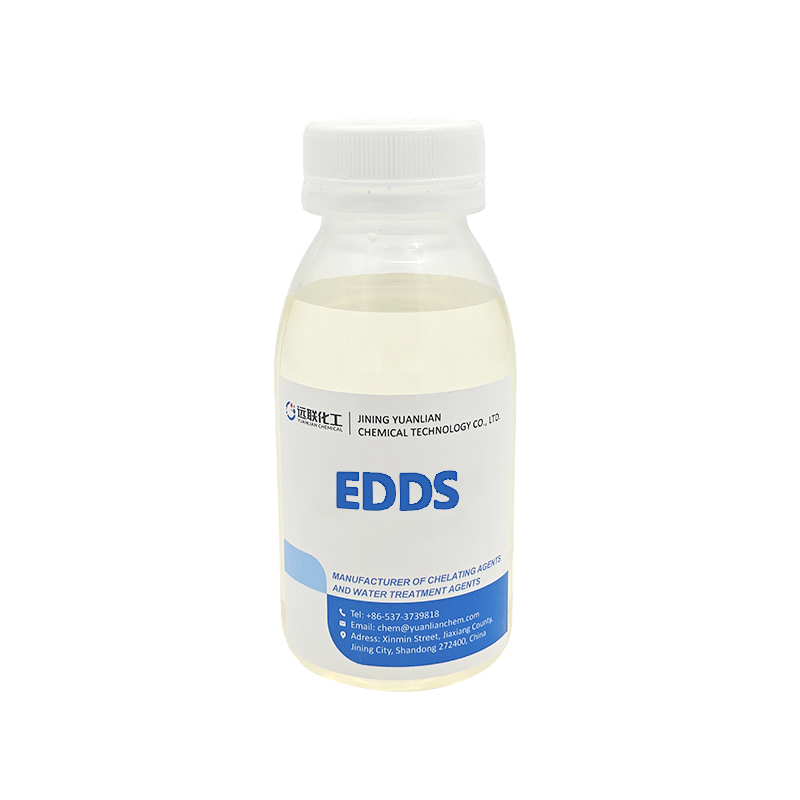
EDDS-Na3 comes in two physical forms that cover most industrial and consumer product requirements. The liquid grade ships as a colourless to light yellow solution at 37 per cent minimum active content. Its density runs at or above 1.20 grams per cubic centimetre at 20 degrees Celsius. This form integrates easily into liquid detergent and personal care manufacturing lines.
The powder grade delivers 80 per cent minimum active content as a white solid. Its apparent density measures about 0.4 grams per cubic centimetre. Powder form makes sense for solid detergent tablets, powder laundry formulations, and applications where shipping water across continents adds unnecessary logistics costs. For export markets in Southeast Asia and Europe, the powder grade often proves more economical on a delivered-cost basis despite a higher unit price per kilogram of active content.
Both forms share the same pH range of 9.0 to 10.0 in solution, so switching between liquid and powder in a formulation requires minimal pH adjustment work. The recommended use level sits between 0.3 and 1.0 per cent across most applications. At these low inclusion rates, the cost contribution to the finished formulation stays manageable even for price-sensitive product categories like mass-market laundry detergents.
Where EDDS Delivers the Strongest Performance
The application range for EDDS stretches wider than most formulators initially expect. Personal care represents the largest current market, but the molecule earns its place in several other segments where its iron selectivity and stability create clear advantages.
Personal Care and Cosmetics
Shower gels, shampoos, facial cleansers, and hair dyes all share a common enemy: metal ions in tap water. These ions react with surfactants, reduce foam quality, and can trigger oxidative degradation of fragrance and colour ingredients. EDDS binds these troublemakers without stripping beneficial minerals from the formula itself. The INCI registration makes it straightforward to list on cosmetic ingredient labels for the European and North American markets.
Detergents and Household Cleaners
Laundry and dishwashing products need chelating agents that work across a range of water hardness levels. The iron selectivity of EDDS provides an extra benefit here. Iron stains on fabrics and dishes respond to chelating agents that can pull iron out of fibre and surface pores. Standard chelating agents often get distracted by calcium before they reach the iron. EDDS stays on target.
Hydrogen Peroxide Bleaching Stabilisation
Hydrogen peroxide breaks down faster when trace metals catalyse its decomposition. Adding EDDS to a peroxide bleaching formulation binds these metal catalysts and extends the active life of the peroxide. This stabilisation effect proves especially valuable in textile processing, pulp and paper bleaching, and hard surface disinfection products where peroxide activity determines cleaning or whitening performance.
Silica Scale Prevention
When used together with sodium silicate in cleaning formulations, EDDS reduces silica scale formation on equipment surfaces. This combination addresses a specific pain point in industrial cleaning operations where silicate-based builders leave behind deposits that require costly downtime for removal. The mechanism involves EDDS disrupting the polymerisation of silicate species before they can form hard scale, keeping the cleaning system running longer between maintenance intervals.
Electronics and Specialty Chemical Applications
The electronics industry demands chelating agents that leave zero residue after rinsing. Trace metal contamination on circuit boards or semiconductor surfaces causes reliability failures that cost far more than the cleaning chemicals themselves. EDDS serves in electronic-grade cleaning formulations where its biodegradability provides an additional benefit. Wastewater from electronics manufacturing faces strict discharge limits, and a chelating agent that mineralises in the treatment plant avoids the compliance issues that EDTA creates.
Compatibility with Other Chelating Agents
EDDS does not need to work alone. Formulators often pair it with other chelating dispersants to cover a broader spectrum of metal ions or to fine-tune performance for specific water hardness profiles. The molecule plays well with phosphonate-free builder systems, giving formulators more flexibility when designing products for markets with phosphate restrictions.
The European Chemicals Agency (ECHA) database provides the full regulatory profile and safety assessment for EDDS under REACH, including biodegradation test results and environmental fate data.
How to Source EDDS-Na3
Standard packaging options cover small-scale lab trials through full production volumes. The 25-kilogram drum serves R&D and pilot batch needs. The 250-kilogram drum and 1,250-kilogram IBC options fit production-scale manufacturing. Storage requires a cool, dry place away from direct light, with containers kept sealed. The 12-month shelf life from the date of manufacture gives adequate time for inventory turnover in most supply chains.
Always request the Technical Data Sheet, Safety Data Sheet, and batch-specific Certificate of Analysis before placing an order. A supplier who cannot produce all three documents on request should raise a red flag regardless of the price quoted.
Contact [email protected] or call +86-537-3739818 to request a free evaluation sample and discuss your specific formulation requirements. Samples of 200 to 500 grams ship for laboratory testing, enough material to complete a full bench-scale formulation trial.
Latest News




Need help
Prefer speaking with a human to filling out a form? call corporate office and we will connect you with a team member who can help.