10 Jul
Designing Bio-Based Formulations: The Technical Advantages of GLDA-Na4
Consumer demand for "natural," "mild," and "non-irritating" labels has fundamentally changed product development in home and personal care over the past five years. On European retail shelves, the number of products carrying "EDTA-free" claims increased by roughly 40% between 2023 and 2025. At the same time, regulatory assessments of traditional synthetic chelating agents have tightened—EDTA's persistence in the environment has made it increasingly unwelcome on major European retailers' procurement lists.
Formulation engineers face a practical set of problems. Remove EDTA and phosphates, and how do you maintain detergency in hard water? How do you reduce traditional preservative usage without compromising microbiological safety? How do you balance cleaning efficiency and skin compatibility in mild baby care formulations?
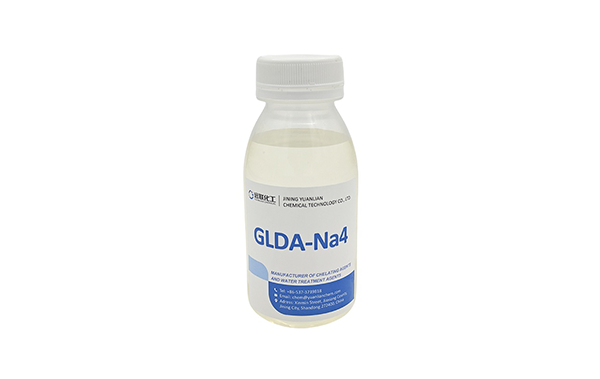
GLDA-Na4 (tetrasodium glutamate diacetate) offers a viable technical path. Derived from plant-based L-glutamic acid, it balances chelation performance, environmental compliance, and formulation compatibility.
Crucial Performance Features of GLDA-Na4 in Mild Formulations
1. Outstanding Solubility in Concentrated Systems
The trend toward concentrated liquid detergents and personal care products has been advancing steadily. From liquid laundry pods to high-density detergent bases, the "water space" in formulations keeps shrinking. Under these conditions, traditional chelates like EDTA salts can crystallise or cause phase separation at high electrolyte concentrations or low temperatures.
GLDA-Na4 behaves differently. It remains fully soluble across a broad pH range, from acidic personal care systems to highly alkaline detergents. Even at 47% active content—the most widely used commercial liquid grade—it stays clear and fluid from 0°C to elevated temperatures. For low-water or "water-free" concentrate formulations, GLDA-Na4 does not become a stability bottleneck and does not require additional hydrotropes to maintain clarity.
2. Preservative Synergistic Effect
This is a feature worth examining closely in personal care formulations. Chelating agents inhibit microbial activity by sequestering the trace metal ions that microorganisms require for survival. Because GLDA contains natural amino acid components, it exhibits stronger binding affinity with bacterial cell walls and can disrupt cellular electrolyte balance more effectively than conventional chelants.
Laboratory data indicates that GLDA, when combined with various biocides, can reduce preservative usage by 20% to 80%. In one study, compounding GLDA with imidazolidinyl urea reduced the required usage against Pseudomonas aeruginosa by 50% while maintaining the same antimicrobial efficacy. For premium personal care and baby care products positioned as "mild" or "low-irritation," this means achieving microbial safety with lower preservative loads—and therefore lower potential for skin sensitisation.
3. Unmatched Environmental Profile
GLDA-Na4 is classified as readily biodegradable under OECD 301B/D standards, with >60% degradation within 28 days. Unlike EDTA, which persists in the environment, GLDA breaks down rapidly under standard wastewater treatment conditions and does not accumulate in natural water bodies.
The core raw material, L-glutamic acid, is derived from plant-based renewable resources, with a biobased content certified at 58% under the USDA BioPreferred program. This allows GLDA-Na4 to meet the requirements of major European ecolabels including EU Ecolabel, Nordic Swan, and Blue Angel.
Technical Evaluation: GLDA-Na4 vs. EDTA-4Na vs. Citric Acid
| Parameter | GLDA-Na4 | EDTA-4Na | Citric Acid |
|---|---|---|---|
| Biodegradability (OECD 301) | Readily biodegradable (>60% in 28 days) | Not readily biodegradable (<1%) | Readily biodegradable |
| pH stability range | 2–14 | 4–10 | 5–8 |
| Performance at pH > 10 | Maintains high chelation | Maintains ~80% chelation | Drops sharply |
| Thermal stability (170°C/6h) | No decomposition | Partial decomposition | Decomposes |
| Skin irritation | Non-irritating | Potential cumulative irritation | Low irritation |
| Preservative synergism | Yes (20–80% reduction) | Yes | Limited |
| Calcium binding (mg CaCO₃/g) | 280–300 | 300–320 | ~150 |
Chelation stability at high pH. Citrate is often the first alternative formulation engineers test when replacing EDTA. It is readily biodegradable and widely available. But in high-pH liquid detergents and dishwash tablets—typically pH 10–11—citrate's chelation efficiency drops sharply as the carboxylic acid groups lose protonation. GLDA maintains its metal-binding capacity across a broad operating window from pH 2 to 13. This versatility makes it suitable for everything from mildly acidic personal care systems to highly alkaline industrial cleaning formulations.
Thermal stability differences. Thermogravimetric analysis shows no decomposition for GLDA after 6 hours at 170°C or after one week at 150°C. This has practical implications for automatic dishwashing (typical wash temperatures of 60–70°C, with even higher temperatures during drying) and high-temperature industrial cleaning applications.
Skin compatibility. EDTA has been associated with potential cumulative irritation to skin and mucous membranes. GLDA, by contrast, is classified as non-irritating to skin and eyes. It contains no genetically modified components and is suitable for sensitive-skin care product development.
Recommended Formulation Guidelines for R&D Engineers
Premium Personal Care & Baby Care. In amino acid surfactant systems, GLDA-Na4 is typically used at 0.2–0.5% active content. Its role is to sequester calcium and magnesium ions from hard water, protecting the foam volume and cleaning efficiency of amino acid-based surfactants while also contributing to preservative synergism. The INCI name Tetrasodium Glutamate Diacetate can be listed on ingredient declarations as a technical endorsement of the product's green formulation approach.
Concentrated Laundry Detergents & Pods. Concentrated laundry liquids and pod products demand ingredients with high solubility and system stability. GLDA-Na4's complete miscibility with water makes it compatible with high-density systems at 50–60% active content without crystallisation or phase separation. In one medium-sized German brand's concentrated laundry formulation, substituting 3% GLDA-Na4 for the existing EDTA-phosphonate combination improved calcium chelation capacity by 15% and reduced enzyme activity loss after 12 months from 30% to 8%.
Eco-Friendly Institutional Cleaning. In automatic dishwash tablets or CIP cleaning formulations, GLDA's calcium binding capacity (approximately 45 mg Ca²⁺/g on a dry basis) effectively inhibits limescale deposition and glass filming. Typical use levels range from 2% to 8%, often in combination with MGDA and dispersing polymers.
Sourcing and Process Efficiency: The Value of Stable Liquid Supply
Process advantages of high-purity liquid grades. The most widely distributed commercial form of GLDA-Na4 is the 47% active liquid solution. Key specifications include density of approximately 1.40 g/cm³ and pH (1% solution) of 11.0–12.0. For compounding facilities, direct use of the liquid grade eliminates dusting hazards and occupational health concerns associated with powder handling, simplifies pre-dissolution steps, and reduces overall plant energy consumption. The liquid can be pumped directly into mixing vessels, which is particularly advantageous in large-scale continuous production lines.
Supply chain consistency. In bulk procurement, controlling free amino acid residuals to very low levels and maintaining batch-to-batch colour clarity are essential to preserving end-product quality consistency. GLDA synthesis involves condensation of L-glutamic acid with monochloroacetic acid, and reaction temperature and residence time directly influence by-product formation—including the cyclic GLMN impurity. A supplier's process maturity and quality management system are factors worth evaluating in purchasing decisions.
Technical Cooperation and Documentation Support
The transition to green formulations is not just about regulatory compliance. GLDA-Na4 offers a practical way to balance chelation performance, environmental compatibility, and formulation mildness. It demonstrates that ecolabel compliance and product performance can be achieved in the same package.
Our technical team supports home care and personal care manufacturers in formulation optimisation. If you are evaluating EDTA replacement options, optimising preservative systems, or need chelation test data tailored to specific water hardness conditions and surfactant systems, contact us for detailed Technical Data Sheets (TDS), Safety Data Sheets (SDS), and application samples.
Latest News


Need help
Prefer speaking with a human to filling out a form? call corporate office and we will connect you with a team member who can help.