10 Jul
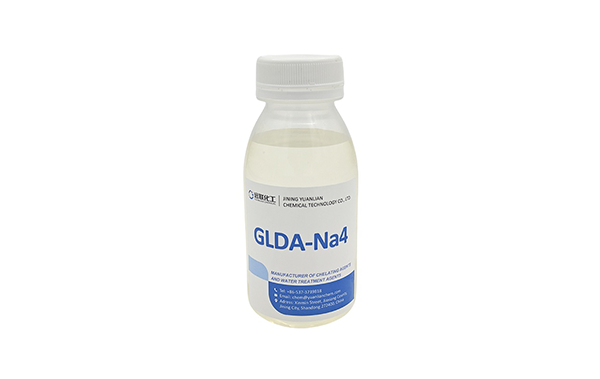
GLDA-Na4 Technical Guide: A Biodegradable Chelating Agent for Modern Formulations
The pressure on formulators to move away from persistent chelating agents has been building for years. Phosphates are restricted across most of Europe. EDTA, effective though it is, faces increasing scrutiny for its environmental persistence. The European market has moved decisively toward readily biodegradable alternatives, driven by EU Ecolabel criteria and retailer procurement policies. The challenge has been finding replacements that match the technical performance of the incumbent chemistry.
Tetrasodium glutamate diacetate—GLDA-Na4—has emerged as a practical solution. It addresses both the regulatory requirements and the performance demands of modern detergent, personal care, and industrial cleaning formulations. GLDA is produced from L-glutamic acid, a naturally occurring amino acid, and offers a biobased content of up to 58% according to USDA BioPreferred certification .
Chemical Profile and Chelation Mechanism
Core parameters. GLDA-Na4 (CAS 51981-21-6) has a molecular formula of C₉H₉NNa₄O₈ and a molecular weight of 351.1 g/mol . The INCI name is Tetrasodium Glutamate Diacetate . Commercial liquid grades are available at various active contents—38%, 47%, and a high-activity 55% grade for concentrated formulations .
A high-activity grade with 54.6–55.4% active content offers specific advantages for unit-dose formats such as liquid laundry pods and dishwasher tablets, where water content must be minimized to maintain film integrity. Key specifications for this grade include:
Appearance: Clear liquid
Density: ~1,500 kg/m³
pH (1% w/v dilution): 10.0–10.4
Crystallisation point: < -15°C
NTA content: <0.10%
Chelation mechanism. As a tetrasodium salt of a pentadentate ligand, GLDA forms stable 1:1 complexes with divalent and trivalent metal ions through its three carboxylate groups and one tertiary amine. The theoretical sequestering values are:
| Metal Ion | pH Range | Sequestering Value (mg metal/g) |
|---|---|---|
| Calcium (Ca²⁺) | 6–14 | 65 |
| Magnesium (Mg²⁺) | 5–10 | 40 |
| Copper (Cu²⁺) | 2–12 | 100 |
| Zinc (Zn²⁺) | 3–12 | 100 |
| Ferric (Fe³⁺) | 2–8 | 80 |
| Manganese (Mn²⁺) | 5–10 | 85 |
These values demonstrate GLDA's broad metal-binding capability across a wide pH range, making it suitable for applications from acidic descaling to alkaline industrial cleaning.
Environmental profile. GLDA is classified as readily biodegradable according to OECD 301B standards, with >60% degradation within 28 days . It also degrades under anaerobic conditions and ultimately converts completely to CO₂ and water . The product is Ecolabel-compliant, NTA-free, and does not carry a Proposition 65 warning .
Technical Advantages Over Traditional Chelating Agents
pH stability. GLDA maintains its chelation performance across a broad operating window from pH 2 to 13 . This versatility is particularly valuable for automatic dishwashing formulations and industrial cleaning applications where high alkalinity is required for protein and starch removal. Citrate, by comparison, shows significantly reduced chelation efficiency above pH 8. EDTA, while effective, lacks the environmental compliance credentials that GLDA provides.
High-temperature stability. Through thermogravimetric analysis, GLDA shows no decomposition after 6 hours at 170°C or after one week at 150°C . This thermal stability makes it suitable for applications requiring elevated processing or operating temperatures—including automatic dishwashing (typical wash temperatures of 60–70°C), textile dyeing, and industrial boiler cleaning .
Bleach compatibility. GLDA stabilises perborate and percarbonate bleaching systems by sequestering transition metal ions—iron, copper, manganese—that would otherwise catalyse peroxide decomposition . This extends product shelf life and maintains bleaching efficacy over the storage period.
Preservative synergy. Because GLDA contains natural amino acid components, it exhibits stronger binding affinity with bacterial cell walls. This can disrupt cellular electrolyte balance and inhibit microbial activity. Studies have shown that GLDA provides preservative-boosting synergy with biocides, potentially reducing preservative usage by 20–80% in certain formulations . For example, compounding GLDA with imidazolidinyl urea reduced the required usage against Pseudomonas aeruginosa by 50% .
Primary Industrial Applications
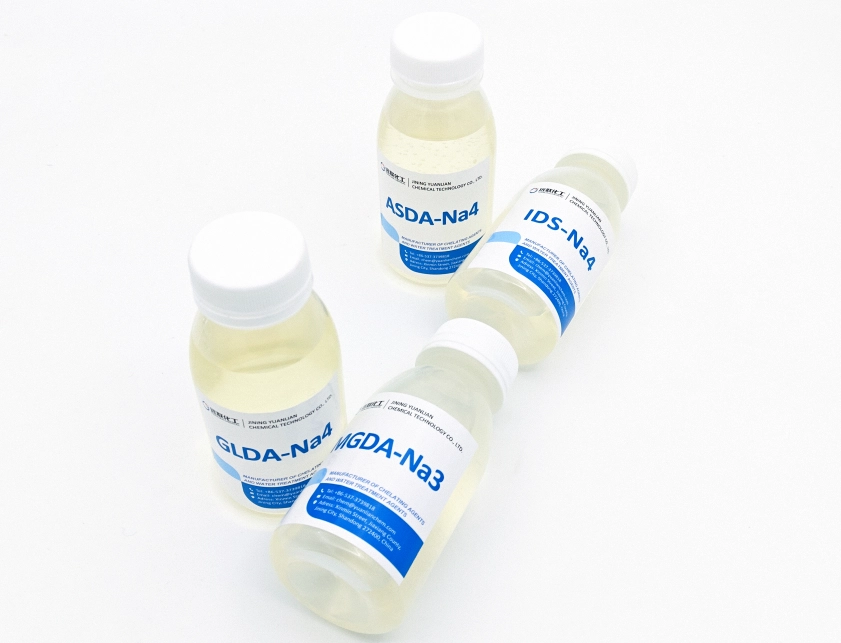
Automatic dishwashing detergents. GLDA is one of the most effective biodegradable chelating agents for calcium binding in alkaline automatic dishwashing formulations. It prevents spotting and filming on glassware, removes tea and starch stains, and enhances rinsing efficiency. When combined with glucoheptonates, hard surface cleaning performance is further improved . GLDA is also listed as a preferred builder component in dishwasher compositions alongside MGDA and IDS .
Heavy-duty liquid laundry detergents. In laundry formulations, GLDA prevents anionic surfactants—LAS, AES—from being deactivated by calcium and magnesium ions in hard water. It also prevents "lime soap" deposits that form when fatty acids react with hard water ions. This maintains detergency across a range of soil types while extending product shelf life by stabilising unsaturated fatty acid chains against oxidation .
Personal care products. GLDA is used in shampoos, body washes, and facial cleansers as a trace metal stabiliser. It prevents rancidity in oil-containing formulations, stabilises preservative systems, and improves foam characteristics. The product is compliant with European Directive EC 1223/2009 on cosmetic products and has been accepted by Whole Foods Market Premium Body Care standards . The low irritation profile makes it suitable for sensitive-skin formulations .
Industrial cleaning and water treatment. In CIP systems, GLDA controls scale formation and removes existing calcium deposits. It functions as a scale inhibitor in reverse osmosis membranes and cooling water systems. In transport cleaners, it removes oil and iron deposits under slightly acidic, neutral, or mild alkaline conditions .
Application Guidelines for Formulators
Liquid vs. powder selection. GLDA is primarily supplied as a liquid solution with active contents of 38%, 47%, or 55% . The high-activity 55% grade is particularly well-suited for unit-dose formats where water content must be minimised. The liquid grade can be pumped directly into mixing vessels, eliminating dusting risks and reducing energy consumption associated with dissolving powders.
Compatibility considerations. Store GLDA in original packaging or in tanks constructed from PVC, PP, PE, stainless steel, or bituminised materials. Avoid contact with aluminium, zinc, nickel, copper, and copper alloys . The product is miscible with water in any ratio and remains fluid below -15°C, facilitating handling in European winter conditions .
Dosage optimisation. Typical use levels vary by application. In heavy-duty liquid detergents, 0.2–0.5% active GLDA is often sufficient to stabilise the formulation and prevent surfactant deactivation. In automatic dishwashing tablets, builders are typically included at higher levels—2–5% of total formula—to handle the calcium load from water and food residues.
Quality specifications. For consistent performance, verify that the GLDA supply meets specifications for active content, colour (≤250 APHA for high-activity grades), and low by-product content such as NTA-Na3 (<0.10%) .
Supply Chain and Regulatory Status
European compliance. GLDA is fully REACH-registered for import and use within the European Economic Area . It is listed on the EPA Safer Choice programme and approved for direct release to the environment . The product is USDA BioPreferred-certified at 58% biobased content .
Growing European market. Europe is currently the largest GLDA market globally, accounting for approximately 38% of worldwide revenue. This is driven by REACH regulations, national environmental policies, and strong demand from Germany, France, and the Netherlands—countries with advanced chemical industries and strong commitments to sustainable chemistry.
Supply stability. Formulators should assess supplier capabilities beyond technical specifications. Consistent product quality—including low free amino acid residuals, clear colour, and minimal NTA content—depends on robust manufacturing processes. The synthesis of GLDA involves careful control of reaction temperature and residence time to minimise by-product formation such as cyclic GLMN .
Technical Support and Next Steps
GLDA-Na4 represents a practical path for formulators navigating the transition away from phosphates and EDTA. It offers the chelation performance required for hard water applications while meeting the environmental standards now expected by European regulators and retailers.
Our applications laboratory provides technical support for detergent, personal care, and industrial cleaning formulations. For chelation data tailored to specific water hardness conditions or surfactant systems—and for formulation reference guides and experimental samples—contact our technical team.
Latest News


Need help
Prefer speaking with a human to filling out a form? call corporate office and we will connect you with a team member who can help.