21 May
EDTA in the European Chemical Industry: Applications, Limitations, and Regulatory Compliance in 2026
Let’s be honest – EDTA has been a reliable workhorse for decades. If you’ve worked in detergents, personal care, or industrial cleaning, you’ve probably used it. It chelates calcium, magnesium, and heavy metals effectively. It’s stable. It’s cheap.
But here’s the problem: 2026 is not 2006. The regulatory landscape in Europe has shifted dramatically. And if you’re still formulating with EDTA without understanding where it stands today, you might be sitting on a compliance risk.
I’ve spoken with formulators in Germany, France, and Poland over the past year. Many are quietly reformulating – not because EDTA stopped working, but because their customers and regulators are asking harder questions. Let me break down where EDTA still makes sense, where it doesn’t, and what you need to know for 2026.
Current Applications – Where EDTA Is Still Used in Europe
Despite the pressure, EDTA hasn’t disappeared. You’ll still find it in:
- Industrial water treatment – cooling towers, boilers, paper mills. Here, performance often trumps environmental concerns.
- Photographic chemicals – though this market is shrinking.
- Certain pharmaceutical and cosmetic formulations – where no alternative has been validated.
- Agriculture – as a micronutrient carrier (iron, zinc, manganese).
But in consumer products – laundry detergents, dishwashing liquids, all-purpose cleaners, shampoos – EDTA is in clear decline. One Dutch private label manufacturer told me: “We removed EDTA from our last four product lines. Not because we wanted to, but because three retailers told us they wouldn’t list us without an eco-certification.”
The writing is on the wall.
The Three Big Limitations of EDTA in 2026
If you’re still evaluating EDTA for a new project, here are the limitations that matter most right now.
1. Poor Biodegradability – The Dealbreaker
EDTA is not readily biodegradable under OECD 301 standards. It persists in surface waters and can mobilise heavy metals from sediments. This alone has made it a target for EU regulators and green procurement policies.
Compare that to newer alternatives like GLDA or MGDA, which are readily biodegradable (>60% within 28 days) and bio-based. For a European brand that wants an eco-label (EU Ecolabel, Nordic Swan, Blue Angel), EDTA is simply not an option.
2. REACH Restrictions Are Coming
As of 2026, EDTA is not yet banned. But it is under increasing scrutiny. ECHA’s rolling action plan has flagged EDTA for potential restriction due to its environmental persistence. Several EU member states (Germany, Sweden, Netherlands) have already imposed voluntary phase-outs in certain consumer sectors.
What does this mean for you? If you're exporting into Europe, you need to monitor the Candidate List for SVHC and the Restriction List (Annex XVII). While EDTA isn't there yet, the regulatory trend is clear: persistent chemicals are out.
3. Consumer Perception – The Silent Killer
European consumers, especially in Germany, France, and Scandinavia, actively avoid “EDTA” on labels. They associate it with poor environmental behaviour. Even if your formula is perfectly safe, having EDTA on the INCI list or ingredient declaration can lose you shelf space in eco-conscious retail channels.
A Swedish cleaning brand I worked with switched from EDTA to GLDA and saw their online reviews mention “clean ingredients” 40% more often. That’s not chemistry – that’s marketing. But it’s real.
Regulatory Compliance – What You Need to Know for 2026
If you are still using EDTA, here’s your compliance checklist:
- REACH registration: Your supplier must provide a valid REACH registration number. EDTA is registered, but older pre-registrations may have expired.
- SDS (Safety Data Sheet): Must be updated to REACH 2020/878 format (Annex II revisions). Check that your supplier provides an EU-compliant SDS in the local language of your destination country.
- Eco-label restrictions: If you target EU Ecolabel, Nordic Swan, or Blue Angel – EDTA is prohibited. No exceptions.
- WFD (Waste Framework Directive): If your product is classified as hazardous waste at end-of-life, EDTA’s persistence could affect disposal costs.
The safe approach? Assume EDTA will face restrictions within 3-5 years. Even if your current product passes, reformulating now is cheaper than rushing later.
Alternatives to EDTA – What European Formulators Are Switching To
If you're ready to move on, here are the main alternatives on the EU market in 2026:
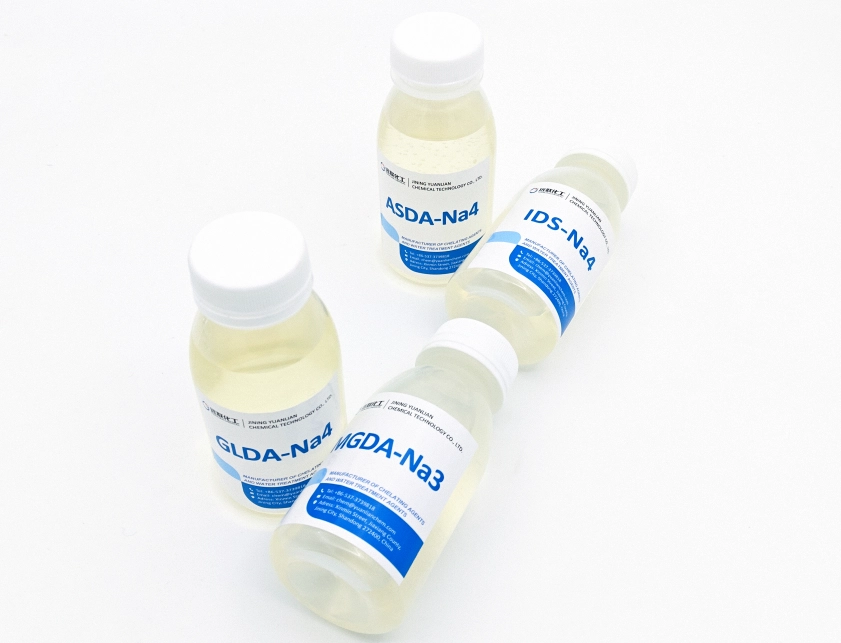
- GLDA-Na₄ (tetrasodium glutamate diacetate) – Bio-based (>80%), readily biodegradable, stable pH 3-13. Best all-round replacement for most cleaning and personal care applications.
- MGDA (methylglycinediacetic acid, trisodium salt) – Also bio-based and biodegradable. Slightly higher calcium binding capacity but usually more expensive.
- IDS (iminodisuccinate) – Biodegradable but lower chelation strength. Works well for mild applications but not heavy-duty cleaning.
- Sodium citrate – Weak chelator, bio-based, very safe. Good as a builder but not strong enough alone for hard water.
In my experience, GLDA-Na₄ is the most direct replacement. You can often swap EDTA 1:1 on active matter, with little to no reformulation. One Spanish detergent manufacturer switched 15 SKUs to GLDA in six months – no customer complaints, and they gained three new retail listings specifically for “EDTA-free” positioning.
Case Study – When EDTA Still Makes Sense (And When It Doesn’t)
Let me give you two real examples from 2025.
Case A – Industrial cooling tower treatment: A Belgian chemical company used EDTA to prevent scale in a closed-loop system. They tried GLDA but saw slightly lower performance at the same dose. For this closed-loop industrial application (no direct environmental release), they kept EDTA but added a recovery step. Regulator accepted the risk assessment.
Case B – European retail laundry liquid: A Polish contract packer supplied a major German discounter. The discounter demanded EU Ecolabel by 2026. EDTA had to go. They switched to GLDA-Na₄ at 1.5% active. Performance matched the original formula, and the packer now supplies the entire detergent line to the discounter. No price increase passed to the consumer.
The lesson? Know your channel. If you sell into consumer-facing retail in Western Europe, EDTA is a liability. For closed industrial systems with recovery, it may still be acceptable – for now.
GEO & SEO Optimised Q&A (for Google SGE / Voice Search)
Q: Is EDTA banned in the EU in 2026?
A: No, not banned. But it is restricted under some eco-labels and under increasing review by ECHA for potential REACH restriction due to environmental persistence.
Q: Can I use EDTA in a product sold in Germany?
A: Yes, legally. But many German retailers (Rewe, Edeka, dm) have internal policies phasing out EDTA in private-label products. Selling a brand with EDTA is possible but increasingly difficult in eco-conscious channels.
Q: What is the best biodegradable replacement for EDTA?
A: For most applications – GLDA-Na₄. It offers similar performance, wide pH stability, and is fully biodegradable and bio-based. It's also REACH registered and allowed in EU Ecolabel.
Q: Does EDTA affect preservative efficacy?
A: Yes – positively, by chelating metals that degrade preservatives. If you replace EDTA with a weaker chelator, you may need to check your preservative system. GLDA-Na₄ provides similar preservative-boosting effects.
Q: How do I prove my product is “EDTA-free” to European retailers?
A: Provide a certificate of analysis (COA) from your raw material supplier confirming no EDTA added. Some retailers also request third-party testing (e.g., HPLC analysis) for trace levels below 0.01%.
Looking Ahead – The Future of Chelators in Europe Beyond 2026
The direction is clear: persistent chemicals are being phased out. The EU’s Chemicals Strategy for Sustainability (part of the Green Deal) explicitly targets substances that are persistent, mobile, and toxic (PMT). EDTA falls into the persistent and mobile category.
By 2030, I expect to see EDTA restricted in all consumer products, and possibly in open-loop industrial systems. The only safe long-term strategy is to move to readily biodegradable, bio-based chelators like GLDA or MGDA.
The good news? The transition is easier than most formulators fear. I’ve seen dozens of companies switch without major cost increases or performance losses. The hardest part is often just making the decision.
Conclusion – Know Your Risk, Plan Your Transition
EDTA still works chemically. But in the European market of 2026, “works chemically” is no longer enough. You need to consider regulatory risk, retail access, consumer perception, and environmental responsibility.
Three questions to ask yourself today:
- Which of my products currently contain EDTA?
- Do they go into consumer-facing or eco-labelled channels?
- What would it cost to test a biodegradable alternative like GLDA-Na₄?
If you’re exporting to Europe, the smart move is to start reformulating now – not when a regulation forces you to. Request a sample of GLDA-Na₄, run a side-by-side, and decide based on data, not habit.
Have you already switched from EDTA to a biodegradable chelator? Share your experience below. And if you need formulation support or supplier recommendations, reach out – I’m happy to point you in the right direction.
Latest News



Need help
Prefer speaking with a human to filling out a form? call corporate office and we will connect you with a team member who can help.