26 Feb
Every Wash is an Environmental Declaration: GLDA Reconciles Household Cleaning with the Earth
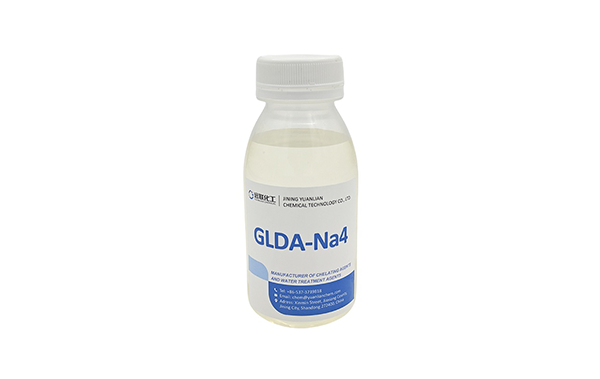
Have you ever thought, when you press the washing machine start button or rinse foamy dishes, that this wastewater with chemical residues is quietly flowing into rivers, lakes, and oceans? Traditional detergents contain ingredients like phosphorus and EDTA, which take decades to degrade. However, the emergence of Tetrasodium Glutamate Diacetate (GLDA) has turned household cleaning into a daily act of protecting the planet.
From Sewers to Oceans: The Invisible Harm of Traditional Washing
You might not know that washing a white shirt can release 0.3 grams of non-degradable chelating agents into water bodies. EDTA in traditional detergents has a 28-day biodegradation rate of only 6%. Its long-term accumulation leads to heavy metal enrichment in water, damaging the gill function of fish. Phosphorus-containing ingredients even trigger excessive algal growth, turning lakes into "dead zones"—globally, the freshwater ecosystems lost each year due to detergent pollution are equivalent to the area of 300 West Lakes.
The "environmental sin" of household cleaning hides in every detail: in hard water areas, people have to pour more detergent to remove stains, resulting in more chemicals entering the water cycle; residual descaling agents from dishwashers, when flowing into soil with wastewater, inhibit crops' absorption of calcium.
GLDA: Let Every Drop of Wastewater "Naturally Dissolve"
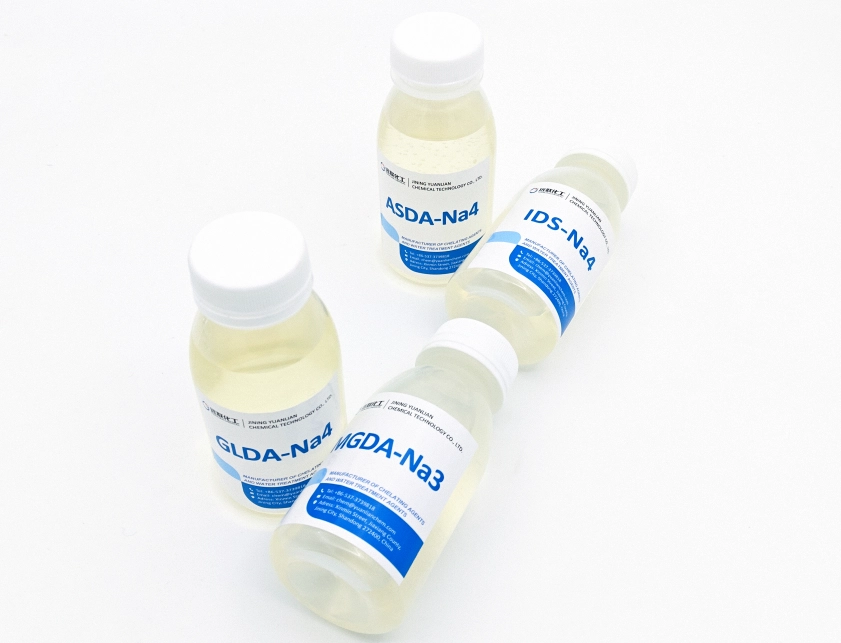
The birth of GLDA has fundamentally rewritten the opposing relationship between washing and environmental protection. This green chelating agent, made from corn starch fermentation, is like a "gentle cleaner"—it efficiently removes stains while quickly breaking down in nature.
l Raw Material Revolution: Moving away from petroleum-based chemical raw materials, it uses renewable L-glutamic acid as the core. Carbon emissions during production are 42% lower than traditional processes, reducing reliance on fossil fuels from the source.
l Biodegradability: Certified by OECD 301B, GLDA has a 28-day degradation rate of 98.5%. After entering water bodies, it decomposes into water and carbon dioxide, even tolerable by the most sensitive coral reef ecosystems. In contrast, EDTA takes 100 years to fully degrade.
l Reduced Dosage: In hard water areas, GLDA’s chelating capacity is twice that of traditional ingredients. Washing a shirt only requires 1/3 of the usual dosage, reducing annual chemical emissions by about 2.4 kilograms—equivalent to installing a "wastewater purifier" for the household.
Environmental Practices in Household Scenarios
In baby and child cleaning, a top concern for mothers, GLDA shows its "gentle power": when cleaning baby bottles, it precisely removes calcium and magnesium ions from milk stains. With a near-neutral pH (9-10), no repeated rinsing is needed to avoid chemical residues. Experiments show that wastewater from baby laundry detergents containing GLDA reduces the teratogenic rate of zebrafish embryos by 92%, truly achieving "clean without traces, environmental protection without burden."
Households in hard water areas feel this change more acutely: in the past, to combat scale, 1.2 liters of dishwasher salt were consumed monthly. Now, detergent tablets with GLDA only need half the dosage to keep glassware spotless, reducing sodium chloride entering groundwater by 5 kilograms annually.
Your Choice Shapes the Earth’s Future
The EU has long listed GLDA as the "preferred ingredient for eco-labels." BMW’s Leipzig plant uses it to clean car bodies, reducing CO₂ emissions by 2.4 tons per 1,000 units—and every household’s choice accumulates the power of change: if 100 million households in China switch to GLDA-containing detergents, the annual reduction in water pollution would be equivalent to purifying 1,000 urban rivers.
When GLDA molecules capture metal ions in washing machines, dissolve scale in dishwashers, and finally degrade gently in nature, we can finally say: household cleaning is not a burden on the environment, but a way to reconcile with the Earth.
Now, choose GLDA produced by Yuanlian Chemical, choose GLDA-containing detergents, and let every dissipation of foam become a green love letter to the Earth.
Latest News


Need help
Prefer speaking with a human to filling out a form? call corporate office and we will connect you with a team member who can help.