27 Apr
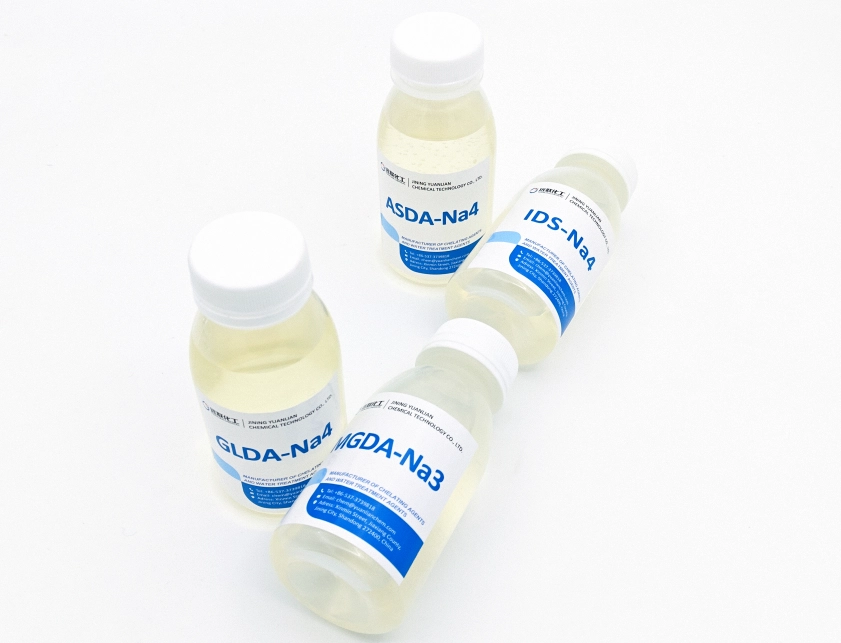
Green Chelating Agents in the Detergent Industry: The Preferred Choice of GLDA and MGDA
In the detergent industry, chelating agents are the core additives that ensure cleaning efficiency by locking calcium, magnesium, and heavy metal ions. As global regulations tighten under EU REACH and consumer awareness grows, the industry is shifting from traditional agents (STPP, EDTA) to high-performance green alternatives: GLDA and MGDA.
I. The Environmental Imperative: Moving Beyond EDTA and Phosphates
Traditional chelating agents face severe challenges:
Phosphates (STPP): Cause eutrophication and are restricted in many regions.
EDTA: Biodegradation rate is less than 6%, leading to long-term environmental residue and heavy metal re-release.
Green chelating agents, represented by GLDA and MGDA, offer a dual advantage of high efficiency and environmental friendliness, making them the cornerstone of industry transformation.
II. GLDA: The All-Rounder Derived from Nature
GLDA (Tetrasodium Glutamate Diacetate) is fermented from renewable plant materials like starch or molasses.
1. Core Advantages:
Disruptive Biodegradability: A 28-day biodegradation rate of 80%-98% (OECD standards).
High Performance: Chelating capacity exceeds traditional citrates and even outperforms EDTA.
Stability: Maintains effectiveness across a wide pH range (2-12) and temperatures above 80°C.
Safety: Low irritation to skin and eyes, ideal for sensitive skin care formulations.
2. Best Application Scenarios:
High-end Laundry & Dishwashing: Prevents fabric graying and eliminates water spots on tableware.
Industrial Cleaning: Effective for descaling metal parts and food processing equipment.
Personal Care: Acts as a stabilizer in shampoos and body washes to extend shelf life.
III. MGDA: The Precise and Efficient Cleaning Powerhouse
MGDA (Trisodium Methylglycine Diacetate) is chemically modified from L-glycine, offering high-density chelating power.
1. Core Advantages:
Superior Chelation: Calcium and magnesium chelating values are comparable to EDTA, rapidly softening hard water.
High-Temperature Stability: Remains active in high-temperature rinsing environments—a key advantage for Automatic Dishwasher Detergents (ADWD).
Formulation Optimization: Compatible with common surfactants (AES/LAS), often reducing surfactant dosage by 10%-15%.
2. Best Application Scenarios:
Hard Water Specialists: Solves scaling problems in regions with extreme water hardness.
Eco-label Products: Certified by EU ECOCERT, helping products enter strict international markets.
Infant Care: Its low irritation profile makes it suitable for baby tableware cleaners.
IV. Decision Guide: Which One Should You Choose?
Both GLDA and MGDA are excellent replacements for EDTA, but the choice depends on your specific formulation goals:
| Feature | GLDA (Preferred Choice) | MGDA (Preferred Choice) |
|---|---|---|
| Primary Strength | Ultimate biodegradability & skin mildness. | High-temp stability & precise chelation. |
| Best pH Range | Extremely wide (pH 2-12). | Wide (pH 3-12). |
| Top Application | Liquid detergents, Personal care, Industrial. | Dishwasher tabs, Hard water laundry, Heavy-duty cleaning. |
| Compounding | Excellent dispersion & scale inhibition. | High synergy with surfactants; cost-effective. |
V. Future Trends: Toward "Sustainable Cleaning"
At Yuanlian Chemical, we see a future where green chemistry is the standard. Market demand for GLDA and MGDA is accelerating, especially in European and American markets. By compounding these agents with enzymes and antioxidants, we are expanding their reach into water treatment and advanced personal care.
Latest News


Need help
Prefer speaking with a human to filling out a form? call corporate office and we will connect you with a team member who can help.