03 Mar
Green Tenderness in Housework: GLDA Frees Household Care from Owning the Earth an "Environmental Debt"
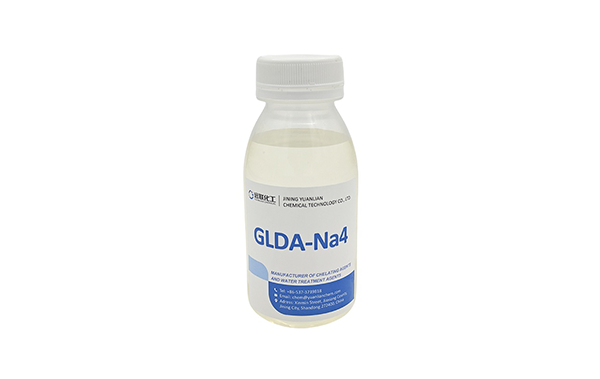
Every housewife is greeted by the same scene when opening the kitchen door in the morning: greasy dishes and bowls waiting to be washed in the sink, piles of dirty clothes on the balcony, and limescale and mold on bathroom tiles. When we pick up detergents to wipe, scrub, and rinse, the soapy wastewater—laden with chemical residues—quietly flows into rivers and lakes. Traditional household care detergents contain ingredients like EDTA, phosphorus, and petroleum-based surfactants, which take decades or even centuries to degrade. However, the emergence of Tetrasodium Glutamate Diacetate (GLDA) has turned daily housework from "invisible pollution" into a gentle act of protecting the Earth.
The "Environmental Bill" Hiding in Dish Soap and Laundry Detergent
EDTA in traditional laundry detergents has a 28-day biodegradation rate of only 6%. Its long-term accumulation causes heavy metals to adhere to the gills of fish and shrimp in rivers, leading to a 40% drop in their survival rate. Phosphorus-containing components in kitchen dish soap trigger excessive growth of algae in community landscape ponds; the green algae covering the water surface deprives underwater plants of sunlight entirely. The strong acid in bathroom descaling agents not only corrodes the gaps between tiles but also acidifies the soil, inhibiting potted plants from absorbing calcium.
Even more challenging is the "double waste" in hard water areas: to counteract the ineffectiveness of detergents caused by calcium and magnesium ions, people have to pour extra laundry detergent. Unfortunately, this does not make clothes cleaner—instead, more chemical residues stick to the fibers. To remove limescale, one bottle of strong acid descaling agent is used every week; the wastewater leaves a layer of hard-to-clean chemical deposits on the inner walls of sewers. These "environmental debts" hidden in daily housework are quietly adding to the Earth’s burden.
GLDA: Turning Every Bottle of Household Detergent into an "Earth-Friendly" Product
The birth of GLDA is not just a simple ingredient replacement—it reconstructs the "environmental logic" of household care. This green chelating agent, made from corn starch fermentation, acts like a "measured housework assistant": it can precisely break down dirt while quickly "exiting" in nature without leaving any burden.
l Carbon Reduction from Raw Materials: Moving away from petroleum-based chemical raw materials, GLDA uses renewable L-glutamic acid as its core. Producing 1kg of GLDA reduces carbon emissions by 4.2kg compared to traditional chelating agents—equivalent to the carbon sequestration capacity of planting 2 trees per bottle of GLDA-containing laundry detergent, cutting off reliance on fossil fuels at the source.
l Degradation So Fast It’s "Invisible": Certified by OECD 301B, GLDA has a 28-day degradation rate of up to 98.5%. After wastewater flows into water bodies, GLDA decomposes into water and carbon dioxide—even duckweed, which is highly sensitive to chemicals, can grow normally in such water. In contrast, traditional chelating agent EDTA takes 100 years to completely disappear; equivalent to EDTA residues from the Qing Dynasty still affecting water bodies today.
l Half the Dosage, Double the Effect: GLDA’s chelating capacity is twice that of traditional ingredients. In hard water areas, washing a load of clothes requires only 70ml of laundry detergent instead of 200ml. With fewer suds, it still thoroughly cleans collar sweat stains and cuff oil stains. A single pump of kitchen dish soap is enough to leave a greasy wok sparkling clean, eliminating the need for repeated rinsing. This reduces annual wastewater discharge by approximately 300 liters—equivalent to saving 15 barrels of water for a household.
GLDA’s Environmental Tenderness Hides in Every Housework Scene
For families with babies, GLDA’s "low irritation + low residue" makes it a reassuring choice for mothers: using GLDA-containing baby laundry detergent to wash drool bibs not only strips calcium and magnesium ions from milk stains but also has a near-neutral pH (9-10), so hands don’t feel tight during hand washing, and clothes remain soft after machine washing. Experiments show that the mortality rate of brine shrimp exposed to such wastewater decreases by 91%, so mothers no longer need to rinse clothes an extra 3 times with clean water after washing.
The change is even more obvious for households in hard water areas: in the past, white shirts would turn gray and yellow after 5 washes; now, with GLDA-containing laundry detergent, they remain as white as freshly ironed even after 20 washes. When removing limescale from bathroom tiles, switching to GLDA-containing cleaners eliminates the need for gloves to prevent corrosion. After wiping off limescale, the gaps between tiles don’t turn black, and using the wastewater to water pothos on the balcony even makes the leaves greener—proving that housework can be "non-harmful" and leave only cleanliness.
Even stubborn kitchen grease is tackled by GLDA: soaking range hood filters in GLDA-containing cleaner for 10 minutes makes grease drip off automatically, no need for scrubbing with steel wool. A quick spray and wipe removes soy sauce and vinegar stains from kitchen tiles; the wastewater flows into sewers without causing oil to cake inside the pipes—saving effort while not adding to the Earth’s burden.
Every Choice Is a "Repayment" to the Earth
The EU has long listed GLDA as the "preferred ingredient for eco-labeled household care products." After replacing traditional chelating agents with GLDA, a Norwegian home goods brand reduced its product carbon footprint by 35%. These changes prove that environmental protection in household care is never a question of "whether to do it"—but "doing it by choosing the right ingredient."
When GLDA molecules capture metal ions between shirt fibers, break down grease on wok surfaces, dissolve limescale on bathroom tiles, and finally degrade quietly in nature, we can finally say: housework is not a burden on the Earth, but a way for us to reconcile with nature.
Now, choose GLDA produced by Yuanlian Chemical, and choose GLDA-containing household care detergents. Let every wipe, every wash, and every rinse become a "green IOU" written to the Earth—this time, we only repay, not owe.
Latest News



Need help
Prefer speaking with a human to filling out a form? call corporate office and we will connect you with a team member who can help.