16 Jun
High-Alkaline Stability: Optimizing CIP Cleaning Formulations with MGDA-3Na
Why Traditional Chelates Fail in CIP Systems
Clean-in-place (CIP) systems are the backbone of food, beverage, and pharmaceutical production. They run hot, they run alkaline, and they face some of the toughest soil challenges in industrial cleaning—proteinaceous deposits, mineral scale, and baked-on residues.
Most CIP protocols rely on sodium hydroxide (caustic) at pH 10–13 to break down protein soils. The problem? High alkalinity pushes many chelating agents to their limit. EDTA struggles. Traditional phosphonates lose efficacy. And some chelates simply precipitate out of solution, leaving you with scale instead of removing it .
This is where MGDA-Na3 (trisodium methylglycine diacetate) changes the equation.
What Makes MGDA-Na3 Different in Alkaline Environments
MGDA-Na3 is a chelating agent built around a natural alanine backbone. Its defining characteristic—and the reason it works so well in CIP—is exceptional caustic stability .
While many organic sequestering agents decompose when exposed to high sodium hydroxide concentrations, MGDA thrives. It remains chemically stable and active in environments with pH levels as high as 13 to 14 .
Key properties for CIP applications:
| Property | MGDA-Na3 Performance |
|---|---|
| pH stability range | 2–13.5 |
| Temperature stability | Effective up to 100°C+ |
| Caustic compatibility | Stable in high NaOH concentrations |
| Calcium binding | Strong, prevents carbonate precipitation |
| Biodegradability | Ready (OECD 301B) |
How MGDA Improves CIP Performance
Prevents Scale Formation Under Alkaline Conditions
In CIP systems, hard water combined with caustic creates the perfect conditions for calcium carbonate and calcium hydroxide precipitation. These deposits form on equipment surfaces, reducing heat transfer and creating harbourage sites for bacteria.
MGDA binds calcium and magnesium ions effectively, preventing precipitation before it happens . The result: cleaner surfaces, better heat exchange efficiency, and longer production runs between cleaning cycles.
Enhances Caustic Cleaning Power
Blended caustic products—where additives are included in the cleaning chemistry—have been shown to improve overall CIP results . MGDA works synergistically with sodium hydroxide, allowing formulators to achieve better soil removal at potentially lower caustic concentrations .
This matters for two reasons. Lower caustic use reduces neutralisation costs for effluent treatment. And better cleaning means shorter CIP cycles, which translates to more production time.
High-Temperature Stability
CIP systems often run at elevated temperatures—70°C to 100°C or higher. Many chelates degrade under these conditions. MGDA does not.
The molecular structure maintains integrity during high-temperature cleaning cycles, ensuring the chelating power does not drop off partway through the wash . On heat exchange surfaces, MGDA also works through crystal lattice distortion, actively inhibiting scale adhesion even at elevated temperatures .
Practical Benefits for CIP Formulators
Reduced Re-deposition
MGDA keeps calcium and magnesium ions in solution. That means dissolved minerals do not precipitate back onto cleaned surfaces during the rinse cycle. The result: spot-free equipment and less post-cleaning inspection time.
Compatibility with Other Additives
MGDA works alongside non-ionic surfactants, threshold inhibitors (polyacrylates), and enzymes. It is particularly compatible with peroxide bleaching systems, chelating iron and copper ions that would otherwise catalyse peroxide decomposition .
Cleaner Environmental Profile
Unlike EDTA, which persists in the environment, MGDA is readily biodegradable under OECD 301B standards . For European food and beverage producers facing tightened discharge regulations, this is a significant advantage.
CIP Formulation Guidelines
Typical use levels in CIP formulations:
Liquid concentrates: 3–10% MGDA-Na3 (40% active liquid form)
Powder blends: 5–15% MGDA-Na3 (granular or powder form)
Compatibility:
Works with sodium hydroxide, potassium hydroxide, and amines
Compatible with anionic and non-ionic surfactants
Suitable for both acidic and alkaline CIP cycles
Handling:
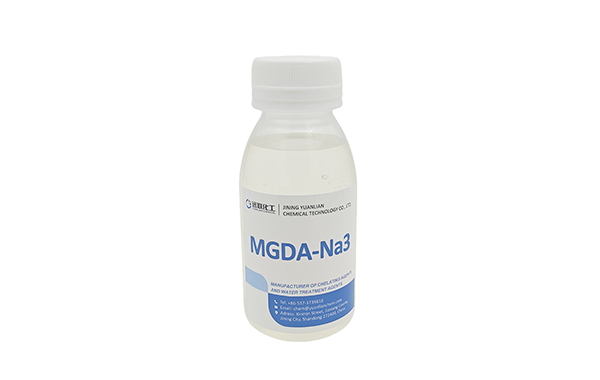
MGDA-Na3 is supplied as a clear to light yellow liquid (40% active) or as granules (>80% active)
The liquid form is easiest to blend into existing CIP concentrates
Store in sealed containers away from strong oxidisers
Final Takeaway
CIP cleaning is demanding. High alkalinity, high temperatures, and hard water create conditions where many chelating agents fail. MGDA-Na3 does not.
It remains stable at extreme pH, prevents scale formation, and enhances caustic cleaning power. And it biodegrades completely, which keeps regulators satisfied and food safety auditors happy.
For formulators looking to optimise CIP formulations, MGDA-Na3 is worth serious consideration.
Latest News



Need help
Prefer speaking with a human to filling out a form? call corporate office and we will connect you with a team member who can help.