17 Jun
Replacing EDTA with MGDA Chelated Micronutrients in Sustainable Agriculture
For decades, EDTA has been the standard chelating agent in micronutrient fertilisers. It keeps iron, zinc, manganese, and copper soluble and available to plant roots. But the downsides have become impossible to ignore.
EDTA is not readily biodegradable. It accumulates in soil, groundwater, and natural water bodies . While non-toxic to mammals itself, its strong chelating properties can leach heavy metals from the soil, increasing their mobility and potentially contaminating drinking water . In calcareous soils with elevated pH, EDTA's stability with iron is insufficient, requiring additional chelating agents like DTPA or EDDHA for effective iron delivery .
Regulatory pressure is mounting. The EU is increasingly restricting persistent chelates, and agricultural use bypasses wastewater treatment systems, eliminating opportunities for capture and recycling . The question is no longer if EDTA should be replaced, but what to replace it with.
MGDA: A Biodegradable Alternative That Performs
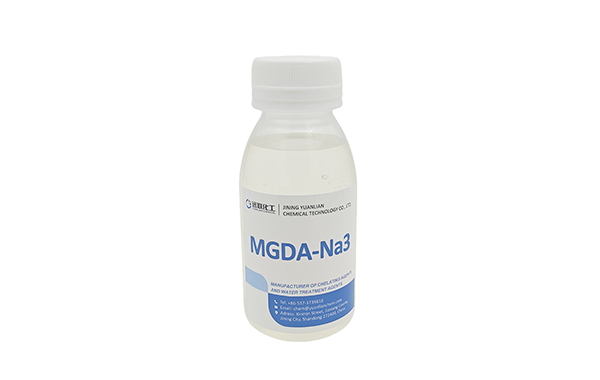
MGDA (methylglycine diacetic acid) is an amino-acid-based chelating agent that offers a genuine solution . It forms stable complexes with iron, zinc, manganese, and copper—the same micronutrients that EDTA chelates—but with one critical difference: it biodegrades completely.
Under OECD 301 tests, MGDA achieves >60% degradation within 28 days. In real-world conditions, breakdown is often faster. For growers aiming for EU Ecolabel certification or responding to retailer sustainability requirements, this difference is decisive .
The Performance Advantage in Soil and Hydroponics
Stability Across pH Ranges
EDTA-Fe begins to precipitate rapidly above pH 6.8. MGDA-Fe remains more than 90% intact up to pH 7.2–7.5 . For recirculating hydroponic systems where pH drifts upward over time, this means fewer deficiencies and less product waste.
Better Iron Bioavailability
Recent studies show that MGDA-Fe maintains iron in solution longer than EDTA under typical growing conditions, especially in alkaline or hard water systems . Case studies from Dutch hydroponic lettuce growers report:
Iron remained fully soluble for entire 6-week crop cycles
18% reduction in total iron input
Cleaner irrigation channels and pump filters
Effective Across Multiple Micronutrients
MGDA complexes not only iron but also zinc, manganese, and copper effectively . Academic research has demonstrated that biodegradable chelating agents like MGDA can form stable, bioavailable metal complexes across a wide pH range critical for agricultural applications .
Addressing the Cost Question
MGDA is more expensive than EDTA on a per-kilo basis. But total cost of ownership tells a different story.
Lower use rates – growers often reduce iron input by 15–20% when switching to MGDA-Fe
Reduced maintenance – less precipitation means cleaner pipes, fewer clogged emitters, and lower labour costs
Regulatory compliance – avoiding future reformulation costs and potential restrictions on EDTA-based products
Practical Replacement Guidelines
For growers and formulators making the switch:
Start with a 1:1 replacement – active MGDA for active EDTA. The calcium binding capacities are close enough that this is usually the correct starting point.
Check your pH range – MGDA works best in neutral to alkaline conditions. It is particularly effective in recirculating systems where pH fluctuates.
Test compatibility – MGDA-Fe mixes well with standard fertiliser components but avoid direct mixing with concentrated phosphates or sulfates in the same tank .
The Regulatory Outlook
The EU Fertilising Products Regulation (2019/1009) requires chelating agents to remain stable in standard solution at pH 7 and 8 for at least three days . MGDA meets these requirements while also satisfying the biodegradability criteria that EDTA cannot.
For European growers facing tightened discharge regulations, retailer sustainability audits, and the EU Green Deal targets, MGDA chelated micronutrients offer a future-proof alternative.
The Bottom Line
EDTA is not going to disappear overnight. But the direction of travel is clear. European regulators, retailers, and consumers are demanding sustainable agriculture. MGDA chelated micronutrients deliver the performance growers need and the environmental profile regulators require.
It works. It biodegrades. And it is available at scale.
Latest News



Need help
Prefer speaking with a human to filling out a form? call corporate office and we will connect you with a team member who can help.