18 Jun
Biodegradable Industrial Descaling: The Chelating Power of IDS-Na4 in Alkaline Cleaners
The Scale Problem That Costs Industry Time and Money
Anyone who has managed an industrial cleaning operation knows the frustration. Hard water deposits build up on heat exchangers, reduce efficiency, and eventually force production to stop for descaling. Calcium carbonate, calcium sulphate, and other mineral scales are relentless. They form on any surface where water is heated or evaporated, and they cost industry millions in lost efficiency and maintenance downtime.
Traditional descaling agents work. Acids dissolve the deposits, but they are aggressive. They attack equipment surfaces. They require careful handling. And the wastewater needs neutralisation before discharge.
Alkaline cleaners with chelating agents offer a gentler approach. They soften water, prevent scale formation, and remove existing deposits without the corrosion risks of acids. The challenge has been finding a chelate that actually works in alkaline conditions and does not persist in the environment.
Tetrasodium iminodisuccinate (IDS-Na4) addresses both requirements. It chelates calcium and magnesium in high-pH formulations, prevents scale deposition, and biodegrades completely. No trade-offs.
What Makes IDS-Na4 Effective in Alkaline Cleaners
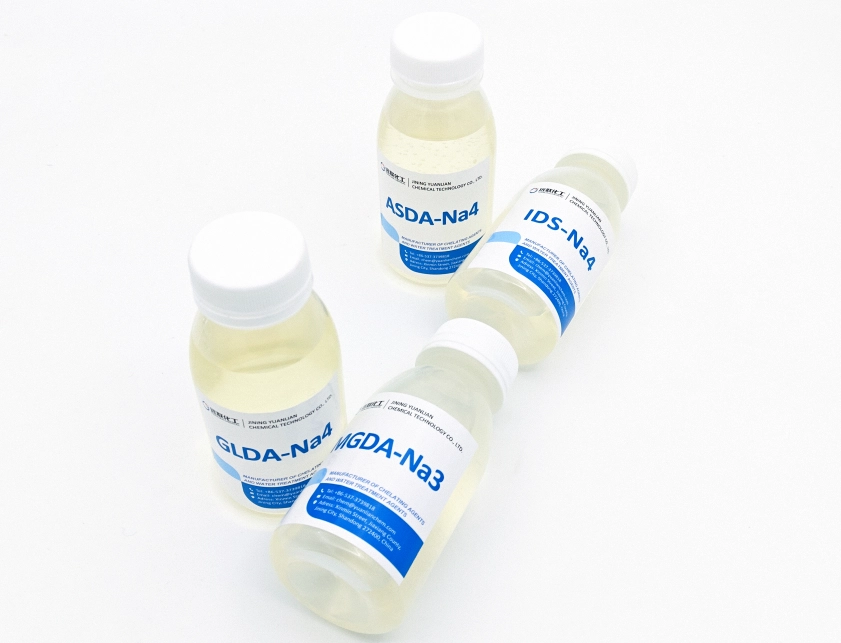
IDS-Na4 is a chelating agent based on iminodisuccinic acid. It belongs to the same family as MGDA and GLDA—chelates designed to replace persistent alternatives like EDTA and NTA . Its structure contains multiple carboxylate groups that bind metal ions into stable, soluble complexes.
Key properties for alkaline cleaners:
Stable across a wide pH range – remains active at the high pH typical of industrial degreasers and heavy-duty cleaners
Strong calcium and magnesium binding – prevents scale formation before it starts
Good peroxide stabilisation – useful in formulations that combine alkalinity with oxidising agents
Easy to handle – supplied as a 34–40% liquid solution or solid granules
Non-corrosive to equipment – compatible with stainless steel, glass, and decor surfaces
The product is described as a "readily biodegradable medium strong chelating agent with a well-balanced calcium- and heavy metal binding capacity" . It achieves what many other chelates cannot: effective descaling in alkaline conditions without environmental persistence.
IDS-Na4 vs Traditional Descalers
The conventional approach to industrial descaling has been acids or persistent chelates. Acids remove scale quickly but corrode equipment and require careful neutralisation. EDTA and phosphonates work but do not biodegrade, leading to regulatory and environmental concerns.
IDS-Na4 offers a different profile:
| Property | Acid-based descalers | EDTA/DTPA | IDS-Na4 |
|---|---|---|---|
| Removes existing scale | ✅ Yes | ⚠️ Slow | ✅ Yes |
| Prevents new scale | ❌ No | ✅ Yes | ✅ Yes |
| Corrosion risk | High | Low | Low |
| Biodegradable (OECD 301) | ❌ No | ❌ No | ✅ Yes |
| EU Ecolabel eligible | ⚠️ Depends | ❌ No | ✅ Yes |
For formulators targeting EU Ecolabel or Nordic Swan certification, the biodegradability difference is decisive.
Practical Applications in Industrial Cleaning
Metal surface cleaning. IDS-Na4 is used in alkaline cleaners to remove rust and iron sulfide scale from metal pipelines, particularly in natural gas infrastructure . The chelating action loosens deposits without the aggressive attack associated with acids.
Bottle washing and CIP systems. In food and beverage processing, alkaline CIP cleaners with IDS-Na4 prevent calcium carbonate and phosphate scale from forming on equipment surfaces . The product is effective at the elevated temperatures typical of CIP cycles.
Heavy-duty floor and surface cleaners. Industrial floor cleaners often run at high pH to cut through grease. IDS-Na4 softens the water so surfactants can work efficiently. It also prevents the white residue that hard water leaves behind.
Cooling water treatment. IDS-Na4 prevents scale deposits in cooling towers and other recirculating water systems . It controls hardness without the phosphorus loading that contributes to eutrophication.
Why European Formulators Are Switching
European regulations are driving the move toward biodegradable chelates. REACH and the EU Detergent Regulation restrict phosphonates and persistent chelates. The market for biodegradable chelating agents is growing, driven by environmental concerns and stricter regulations .
Major producers are responding. Nouryon recently achieved ISCC PLUS certification at its Herkenbosch, Netherlands facility, allowing it to produce biodegradable chelates from up to 100% biobased raw materials . Lanxess offers IDS-Na4 as BAYPURE® CX 100, which they describe as an "eco-friendly alternative to NTA or EDTA" .
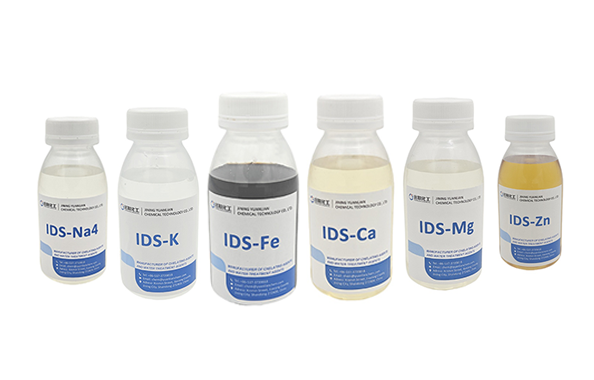
Yuanlian Chemical also produces IDS-Na4, with products that are REACH-compliant and meet ISO 9001 and ISO 14001 standards. Their IDS products are available in forms suitable for industrial cleaning applications.
The Bottom Line
IDS-Na4 solves the descaling problem without the environmental trade-offs. It works in alkaline conditions, removes scale effectively, and biodegrades completely. For European industrial cleaning formulators facing regulatory pressure and customer demand for sustainable chemistry, it is a practical, proven alternative.
It chelates, it prevents deposits, and it disappears after use. That is a combination worth testing in your next formulation.
Latest News



Need help
Prefer speaking with a human to filling out a form? call corporate office and we will connect you with a team member who can help.