22 Jun
Advanced Foliar Fertilizer Sourcing: Solubility and Blending Compatibility of MGDA Salts
Anyone who has worked on foliar fertilisers knows the frustration. You spend weeks developing a balanced micronutrient blend. The lab tests look promising. Then you scale it up, and it falls out of solution the moment it hits the tank.
The problem is usually the chelating agent. Some chelates hold minerals well in isolation but struggle when mixed with other salts or under varying pH conditions. The result is precipitates that clog nozzles, uneven nutrient delivery, and disappointed growers.
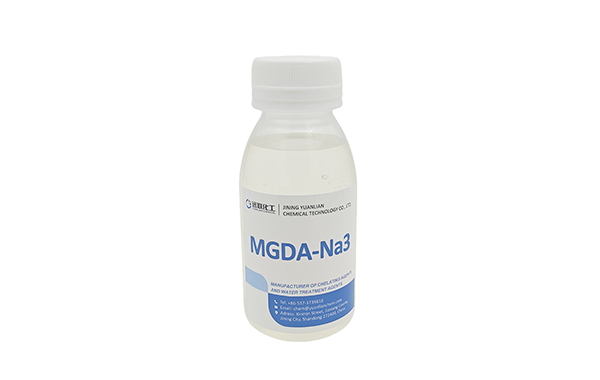
MGDA salts (methylglycine diacetic acid, trisodium salt) have gained attention in recent years as a practical solution. The reason is straightforward: MGDA forms stable, water-soluble complexes with a wide range of metal ions across a broad pH spectrum. For foliar fertiliser formulators, that solubility profile solves many of the headaches associated with traditional chelates.
What Makes MGDA Different
MGDA is an amino-acid-based chelator built around a natural alanine backbone. The compound is supplied in two main forms: a 40% active liquid and a solid granule (typically 78–85% active). Both forms are fully water-soluble, which matters when you are blending concentrates that need to dilute cleanly in the field.
The key solubility properties:
Full miscibility with water at all relevant concentrations
Stable metal complexes from pH 2 to 13.5
Temperature stability up to 100°C
Rapid dissolution in liquid and suspension formulations
These properties make MGDA salts particularly suitable for foliar applications. Most foliar sprays are applied at pH 5–7, where MGDA maintains strong chelation. But the real advantage is the buffer—when tank-mix conditions drift acidic or alkaline, MGDA keeps nutrients soluble.
Solubility: The Practical Difference
Solubility matters for two reasons: concentration and compatibility.
High-concentration stocks. Foliar fertiliser manufacturers often produce concentrated blends that growers dilute on-site. A chelate that cannot hold minerals at high concentration is a problem. MGDA can be formulated into stock solutions that remain clear and stable for extended periods . Operators report that MGDA-based products maintain clarity even at elevated storage temperatures.
Tank-mix compatibility. This is where many chelates fail. Growers frequently combine fertilisers with pesticides, adjuvants, and other additives. The chelate needs to tolerate the resulting chemical cocktail. MGDA is compatible with most common tank-mix partners, including surfactants and other crop protection products, without precipitation or loss of efficacy.
The Biodegradability Advantage
Solubility alone would not justify a switch from EDTA. The environmental profile is what tips the balance.
MGDA is readily biodegradable under OECD 301 tests, with full degradation occurring within 21 days . EDTA, by contrast, shows virtually no degradation over the same period . For European formulators targeting EU Ecolabel or Nordic Swan certification, this difference is decisive.
The degradation pathway matters too. MGDA breaks down into simple, harmless components, not persistent metabolites. It does not remobilise heavy metals from the soil profile.
Practical Formulation Tips
For formulators working with MGDA salts in foliar blends:
Start with the liquid form for ease. The 40% active liquid blends smoothly with water and other liquid nutrients. It requires no pre-dissolution step.
Use the granular form for dry blends. Granular MGDA (78–81% active) suits powder formulations or products where shipping water weight is uneconomical . It is free-flowing and compresses well for tablets.
Avoid direct mixing with concentrated phosphates in the same tank. Standard good practice applies. But when diluted into the final spray solution, compatibility is usually fine.
Check chloride limits if corrosion is a concern. Some MGDA grades contain chloride levels that matter in sensitive equipment. Request specifications from your supplier.
The Bottom Line
Foliar fertiliser formulations require chelates that hold nutrients in solution under real-world conditions. MGDA salts deliver that solubility, across a wide pH range, in concentrated stocks and dilute tank mixes. They also biodegrade completely, which keeps regulators satisfied and eco-label applications viable.
For European formulators looking to move away from persistent chelates without sacrificing performance, MGDA salts are a practical choice.
Latest News




Need help
Prefer speaking with a human to filling out a form? call corporate office and we will connect you with a team member who can help.