22 Jun
Sourcing Bulk MGDA Chelated Micronutrients: Technical Specifications and Supplier Guide
If you are responsible for sourcing chelated micronutrients for the European agricultural market, you have probably noticed the shift. More suppliers are offering MGDA-based products. The regulatory landscape is moving. And the old default—EDTA—is increasingly difficult to justify in eco-label formulations.
The challenge is separating reliable suppliers from the rest. MGDA chelated micronutrients are not a commodity yet. Quality varies. Documentation varies. And the technical specifications that matter for EU compliance are not always obvious.
This guide covers what to look for when buying bulk MGDA chelates for fertiliser applications.
What MGDA Chelated Micronutrients Are
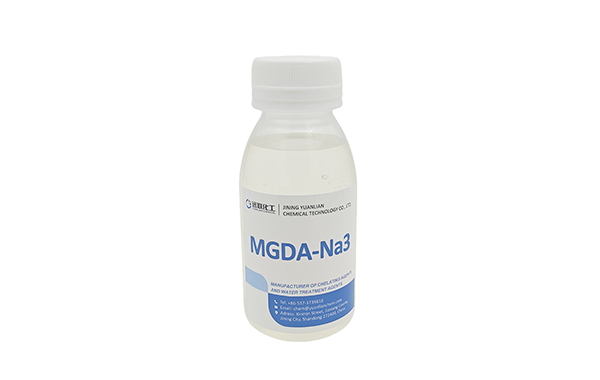
MGDA (methylglycine diacetic acid, trisodium salt) is an amino-acid-based chelating agent. It forms stable, water-soluble complexes with iron, zinc, copper, manganese, and other metal ions essential for plant growth . The compound is supplied in two main forms: a 40% active liquid and a solid granule (typically 78–85% active).
The key selling point for European buyers is the environmental profile. MGDA is readily biodegradable under OECD 301 tests, unlike EDTA, which persists in soil and groundwater . For formulators targeting EU Ecolabel, Nordic Swan, or meeting retailer sustainability requirements, this difference is decisive.
Technical Specifications That Actually Matter
Not everything on a technical data sheet is equally important. Focus on these parameters.
Active content. For liquid MGDA, 40% is the industry standard . Some suppliers offer variations. When comparing quotes, always calculate on active content—a 40% liquid at €1.50/kg is cheaper per active unit than a 38% liquid at €1.40/kg.
Chelating ability. Different metal ions require different binding capacities. MGDA's typical chelating ability is measured in mg of metal per gram of product: Ca²⁺ 60, Cu²⁺ 96, Zn²⁺ 98, Fe²⁺ 84, Mg²⁺ 36, Mn²⁺ 83 . If you are sourcing for a specific micronutrient blend, check that the supplier's grade matches your requirements.
NTA content. This is where many buyers get caught out. NTA (nitrilotriacetic acid) is a suspected carcinogen under EU CLP (H351). Some MGDA production processes leave trace NTA as an impurity. Responsible suppliers will have a limit—typically <0.2% . For EU Ecolabel applications, you want non-detectable levels.
Chlorides and heavy metals. Chlorides above 4% can accelerate corrosion on stainless steel equipment . Iron content above 20 mg/L can affect formulation stability. Request these specifications in the Certificate of Analysis.
EU Regulatory Compliance
The EU Fertilising Products Regulation (2019/1009) sets clear criteria for chelating agents used in fertilisers . The regulation distinguishes between Group 1 chelates (EDTA, DTPA, HEEDTA, IDHA, EDDS) and Group 2 chelates (EDDHA, HBED, etc.) . MGDA is not yet explicitly listed in the current version of this technical specification, which focuses on established test methods for EDTA and DTPA-based products .
However, the direction of travel is clear. European regulators are encouraging biodegradable alternatives. MGDA is already recognised in the detergent sector under the EU Ecolabel and is increasingly used in agricultural formulations where sustainability claims are required .
When sourcing MGDA for the EU market, verify that your supplier can provide:
OECD 301 biodegradability test report
REACH registration confirmation
Certificate of Analysis with active content, NTA, chloride, and heavy metal limits
Stability data in your target application (soil, hydroponics, foliar)
Packaging Options for Bulk Procurement
MGDA chelated micronutrients are typically available in:
Liquid (40% active):
200–250 kg plastic drums
1000–1250 kg IBCs (intermediate bulk containers)
Bulk tankers for large-volume orders
Solid (granular or powder):
25 kg bags
Supersacks (500–1000 kg)
For most fertiliser applications, the liquid form is preferred because it blends easily into water-soluble fertiliser formulations and fertigation systems. European distributors often offer custom packaging options .
Suppliers for the European Market
Established Western producers. Nouryon operates a dedicated MGDA production facility in Herkenbosch, Netherlands, supplying Dissolvine® M to European customers . BASF offers Trilon® M grades through distribution partners like BTC Europe . Vivochem supplies Sequadol® MGDA with quick delivery in the Benelux region .
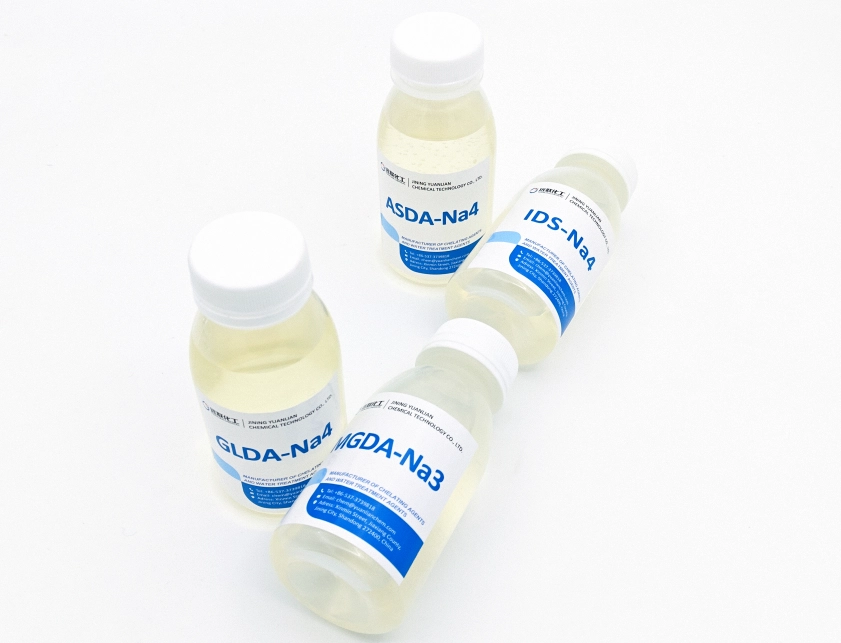
Yuanlian Chemical. Based in China, Yuanlian has developed MGDA chelates for agricultural applications, offering Fe, Zn, Ca, Mg, Cu, and Mn variants . Their products are positioned as eco-friendly alternatives to EDTA, with a focus on addressing the biodegradability challenges of traditional chelates . Yuanlian also produces MGDA in forms suitable for water-soluble fertilisers and foliar applications . For European buyers looking to balance performance and cost, they are worth evaluating.
What to ask any supplier:
Do you have European distribution or direct REACH registration?
Can you provide batch-specific Certificates of Analysis?
What are your lead times for bulk orders?
Do you offer custom chelate blends (e.g., Fe/Zn/Mn combinations)?
Red Flags to Watch For
No Certificate of Analysis available for the specific batch being quoted
Vague specifications — "high purity" without numbers
No REACH documentation — if the product is coming from outside the EU, this is non-negotiable
Inconsistent colour or clarity between samples
Price significantly below market — extremely cheap material often means low active content or high impurities
The Bottom Line
Sourcing MGDA chelated micronutrients for the European market is straightforward once you know what to look for. Focus on active content, NTA limits, chelating ability, and REACH compliance. Verify with Certificates of Analysis. And test samples from multiple suppliers before committing to bulk orders.
The market is moving toward biodegradable chelates. MGDA is one of the proven alternatives. The key is finding a supplier who can deliver consistent quality with the documentation European buyers require.
Latest News



Need help
Prefer speaking with a human to filling out a form? call corporate office and we will connect you with a team member who can help.