23 Jun
Preservative Boosting Effects of GLDA-Na4 in Premium Personal Care Formulations
The Hidden Challenge in Preservative Systems
Anyone who has developed a personal care formulation knows the frustration. You select a preservative system that should work. The challenge tests pass at the lab scale. Then the product sits on the shelf for a few months, and the preservative efficacy drops. Microbial growth appears. The batch has to be discarded.
The problem is often not the preservative itself, but the environment it is working in. Metal ions—calcium, magnesium, iron, copper—are everywhere in water, raw materials, and processing equipment. These ions can deactivate preservatives, neutralise their antimicrobial activity, and create conditions where microorganisms thrive.
Traditional chelating agents like EDTA address this by binding metal ions. But EDTA does not biodegrade, and regulators are taking notice. Premium formulators targeting EU Ecolabel, Nordic Swan, or COSMOS certification need alternatives that work as well without the environmental baggage.
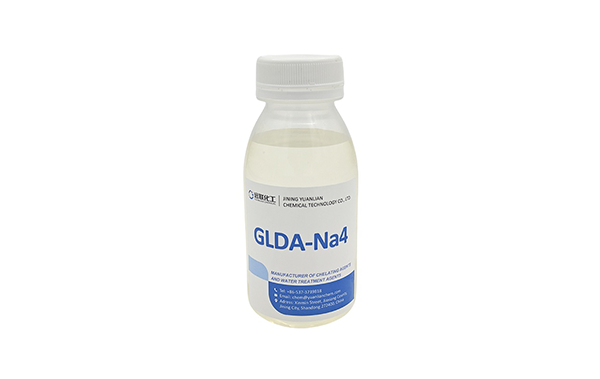
GLDA-Na4 (tetrasodium glutamate diacetate) offers a solution. It is a bio-based, readily biodegradable chelating agent that enhances preservative efficacy, allowing formulators to use lower preservative loads while maintaining microbial stability .
What Is GLDA-Na4?
GLDA-Na4 is a chelating agent derived from L-glutamic acid, a naturally occurring amino acid . It forms stable, water-soluble complexes with calcium, magnesium, iron, and other metal ions, preventing them from interfering with preservative systems.
Basic specifications:
| Property | Value |
|---|---|
| INCI Name | Tetrasodium Glutamate Diacetate |
| CAS No. | 51981-21-6 |
| Available forms | Liquid (38–47% active) |
| pH (1% solution) | 11.0–12.0 |
| Biodegradability | Readily biodegradable (OECD 301) |
| NTA content | Non-detectable |
GLDA is produced from renewable raw materials and is NTA-free, making it suitable for formulations positioned as natural or sustainable .
How the Preservative Boosting Mechanism Works
GLDA-Na4 is not a preservative itself . It does not kill microorganisms directly. What it does is create an environment where preservatives can work more effectively.
The mechanism is straightforward. Microorganisms need metal ions for essential functions—enzyme activity, membrane stability, nutrient transport. GLDA binds those metal ions, disrupting microbial cell membranes and making the organisms more vulnerable to the primary preservatives .
What this delivers in practice:
Enhanced biocidal efficacy. GLDA provides enhanced preservative boosting power compared to commonly used boosters such as EDTA and NTA .
Effective against both Gram-positive and Gram-negative bacteria. GLDA works across a broad microbial spectrum, including molds .
Reduced preservative load. With GLDA in the formulation, you can use less active preservative while maintaining the same level of protection .
Where Premium Formulators Are Using GLDA
Facial Cleansers and Body Washes
In wash-off products, GLDA enhances preservative efficacy while also managing hard water. It binds calcium and magnesium ions that would otherwise react with surfactants, ensuring a rich lather and preventing the tight, dry feeling some consumers associate with hard water residue .
Hair Care
Shampoos and conditioners face a dual challenge: hard water and preservative stability. GLDA softens water for better foam and rinse, while boosting preservative systems to extend shelf life .
Skin Care (Creams, Serums, Lotions)
GLDA protects against metal-catalysed oxidation, preventing rancidity of natural oils and preserving the intended colour and odour of the formulation . It also stabilises antioxidants and other sensitive actives .
Sun Care
In sunscreens, GLDA prevents discolouration and degradation of UV filters, maintaining product efficacy and appearance over the shelf life .
Wet Wipes and Shaving Products
GLDA's dispersion properties combined with easier rinsing make it particularly suitable for modern wash-off formulations, as well as wipes and shaving products .
Practical Formulation Guidelines
Recommended concentration. 0.1–0.5% active GLDA in the finished formulation .
Replacement ratio. GLDA can replace EDTA on a 1:1 active basis in most applications .
Incorporation method. Add GLDA to the aqueous phase or at the end of formulation. It is completely soluble in water at all proportions .
pH range. GLDA remains stable and effective from pH 2 to 14, offering flexibility across acidic and alkaline formulations .
The Regulatory and Market Advantages
European regulators and eco-label schemes are increasingly demanding ready biodegradability. GLDA passes OECD 301 tests with >60% degradation within 28 days. EDTA does not.
For brands targeting:
EU Ecolabel
Nordic Swan
COSMOS
BDIH Standard
USDA BioPreferred
...GLDA provides a credible, documented alternative to persistent chelates .
The Bottom Line
GLDA-Na4 is not a compromise. It is a genuinely better choice for premium personal care formulations—strong chelation, broad pH tolerance, ready biodegradability, and proven preservative boosting power.
The ability to reduce preservative loads while maintaining shelf life, combined with a clean environmental profile, makes GLDA a practical choice for formulators looking to meet regulatory requirements and consumer expectations without sacrificing performance.
Latest News



Need help
Prefer speaking with a human to filling out a form? call corporate office and we will connect you with a team member who can help.