26 Jun
Industrial Cleaning with GLDA: Scale Prevention and Metal Ion Control
Why Metal Ions Are a Problem in Industrial Cleaning
In industrial cleaning, metal ions are the hidden enemy. Calcium and magnesium from hard water form scale on equipment surfaces, reducing heat transfer and increasing energy costs. Iron and copper ions catalyse the breakdown of peroxide-based bleaches, shortening their effective life. And transition metals can cause discolouration, degradation of surfactants, and unwanted precipitation.
Traditional chelating agents like EDTA and phosphonates have been the standard solution. They bind metal ions, keeping them in solution and preventing interference. But they come with regulatory baggage—poor biodegradability, persistence in the environment, and restrictions under EU eco-label schemes.
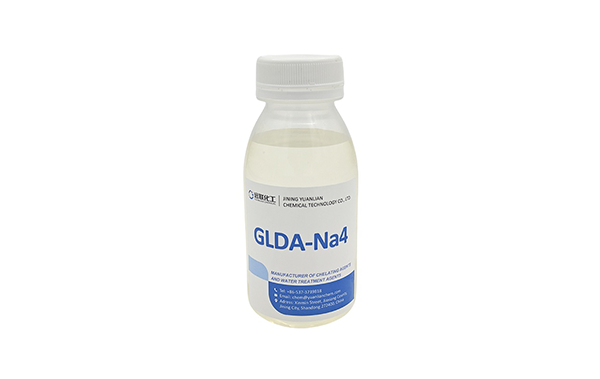
GLDA (tetrasodium glutamate diacetate) has emerged as a practical alternative. It is a biodegradable chelating agent derived from glutamic acid, a naturally occurring amino acid . It binds calcium, magnesium, iron, and other transition metals effectively, preventing scale formation and metal-catalysed reactions. And it biodegrades completely after use.
How GLDA Controls Scale and Metal Ions
GLDA works by forming stable, water-soluble complexes with di- and tri-valent metal ions . Once bound, these ions cannot participate in undesirable reactions—they cannot precipitate as calcium carbonate scale, catalyse peroxide decomposition, or deactivate surfactants.
Calcium and magnesium sequestration. GLDA binds calcium and magnesium ions, softening water and preventing scale formation in industrial cleaning applications . Research has demonstrated GLDA's effectiveness as a chelator for calcium ions at elevated temperatures, with experimental data confirming its chelating ability .
Iron and copper control. In peroxide-based cleaning systems, iron and copper ions catalyse the decomposition of hydrogen peroxide. GLDA binds these transition metals, stabilising bleach systems and extending their effective life .
Metal ion control across pH. GLDA remains effective over a wide pH range—from acidic descaling solutions to highly alkaline degreasers . One product specification notes stability between pH 2 and 13 at room temperature, making it suitable for diverse industrial cleaning applications .
Applications in Industrial Cleaning
GLDA is used across a wide range of industrial and institutional cleaning applications .
Scale removal and prevention. In boilers, heat exchangers, and cooling systems, GLDA removes existing scale and prevents new deposits from forming. It is described as a scale inhibitor in laundering and dishwashing applications, and as effective for scale removal at high pH .
Surfactant enhancement. By removing hard water ions, GLDA allows surfactants to work more effectively. This means lower surfactant use levels, better cleaning performance, and reduced water hardness-related problems .
Metal surface cleaning. Transport cleaners and industrial degreasers benefit from GLDA's ability to remove oil and iron deposits under acidic, neutral, or mildly alkaline conditions . It is also used as a replacement for NTA in these applications .
Bleach stabilisation. In formulations containing perborates or percarbonates, GLDA stabilises the bleach by chelating metal ions that would otherwise catalyse decomposition .
The GLDA Advantage Over Traditional Chelates
GLDA offers several advantages over EDTA and other traditional chelating agents:
Ready biodegradability. GLDA is classified as readily biodegradable under OECD 301D, with more than 60% degradation within 28 days . This makes it compliant with EU Ecolabel, Nordic Swan, and Blue Angel criteria .
Based on renewable raw materials. GLDA is derived from glutamic acid, which is produced from renewable sources via fermentation. One product specification notes that GLDA is partially biobased, with approximately 56% renewable carbon atoms .
Low ecotoxicity. GLDA carries a low eco-toxicity profile and does not require environmental hazard labelling .
Strong chelation. Despite its biodegradable profile, GLDA is described as a "strong chelate" and a "green and strong chelating agent" in the Dissolvine product range . Studies have shown that GLDA can be a more effective chelator than alternatives in certain conditions .
Broad compatibility. GLDA is compatible with anionic, non-ionic, and cationic surfactants, making it suitable for a wide range of industrial cleaning formulations .
Practical Formulation Considerations
Typical use levels. In industrial cleaning formulations, GLDA is typically used at 0.5–5% active, depending on the application and water hardness. Higher levels may be used in heavy-duty descaling products.
Forms available. GLDA is commonly available as a liquid solution at 38% or 47% active content . High-activity grades at 55% are also available for unit-dose and concentrated formulations .
Compatibility. GLDA works with most common industrial cleaning ingredients—surfactants, builders, enzymes, bleaches, and preservatives. It is stable across a wide pH and temperature range.
Regulatory compliance. GLDA is NTA-free, REACH-compliant, and eligible for EU Ecolabel certification. For industrial cleaning formulators targeting green credentials, it is a straightforward replacement for less sustainable alternatives.
The Bottom Line
GLDA is not a compromise. It is a genuinely better choice for industrial cleaning—strong calcium sequestration, effective metal ion control, broad pH tolerance, and ready biodegradability. For European formulators facing regulatory pressure and customer demand for sustainable chemistry, GLDA is the practical, proven alternative to EDTA and phosphonates.
Latest News


Need help
Prefer speaking with a human to filling out a form? call corporate office and we will connect you with a team member who can help.