25 Jun
Agricultural-Grade PASP Procurement Guide: Molecular Weight Profiles and Supply Chain Reliability
Why Molecular Weight Matters in PASP Procurement
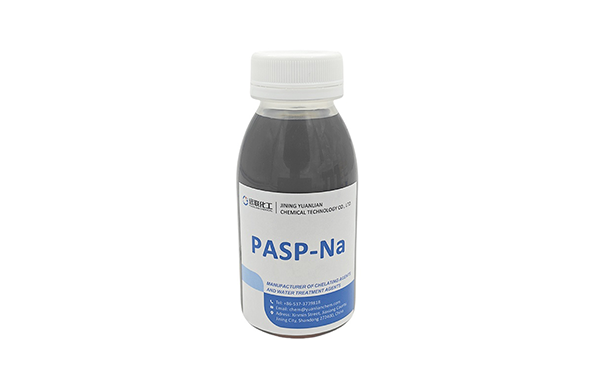
If you are sourcing polyaspartic acid (PASP) for agricultural applications, one specification matters more than most: molecular weight. It is not just a number on a technical data sheet. It directly affects how the product performs in the field, how it interacts with fertilisers, and ultimately how much benefit your customers see.
Research has shown that PASP with higher molecular weights delivers better results in agriculture. A study comparing three molecular weight fractions—5,517 Da, 6,934 Da, and 7,568 Da—found that the highest molecular weight PASP produced the best outcomes for nitrogen retention, crop yield, and nutrient use efficiency . Lettuce showed nitrogen use efficiency improvements of 7.6%, 12.8%, and 15.0% across the increasing molecular weights, with similar trends in wheat trials.
The explanation lies in the polymer structure. Higher molecular weight PASP contains more peptide bonds, which contribute to enhanced root growth and nutrient absorption . It also forms more stable complexes with nutrient ions, reducing leaching losses and keeping fertiliser in the root zone longer. For European growers facing tightening regulations on nitrogen runoff, this difference matters.
Understanding Molecular Weight Profiles
PASP is available in various molecular weight ranges, each suited to different applications. Here is what the numbers mean in practice.
Low molecular weight (1,000–3,000 Da). This fraction is sometimes used in water treatment applications where rapid degradation is preferred. In agriculture, it is generally less effective for nutrient retention and yield improvement.
Medium molecular weight (3,000–6,000 Da). This is the most common range for agricultural-grade PASP . It offers a balance between performance and cost, with sufficient chain length to chelate nutrients and reduce leaching while remaining fully biodegradable.
High molecular weight (7,000–10,000 Da). This range delivers the best agricultural performance, particularly for nitrogen use efficiency and yield improvement . Some suppliers offer PASP in this range for premium fertiliser formulations.
The choice between these profiles should align with your specific application. For coated urea or controlled-release fertilisers, higher molecular weight PASP is often the better investment. For liquid fertiliser additives where rapid dispersion matters, medium molecular weight may be sufficient.
Key Specifications to Request
When evaluating PASP suppliers, request these specifications on the Certificate of Analysis:
Molecular weight (Mw) and polydispersity. The average molecular weight and distribution width. Tighter distributions mean more consistent performance.
Solid content. Typically ≥40% for liquid products . This determines the active material you are paying for.
Biodegradability. OECD 301 certification confirms ready biodegradability, a requirement for EU Ecolabel and many eco-label schemes .
Scale inhibition performance. For fertiliser applications, calcium carbonate inhibition rates above 95% indicate strong chelation capacity .
pH (1% solution). Typically 9.0–11.0 for the sodium salt form .
Residual monomer content. Lower is better for consistent performance and regulatory compliance.
Supply Chain Reliability: What to Look For
The agricultural PASP market is global, with production concentrated in Asia and specialty suppliers serving European buyers . Understanding the supply landscape helps you make informed procurement decisions.
Production Capacity
Look for manufacturers with dedicated PASP production lines and annual capacities measured in thousands of tonnes. Suppliers with modern, automated facilities and established quality management systems (ISO 9001, ISO 14001) are better positioned to maintain batch-to-batch consistency .
REACH Compliance
For imports into the EU, REACH registration is non-negotiable. European buyers should confirm that their supplier—or their supplier's appointed only representative—has fulfilled registration obligations for polyaspartic acid (CAS 181828-06-8) .
European Supply Options
Several suppliers serve the European market. Yuanlian Chemical, for example, manufactures PASP with typical molecular weight profiles of 3,000–5,000 Da and solid content ≥40%, with production capacity exceeding 10,000 tonnes annually and full REACH documentation . European producers, particularly those based in Germany, may offer ultra-high purity grades for specialised applications .
Documentation Checklist
Before placing a bulk order, collect these documents from your supplier:
Certificate of Analysis for the specific batch (not a generic spec sheet)
Safety Data Sheet (compliant with EU regulation)
Molecular weight distribution data
Scale inhibition performance data
The Bottom Line
Sourcing agricultural-grade PASP is straightforward once you know what to look for. Focus on molecular weight (3,000–5,000 Da for standard applications, higher for premium performance), verify specifications with Certificates of Analysis, and confirm REACH compliance for European supply .
The right molecular weight profile makes the difference between a product that works and one that does not. And the right supplier makes the difference between a product you can rely on and one that creates formulation problems.
Latest News



Need help
Prefer speaking with a human to filling out a form? call corporate office and we will connect you with a team member who can help.