24 Jun
Preventing Oil Spots and Fish-Eyes in Premium Plaster Formulations
The Surface Defect Problem No One Talks About
You have spent weeks perfecting your plaster formulation. The rheology is spot on. The setting time is exactly where you want it. Then the finished surface goes on the wall, and you see them—circular craters, small pinholes, or oily spots that refuse to take paint. These defects, commonly called fish-eyes or oil spots, turn a premium product into a reject.
What causes them? More often than not, the answer is surface contamination. Silicone residues, oil-based additives, or even PVA from previous work can create localised areas where the plaster cannot wet out properly. The material pulls away from the contaminated spot, leaving a crater-shaped depression that becomes visible once painted.
The problem is frustrating because it is intermittent and hard to reproduce in the lab. But for European plaster manufacturers supplying high-spec products for commercial or residential projects, any surface defect is unacceptable.
Understanding What Causes Fish-Eyes in Gypsum Plasters
Fish-eyes form when surface tension differences cause the wet plaster to pull away from a spot. That spot is usually contaminated with something hydrophobic—silicone, oil, or grease. In some cases, the contamination comes from the substrate (such as over-polished plaster or PVA residues). In others, it is introduced by additives in the formulation itself.
Silicone contamination is the most common culprit. Even trace amounts of silicone from defoamers, release agents, or processing equipment can cause fish-eyes. That is why selecting the right defoamer is critical. Some defoamers contain silicones that improve foam knockdown but risk creating surface defects if they are not compatible with the system .
Over-polished plaster surfaces can also cause problems. When plaster is finished too smooth, the surface becomes almost glass-like. Paint or subsequent coats cannot get a grip, and the result is what looks like fish-eyes .
Additive incompatibility is another factor. Certain plasticisers, retarders, or water-reducing agents can interact with the gypsum hydration process in ways that affect surface energy. If the formulation is not balanced, the finished surface may show craters or spots that were not visible during initial testing.
Selecting Defoamers That Do Not Cause Surface Defects
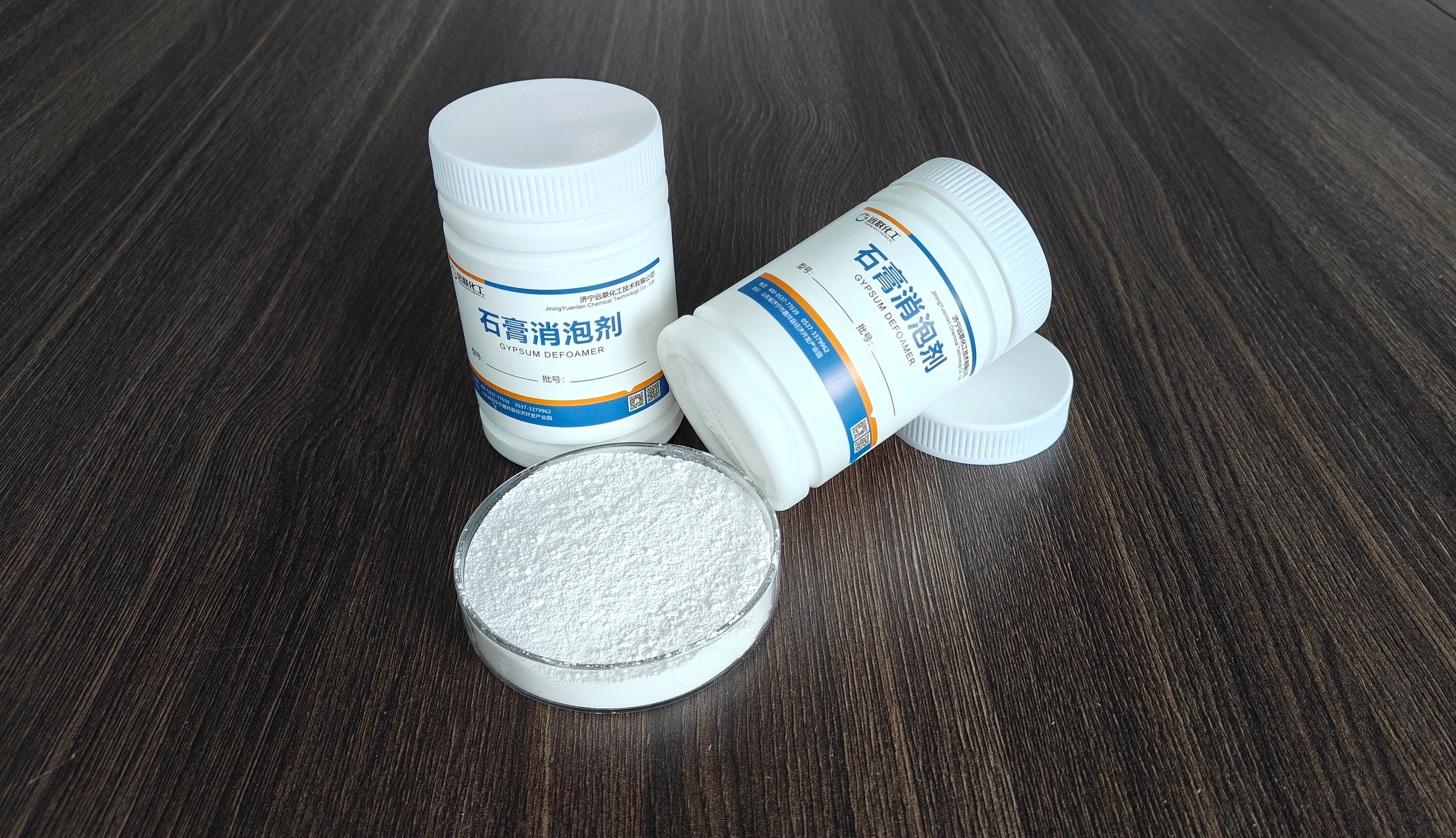
Defoamers are essential for controlling air entrainment during mixing. But choosing the wrong one can introduce problems.
Silicone-based defoamers are highly effective at knocking down foam, but they can cause fish-eyes if they are not properly dispersed or if they are incompatible with the binder system. Some silicone defoamers are formulated specifically to avoid surface defects—for example, BYK-093 is described as having "extraordinary compatibility" that "hardly causes any surface defects such as cratering or haze formation" .
Mineral oil-based defoamers are less likely to cause fish-eyes than silicones, but they may leave a residue that affects paint adhesion. This is the trade-off: silicone defoamers work faster, but mineral oil products are often safer for surface-sensitive applications.
Polyether defoamers offer a middle ground. They are silicone-free, so the risk of fish-eyes is lower, but they may not be as effective in high-foaming systems. Some newer products are described as "odorless polymer defoamers" that are "silicone- and mineral oil-free," making them suitable for VOC-free and eco-label formulations .
The key takeaway: test your defoamer in the full formulation, not in isolation. What works in a simple mortar may cause surface defects when combined with plasticisers, retarders, and other additives.
Practical Steps to Prevent Oil Spots and Fish-Eyes
Check your raw materials. Incoming fillers, additives, and even packaging can introduce contamination. Batch-test each raw material for surface activity before use in premium formulations.
Verify defoamer dosage. Over-dosing a defoamer can cause it to separate and create spots. Start at the lower end of the recommended range and increase only if foam control is inadequate.
Adjust the application method. For plasterers on site, the problem may be contamination from the substrate. A high-grip primer or stain-blocking primer can isolate the contaminated surface and prevent fish-eyes .
Consider substrate treatment. When fish-eyes appear on painted plaster surfaces, a coat of oil-based primer or a dedicated defect eliminator can often resolve the issue . For formulators, this means designing the product to be more forgiving of substrate variations.
The Bottom Line
Fish-eyes and oil spots are not inevitable. They are the result of contamination or incompatibility. By selecting defoamers with demonstrated surface compatibility, controlling additive dosages, and understanding the interaction between formulation and substrate, plaster manufacturers can deliver premium products that finish cleanly every time.
Latest News




Need help
Prefer speaking with a human to filling out a form? call corporate office and we will connect you with a team member who can help.