25 Nov
Polyaspartic Acid PASP as Next-Gen Phosphate-Free Scale Inhibitor for Sustainable Water Treatment
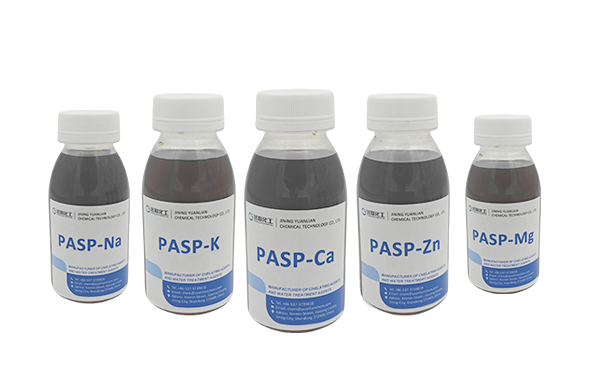
Maintaining efficient heat transfer and flow rates in industrial water systems is critical for productivity, yet scaling remains a persistent challenge. Traditional scale inhibitors often rely heavily on phosphonates or inorganic phosphates, raising environmental concerns due to eutrophication risks. Polyaspartic Acid (PASP), a synthetic, biodegradable polymer, offers a high-performance, phosphate-free alternative, with YuanlianChemical at the forefront of developing effective PASP-based solutions tailored for demanding applications.
Scaling occurs when mineral ions like calcium carbonate, calcium sulfate, or barium sulfate precipitate out of solution and adhere to surfaces in boilers, cooling towers, reverse osmosis (RO) membranes, and heat exchangers. This buildup acts as an insulator, drastically reducing heat transfer efficiency, increasing energy consumption, and potentially leading to costly equipment failures and downtime. For decades, phosphate-based inhibitors dominated the market, offering good performance at a reasonable cost. However, the environmental impact of phosphorus discharge into waterways, stimulating excessive algae growth and damaging aquatic ecosystems, has driven stringent regulations and a shift towards eco-friendly alternatives.
This is where Polyaspartic Acid (PASP) excels. PASP is synthesized from the natural amino acid, aspartic acid. Its unique structure provides exceptional scale inhibition capabilities. PASP molecules contain multiple carboxylate groups (-COO-) along their backbone. These negatively charged groups exhibit a powerful affinity for the positively charged cations (like Ca²⁺, Ba²⁺, Sr²⁺) present in scaling minerals. PASP operates primarily through two synergistic mechanisms: threshold inhibition and crystal modification. In threshold inhibition, relatively low concentrations of PASP adsorb onto the tiny, nascent crystals of scale as they begin to form. This adsorption creates an electrostatic and steric barrier, preventing further crystal growth and agglomeration, effectively holding the minerals in solution even at supersaturated concentrations well beyond their normal solubility limits. Concurrently, PASP distorts the crystal lattice structure of scale minerals. Instead of forming hard, adherent scales, the minerals form dispersed, non-adherent, fine particles or sludges that are easily carried away by the flowing water stream.
YuanlianChemical's innovative PASP formulations leverage these mechanisms to deliver outstanding performance across diverse applications. In cooling tower systems, characterized by evaporative concentration cycles that exacerbate scaling potential, YuanlianChemical PASP effectively controls calcium carbonate, calcium sulfate, and silica scaling. This translates to sustained heat exchanger efficiency, reduced water blowdown frequency and volume, and significant energy savings. For RO systems, where sensitive membranes are highly susceptible to scaling, YuanlianChemical's highly effective PASP grades provide robust protection against sulfate scales (like CaSO₄, BaSO₄, SrSO₄) – notoriously difficult to inhibit without phosphates – as well as carbonate scaling. This protection is crucial for maintaining high water flux rates, maximizing recovery rates, extending membrane lifespan, and reducing operating costs. Boiler water treatment also benefits, where YuanlianChemical PASP inhibits scale formation, enhancing steam generation efficiency and preventing tube blockages and overheating. Oilfield applications are another key area, where PASP injection prevents mineral deposition in reservoirs and wells, safeguarding production.
The environmental advantages of YuanlianChemical's PASP formulations are profound and multi-faceted. Most significantly, they are entirely phosphate-free, eliminating the contribution to eutrophication and helping industries comply with increasingly strict discharge regulations on phosphorus content. PASP possesses excellent biodegradability, breaking down readily in the environment through microbial activity into harmless components (water, carbon dioxide, biomass), unlike some persistent synthetic polymers. Its synthesis often has a lower carbon footprint compared to conventional phosphonates, further aligning with corporate sustainability goals. YuanlianChemical is committed to optimizing the sustainability profile of its PASP products throughout their lifecycle.
Beyond being phosphate-free and biodegradable, YuanlianChemical PASP offers significant technical and economic advantages. Its effectiveness persists across a broad pH range and high temperatures typical of many industrial processes. PASP exhibits excellent stability in the presence of oxidizing biocides like chlorine, a common requirement in cooling water treatment regimes. It shows strong compatibility with other water treatment chemicals, including corrosion inhibitors, dispersants, and many biocides, simplifying formulation and application. Furthermore, PASP demonstrates synergistic effects when combined with other green inhibitors like polyepoxysuccinic acid (PESA), allowing for highly tailored and effective treatment programs designed by YuanlianChemical's technical experts. Economically, the high efficiency of PASP, often requiring lower dosages than traditional treatments for equivalent or better performance, combined with reduced water blowdown needs and lower energy consumption, delivers tangible cost savings for plant operators. The extended lifespan of equipment like boilers, heat exchangers, and RO membranes further contributes to a strong return on investment.
Transitioning to YuanlianChemical PASP requires consideration of water chemistry. Factors like system pH, temperature, pressure, cation and anion concentrations, flow rates, and the presence of iron or other metals significantly influence inhibitor selection and dosage. YuanlianChemical provides comprehensive technical support, including detailed water analysis and pilot testing services, to develop the optimal PASP-based treatment program for each unique application. Successfully implementing PASP involves careful monitoring and control. Key parameters such as inhibitor concentration (ensuring sufficient residual is maintained), pH levels, conductivity, scaling ion concentrations, and corrosion rates should be monitored regularly. YuanlianChemical can assist with establishing monitoring protocols and automated feed control systems for consistent performance.
As water scarcity intensifies and environmental regulations become more rigorous globally, the demand for highly effective, sustainable water treatment solutions like polyaspartic acid will only accelerate. PASP represents a mature, proven technology for phosphate-free scale control. YuanlianChemical is dedicated to advancing PASP chemistry, focusing on enhancing performance efficiency at lower concentrations, developing synergistic blends with other green chemistries, and tailoring products for niche applications where scaling is a critical challenge. By choosing YuanlianChemical PASP inhibitors, industries proactively protect their critical assets against scale, optimize operational efficiency, reduce their environmental footprint, and align with global sustainability objectives, securing a more resilient and responsible future for industrial operations. The move towards PASP is not merely compliance-driven; it's a strategic investment in operational excellence and environmental stewardship.
Latest News


Need help
Prefer speaking with a human to filling out a form? call corporate office and we will connect you with a team member who can help.