10 Dec
Polyaspartic Acid : The Green Key to a New Era of Water-Soluble Fertilizer Efficiency
Research data from a National Key R&D Program of China shows that fertilizers containing modified polyaspartic acid can increase rice yields by over 12%, and maize by 10.4% even with a 20% reduction in fertilizer application.
Polyaspartic Acid (PASP), recognised internationally as a "green chemical," is driving a revolution in water-soluble fertilizer efficiency technology within the agricultural sector, thanks to its non-toxic, pollution-free, and completely biodegradable properties.
This biomimetically synthesised, water-soluble polymer significantly improves fertiliser utilisation and activates soil nutrients through chelation with nutrient ions. Its potential as a high-efficiency fertilizer synergist is being increasingly validated by both research and practical application.
01 Scientific Foundation: The Efficiency-Boosting Principles of PASP
Polyaspartic Acid is not a traditional fertiliser but a highly efficient "Nutrient Transport Commander" and "Soil Conditioner". Its core function lies in its unique molecular structure, which contains active groups such as peptide bonds and carboxyl groups, endowing it with exceptional chelating, dispersing, and adsorptive capacities.
In soil, phosphorus readily binds with cations like calcium, magnesium, and iron, forming fixed phosphate compounds that plants cannot absorb—a primary reason for low phosphorus fertiliser efficiency. As a negatively charged polymer, PASP can preferentially adsorb and "trap" these metal cations, thereby releasing the "locked" phosphate ions and making them available for plant uptake again.
This process not only mobilises fixed phosphorus in the soil but also simultaneously enhances the mobility and availability of chelated mid- and micronutrients like calcium, iron, and zinc, achieving synergistic nutrient efficiency.
02 Multifunctional Efficacy: Comprehensively Addressing Water-Fertiliser Management Challenges
Incorporating PASP into water-soluble fertilizers delivers value through comprehensive improvements for the crop, soil, and the fertigation system itself.
Firstly, it directly promotes root development. Studies indicate that PASP application can stimulate plants to produce more branched roots and root hairs, forming a larger and more efficient absorption network. A robust root system means enhanced water and nutrient uptake, which is the physiological basis for improved stress resistance (drought, cold) and earlier maturation.
Secondly, it systemically improves soil ecology. PASP effectively inhibits the formation of insoluble salt crystals in the soil, thereby reducing soil salinity and alleviating issues of compaction and salinisation.
It also improves the soil microbial community environment, promoting soil health and creating a more favourable rhizosphere environment for crop growth.
Thirdly, it protects irrigation systems. PASP itself is an excellent scale inhibitor in water treatment. Adding it to fertigation systems (drip, sprinkler) helps prevent scale deposition in pipes and emitters, ensuring long-term stable system operation and reducing maintenance costs.
03 Empirical Data: Field Trials Validate Remarkable Yield Increase Effects
Theoretical advantages require validation through field yield results. In recent years, field efficacy trials on PASP-containing fertilizers have yielded convincing data.
According to research published in the journal Fertilizers & Health, fertilizers containing modified polyaspartic acid have shown outstanding performance on staple food crops.
On rice, they achieved a yield increase exceeding 12.15%, translating to a net profit increase of over 255 RMB per mu for farmers. More notably, in maize trials: even with a 20% reduction in conventional fertiliser application, maize still achieved a 10.40% yield increase.
This demonstrates that PASP not only helps increase yields but also enables the sustainable agricultural goal of "increasing efficiency while reducing fertiliser application" by significantly improving fertiliser use efficiency. On wheat, this fertilizer also achieved a 16.65% yield increase and an added profit of 222.83 RMB per mu.
04 Brand Strength: Yuanlian Chemical's Green Chemistry Practice
In the field of PASP R&D and industrialisation, Shandong Yuanlian Chemical Co., Ltd. stands as a pioneering force in China.
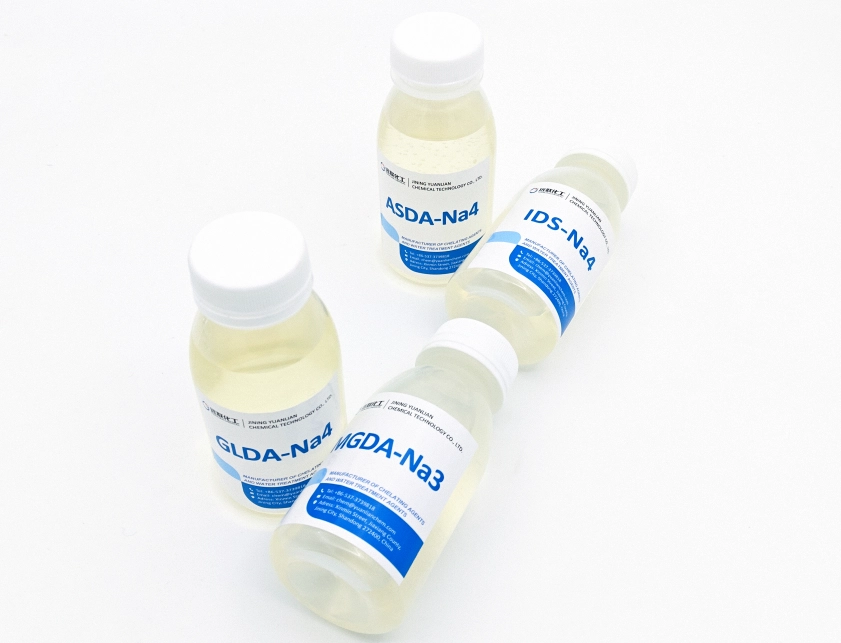
Since its establishment in 2015, the company has focused on the R&D, production, and sales of green chemicals such as Polyaspartic Acid (PASP) and Tetrasodium Iminodisuccinate (IDS).
Yuanlian Chemical adheres to a high-tech orientation, maintaining close cooperation with top institutions like Nankai University, Beijing University of Chemical Technology, and Shandong Agricultural University to ensure technological leadership.
The company has established a production line with an annual capacity of 6,000 tons for its PASP series products, ensuring stable quality to meet diverse customer needs.
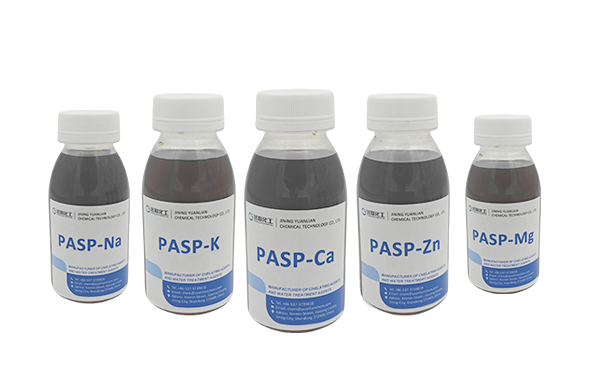
Its product portfolio is comprehensive, covering various forms including Potassium Polyaspartate (PASP-K), Calcium Polyaspartate (PASP-Ca), Magnesium Polyaspartate (PASP-Mg), Zinc Polyaspartate (PASP-Zn), Ammonium Polyaspartate (PASP-NH₄), and Sodium Polyaspartate (PASP-Na).
As a National High-Tech Enterprise, Yuanlian Chemical has obtained multiple certifications including the ISO9001 Quality Management System and holds import-export rights, serving both domestic and international markets.
Upholding its mission to "continuously improve fertilizer utilization efficiency," the company is dedicated to providing customers with green and efficient fertilizer synergy solutions.
With companies like Yuanlian Chemical operating production lines capable of producing thousands of tons of these green chemicals annually, PASP water-soluble fertilizer synergists are moving from the laboratory to vast fields.
In demonstration fields in Shandong, Henan, and other regions, crops like rice and maize using this technology exhibit well-developed root systems and plump grains, achieving stable yield increases while reducing traditional fertilizer inputs.
Farmers are observing that drip irrigation pipes remain clearer, soil compaction is reduced, and crop purchase prices improve due to enhanced quality. This green revolution, starting from the molecular level, is taking deep root in China's agricultural soils, bearing fruitful outcomes.
Latest News



Need help
Prefer speaking with a human to filling out a form? call corporate office and we will connect you with a team member who can help.