04 Jun
Securing Your Green Chemical Supply Chain: Bulk Sourcing Tetrasodium Aspartate Diacetate (ASDA 40% Liquid) Directly from the Manufacturer
The past few years have taught procurement managers a hard lesson: chemical supply chains are fragile. Port delays, allocation cuts, and sudden price jumps have become routine. For buyers of chelating agents, the problem is especially acute. Traditional options like EDTA still work, but regulatory pressure is mounting. Demand for biodegradable alternatives is rising fast – often faster than supply.
That is why more European purchasing teams are looking at Tetrasodium Aspartate Diacetate (ASDA 40% liquid). And they are looking at buying it directly from the manufacturer – skipping the distributor chain that adds cost, delay, and uncertainty.
This article covers what you need to know: the product, the cost case, logistics, and how to start a direct supplier relationship.
What Is ASDA 40% Liquid?
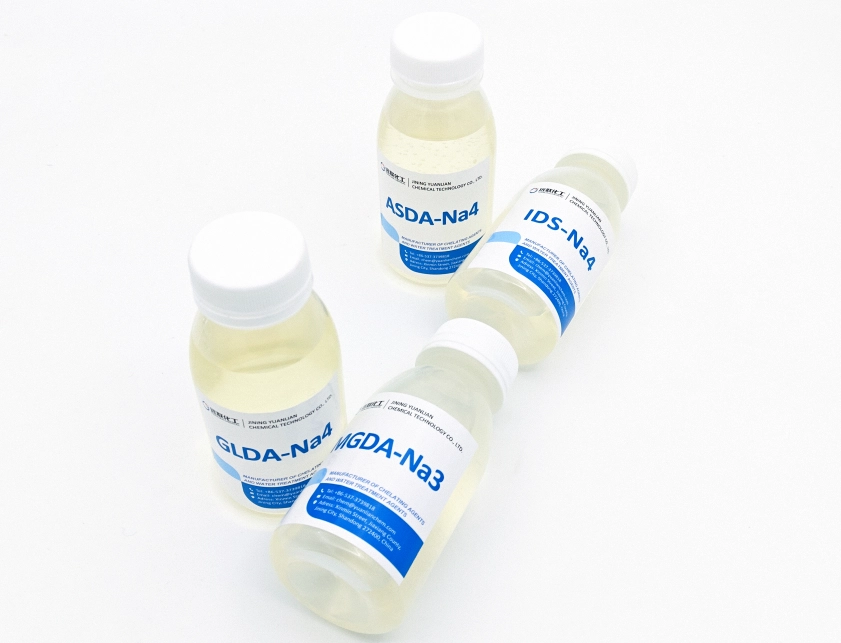
ASDA (tetrasodium aspartate diacetate) is a next-generation biodegradable chelator built on aspartic acid – a naturally occurring amino acid. It binds tightly to calcium, magnesium, iron, and copper ions, making it effective in detergents, water treatment, personal care, and agriculture.
The 40% liquid grade is the most common commercial form. It is a clear to pale yellow solution with low viscosity – easy to pump, dose, and blend. No dust, no clumping, no special dissolution equipment.
| Parameter | Typical Value |
|---|---|
| Active content | 40% ± 1% |
| Appearance | Clear to pale yellow liquid |
| pH (as is) | 10.5–12.5 |
| Heavy metals | Below EU limits |
| Biodegradability | >90% in 28 days (OECD) |
For formulators, this means consistent performance. For procurement, it means a specification you can trust.
Why European Buyers Are Switching to ASDA
Regulatory Pressure Isn't Going Away
EDTA works, but it does not biodegrade. It lingers in rivers and sediments. Under the EU Detergents Regulation, the Ecolabel framework, and the Chemicals Strategy for Sustainability, that persistence is becoming unacceptable.
ASDA is readily biodegradable – over 90% in 28 days under OECD testing. It breaks down into harmless natural components. If your customers demand ecolabel certifications or your company has sustainability targets, switching is not optional. It is a business requirement.
Supply Security Through Direct Relationships
Distributors add value in some cases. But they also add links in the chain. Each link introduces delay, cost, and potential failure points.
Buying directly from the manufacturer gives you a direct line to production planning. You know your allocation. You get advance warning of any changes. And you are dealing with people who actually make the product – not sales representatives who have never seen a reactor.
Consistent Quality Batch After Batch
Batch-to-batch variation is a silent headache. Slightly different impurity profiles. Small shifts in active content. Nothing that makes a batch "out of spec," but enough to cause problems in your formulation.
A reputable manufacturer runs quality control on every batch – active content, heavy metals, chlorides, appearance. When you buy direct, you get a Certificate of Analysis for every shipment. Batch #101 and batch #102 behave identically.
The Cost Case for Direct Sourcing
Let us be honest: ASDA is typically more expensive than EDTA on a per-kilo basis. But total cost of ownership is what matters, not raw material price.
Factor in the following:
Regulatory risk. EDTA is under scrutiny. If it becomes restricted, you will have to reformulate anyway. Switching now avoids a rushed, emergency project.
Ecolabel qualification. EU Ecolabel and Nordic Swan products can command premium pricing. ASDA is eligible. EDTA is not.
Customer demand. Retailers and corporate buyers increasingly ask for environmental data. "Contains a readily biodegradable chelator" is a real commercial advantage.
On top of that, buying direct removes distributor margins. You pay the manufacturer's price, not manufacturer plus 15% plus handling. For bulk buyers – IBCs or tanker quantities – the savings are substantial.
Logistics and Packaging for Europe
Typical packaging options for ASDA 40% liquid:
| Container | Net Weight | Best For |
|---|---|---|
| 25 kg drum | 25 kg | Lab trials, R&D |
| 250 kg drum | 250 kg | Commercial batches |
| 1250 kg IBC | 1250 kg | High-volume production |
| Flexitank | 20–25 tonnes | Industrial scale |
Shipping to Rotterdam, Hamburg, Antwerp, or Genoa is routine. Lead times are typically 4–6 weeks for sea freight.
Storage note: ASDA 40% liquid freezes around -5°C to -10°C. If you are in northern Europe and storing outdoors in winter, heated storage or insulated containers are worth considering. The product works fine after thawing, but gentle warming is needed before pumping.
What to Look for in a Manufacturer
Experienced European buyers check a few key things:
REACH registration. Without it, your supplier cannot legally sell into the EU. Ask for the registration number.
Quality system. ISO 9001:2015 is the minimum. Ask about their testing protocol for each batch.
Traceability. Can they provide a CoA for every shipment? Can they trace a finished batch back to raw materials?
Capacity. If you need steady volume, can they deliver without stretching production?
Communication. Do they reply within 24 hours? Do they understand European time zones?
One manufacturer that meets these criteria is Yuanlian Chemical. They produce ASDA 40% liquid at scale, hold REACH registration, and already supply formulators across Italy, Spain, and Germany. But the same checklist applies regardless of which supplier you choose.
How to Start Sourcing Directly
Switching from distributor to direct manufacturer is simpler than you might think.
Step one: Request a sample. Run it through your standard QC and formulation tests.
Step two: Request a CoA for the sample batch and a production batch. Compare them.
Step three: Ask for pricing on your typical annual volume. Get it in writing with clear incoterms.
Step four: Order a small commercial quantity – one pallet or one IBC. Validate logistics and documentation.
Step five: Scale up once satisfied.
The whole process takes two to three months. That is not long considering the supply security you gain.
Common Questions from European Buyers
Is ASDA classified as hazardous for transport?
No. Under ADR, it is non-hazardous – no UN number, no hazard labels. This simplifies logistics.
What is the shelf life?
24 months from manufacture when stored in sealed containers between 5°C and 40°C.
Can ASDA replace EDTA directly?
In
most applications – detergents, water treatment, personal care,
agriculture – yes. You may need to adjust dosage slightly. Run a
side-by-side test, but many formulators report direct substitution works
well.
What documentation should I expect?
Certificate
of Analysis for each batch, Safety Data Sheet (English and local
language), REACH registration number, and commercial invoice.
Conclusion: Take Control of Your Chelator Supply
European formulators are under too much pressure – on cost, compliance, and sustainability – to leave their supply chain to chance.
Bulk sourcing ASDA 40% liquid directly from a manufacturer puts you back in control. Better pricing. Consistent quality. Direct communication. And the peace of mind that comes from knowing exactly where your raw materials come from.
If you are considering a switch from EDTA – or just want to diversify your supply – a direct manufacturer relationship is the smartest move you can make.
Next step: Request a sample. Run your tests. Compare the numbers. Then decide whether the distributor is still adding value – or just adding cost.
Latest News


Need help
Prefer speaking with a human to filling out a form? call corporate office and we will connect you with a team member who can help.