05 Jun
Securing Your Supply Chain: Bulk Sourcing REACH-Compliant Polyaspartic Acid Directly from the Manufacturer
The past few years taught European procurement teams a hard lesson: chemical supply chains are not as resilient as we thought.
Port backlogs at Rotterdam. Container ship diversions. Raw material allocations that vanish overnight. And when you finally find a replacement supplier, the price has jumped by 30 percent.
For buyers of specialty chemicals like polyaspartic acid, the situation is particularly acute. Demand for biodegradable alternatives is rising fast, but reliable, REACH-compliant supply remains concentrated among a handful of producers.
This article covers what European purchasers need to know about bulk sourcing polyaspartic acid directly from the manufacturer. Practical guidance from people who have been through the process.
What Is Polyaspartic Acid?
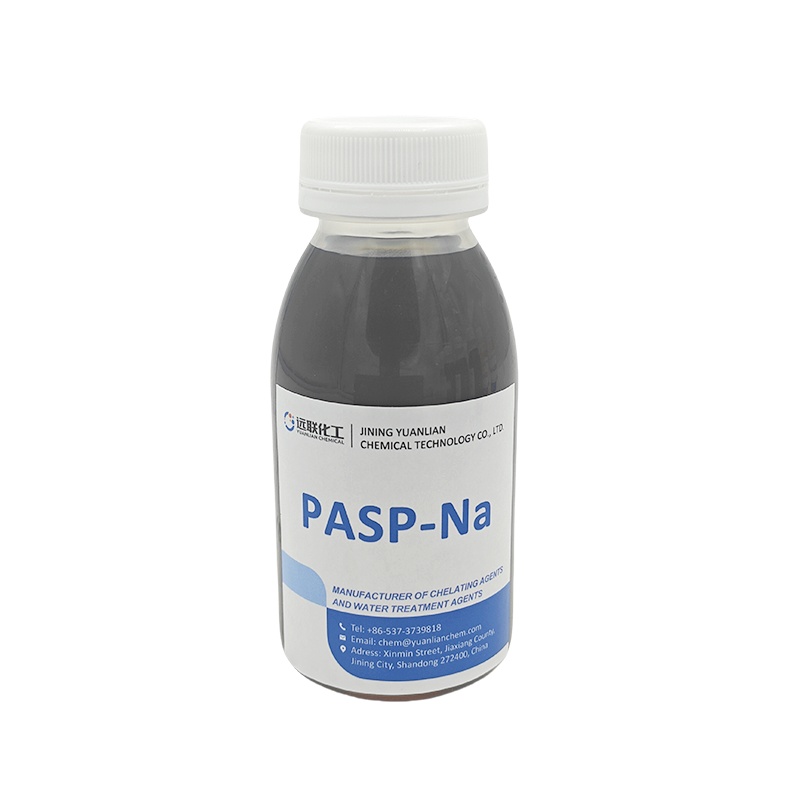
Polyaspartic acid (PASP) is a water-soluble, biodegradable polymer made from L-aspartic acid – a naturally occurring amino acid. It contains no phosphorus and breaks down completely in the environment.
Key applications across European industry:
Water treatment – scale inhibition in cooling towers, boilers, and reverse osmosis systems
Agriculture – fertiliser synergist, improving nutrient use efficiency
Detergents – phosphate-free builder and scale preventer
Coatings – fast-curing, low-VOC industrial coatings
The product is typically supplied as a 40% liquid (yellowish to amber) or as a 90%+ powder. For most industrial applications, the liquid form is preferred – it handles easily, doses accurately, and creates no dust.
Why REACH Compliance Matters
If a chemical supplier cannot provide proof of REACH registration, they cannot legally sell into the EU. That is not a minor detail – it is a hard stop.
Polyaspartic acid for industrial applications falls under REACH (EC 1907/2006). A compliant manufacturer will provide:
A valid REACH registration number
An up-to-date Safety Data Sheet (SDS) in English and relevant European languages
Certificates of Analysis (CoA) for each batch
Some suppliers claim REACH compliance but only register through third-party importers. This works – until something goes wrong. If the importer drops the product line, your supply chain breaks.
Direct manufacturers with their own REACH registration offer greater security. You are not reliant on a middleman who might disappear.
Beyond REACH, European buyers should also verify compliance with EU Ecolabel, Nordic Swan, and the EU Fertilising Products Regulation (2019/1009) depending on application.
Direct Sourcing vs. Distributors: The Real Difference
Distributors add value in some situations. They consolidate small orders. They hold local stock. But for bulk buyers – anyone using 10 tonnes or more per year – the distributor model introduces unnecessary costs and risks.
Here is what you gain by buying directly from the manufacturer.
Better pricing. Distributors typically add 15 to 25 percent to cover their own costs and profit. That margin goes straight to your bottom line when you buy direct.
Faster communication. When you have a question about a shipment or quality issue, do you want to talk to someone who answers within an hour – or someone who forwards your message to a regional office?
Batch traceability. A direct manufacturer can tell you exactly when a specific batch was produced, what raw materials went into it, and which quality tests it passed. Distributors rarely have that level of detail.
Supply security. When demand spikes and allocations tighten, manufacturers prioritise their direct customers – not spot buyers coming through trading companies.
What to Look for in a Manufacturer
Not all manufacturers are equal. Here is what experienced European procurement teams check.
Production Capacity and Track Record
Polyaspartic acid production requires specialised polymerisation reactors and precise temperature control. A manufacturer with annual capacity above 10,000 tonnes and several years of operating history is more likely to deliver consistently than a small, recently established operation.
Quality Consistency
Batch-to-batch variation is a silent killer of formulation stability. A slight shift in molecular weight – typically 3,000 to 5,000 Da for most applications – can change performance significantly.
What to request:
CoAs for the last five production batches
Molecular weight distribution data
Active content verification (40% ±1% for liquid grades)
Heavy metal analysis (lead, cadmium, mercury, arsenic)
Technical Support
Does the manufacturer have in-house technical staff who can answer questions about compatibility, dosage, or application methods? Or will they forward your email to someone in a different department?
Logistics and Lead Times
Shipping from major manufacturing hubs to European ports takes 30 to 45 days by sea. A reliable manufacturer will provide clear incoterms (CIF Rotterdam or FOB shipping port), estimated lead times, and packaging options (IBC totes, drums, or flexitanks).
Red Flags to Avoid
No REACH registration. Non-negotiable. Eliminate immediately.
No sample policy. A manufacturer that refuses to provide samples before a commercial order may be hiding quality issues.
Vague quality documentation. A CoA that lists only active content and pH is not sufficient. You need heavy metal levels and molecular weight data.
No direct technical contact. If every technical question has to go through a sales representative who does not understand the chemistry, problems will take longer to solve.
How to Start Sourcing Directly
Switching from distributor to direct manufacturer takes two to three months. Here is a sensible approach.
Step one: Request a sample. Run it through your standard quality control tests. Compare it to what you are currently using.
Step two: Request full documentation – REACH registration, SDS, and CoAs from multiple batches. Verify everything.
Step three: Request pricing on your typical annual volume. Get it in writing with clear incoterms.
Step four: Place a small commercial order – one pallet or one IBC. Validate that logistics and delivery timing work as promised.
Step five: Scale up once satisfied.
The process requires upfront effort. But the result – a direct relationship with a reliable manufacturer, better pricing, and supply security – is worth it.
Common Questions from European Buyers
Is polyaspartic acid classified as hazardous for transport?
No. Under ADR, it is not classified as dangerous goods. No UN number, no hazard labels.
What is the shelf life?
Typically 24 months from manufacture when stored in sealed containers between 5°C and 40°C.
Can polyaspartic acid replace phosphonates in water treatment?
Yes. In many applications, it matches or exceeds phosphonate performance while eliminating phosphorus discharge concerns.
What documentation should I expect from a manufacturer?
CoA for each batch, SDS (English and local language), REACH registration number, and commercial invoice.
Conclusion: Take Control of Your Supply Chain
European chemical buyers are under pressure – on cost, on compliance, on sustainability. Leaving your chelator supply chain to chance is not a strategy.
Bulk sourcing REACH-compliant polyaspartic acid directly from a manufacturer puts you back in control. Better pricing. Consistent quality. Direct communication. And the peace of mind that comes from knowing exactly where your raw materials come from.
If you are still buying through a distributor chain, ask yourself: are they adding enough value to justify their margin? For most bulk buyers, the answer is no.
Latest News



Need help
Prefer speaking with a human to filling out a form? call corporate office and we will connect you with a team member who can help.