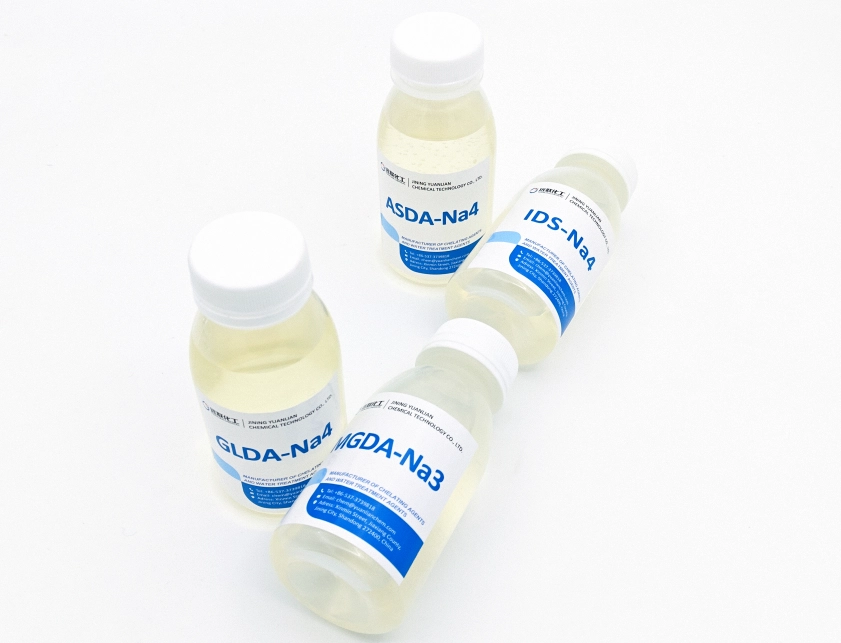
In modern textile wet processing, managing trace heavy metal ions—such as Fe3+, Cu2+, Ca2+, and Mg2+—is critical for achieving consistent whiteness, level dyeing, and high tensile strength. Traditional aminocarboxylate chelating agents like EDTA and DTPA have long served this purpose; however, their poor biodegradability presents ongoing compliance challenges under stringent European environmental frameworks like REACH and Oeko-Tex Standard 100.
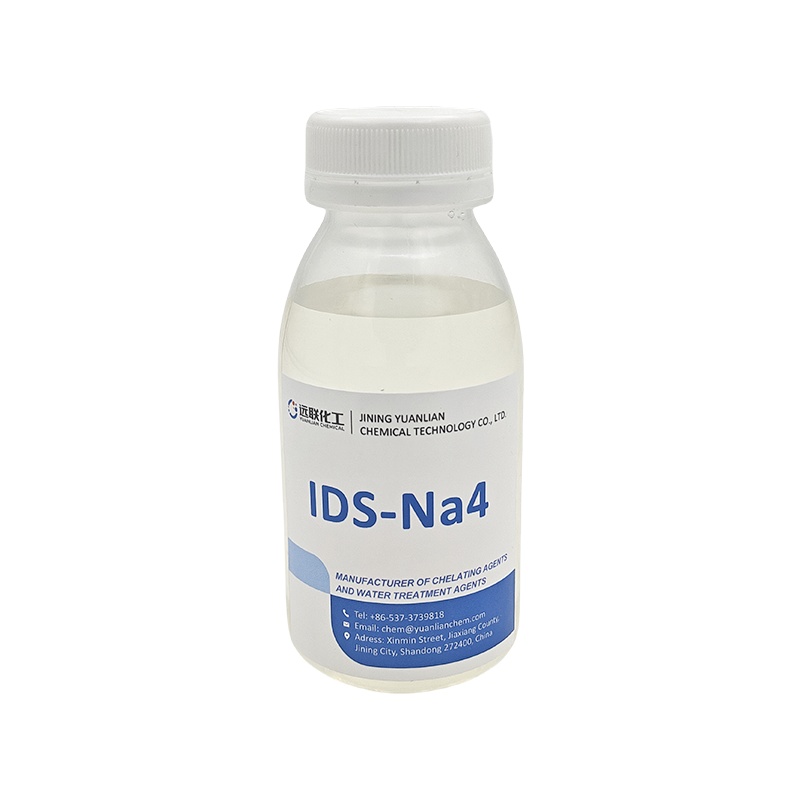
Tetrasodium Iminodisuccinate (IDS-Na4) has emerged as a high-performance, readily biodegradable alternative. By combining strong chelation capacity across alkaline conditions with an exceptionally favorable eco-profile, IDS-Na4 allows textile chemical formulators and processing mills to optimize pretreatment and dyeing while meeting demanding sustainability benchmarks.
1. Key Technical Characteristics of IDS-Na4 in Textile Chemistry
The molecular structure of IDS-Na4 contains multiple carboxyl and amine donor groups, enabling it to form stable, water-soluble coordinate complexes with transition metal cations and earth alkali metals.
High Biodegradability: IDS-Na4 meets OECD 301E test criteria for ready biodegradability, breaking down into environmentally benign metabolites without generating persistent residues in wastewater streams.
Transition Metal Stabilization: It exhibits exceptionally high binding stability for iron (Fe3+) and copper (Cu2+), preventing localized catalytic degradation during hydrogen peroxide bleaching.
Alkaline Stability: Unlike conventional chelators that lose binding capacity at high pH, IDS-Na4 maintains robust chelation efficiency across alkaline processing liquors (pH 9–12).
Eco-Label Compliance: Free of phosphorus and nitrogen-heavy persistent structures, making it suitable for formulation into GOTS- and Oeko-Tex-compliant textile auxiliaries.
2. Primary Application Stages in Textile Processing
A. Hydrogen Peroxide Bleaching Stabilization
During the alkaline bleaching of natural fibers (such as cotton and linen), trace iron or copper contaminants present in raw water or grey fabric can catalyze the rapid, localized decomposition of hydrogen peroxide (H2O2). This uncontrolled breakdown forms hydroxyl radicals that cause localized cellulose degradation, resulting in pinholes and reduced fabric tear strength.
Contaminant (Fe3+/Cu2+) + H2O2  ──> Radical Decomposition ──> Fiber Damage & Pinholes
IDS-Na4 + Contaminant (Fe3+/Cu2+) ──> Stable Chelate Ring     ──> Controlled Bleaching & Fabric Integrity
Integrating IDS-Na4 into the peroxide bleaching bath selectively sequesters catalytic heavy metals, stabilizing the bleaching system without suppressing peroxide reactivity. This yields superior whiteness index values while protecting fiber strength.
B. Scouring & Hardness Ion Management
Hardness ions (Ca2+ and Mg2+) react with natural waxes, pectins, and saponified fats during scouring to form insoluble calcium and magnesium soaps. These deposits adhere to equipment surfaces and fabric webs, causing poor absorbency and uneven dye uptake.
IDS-Na4 effectively sequesters hardness ions under alkaline scouring conditions, preventing soap precipitation and facilitating thorough rinsing. The result is improved fabric hydrophilicity and uniform preparation for subsequent dyeing operations.
C. Dyeing & Soap-Off Operations
In reactive and direct dyeing processes, unchelated transition metals can form metal-dye complexes, leading to shade shifts, dullness, or spotty coloration. Furthermore, during the post-dyeing washing (soap-off) phase, uncomplexed hardness ions can impair the removal of unfixed dye hydrolysates.
Shade Protection: Sequestering free metal ions ensures consistent batch-to-batch color reproducibility.
Enhanced Fastness: Using IDS-Na4 during the soap-off stage improves rubbing and washing fastness by ensuring complete removal of hydrolyzed reactive dyes.
3. Comparative Performance Analysis
The table below summarizes the technical and operational trade-offs between traditional chelating agents and green alternatives in textile wet processing:
| Property / Parameter | IDS-Na4 | EDTA-Na4 | DTPMP / Phosphonates |
|---|---|---|---|
| OECD 301 Biodegradability | Readily biodegradable (>80%) | Not readily biodegradable | Poorly biodegradable |
| Phosphorus Content | Zero (0%) | Zero (0%) | High (P-based) |
| Fe3+ Chelation in Alkaline pH | Very High | Moderate to Low | High |
| Fiber Degradation Protection | Excellent | Moderate | Good |
| Regulatory Compliance | REACH, Oeko-Tex, GOTS aligned | Restricted in many regions | Subject to phosphorus limits |
4. Practical Formulation & Dosing Considerations
When incorporating IDS-Na4 into textile auxiliary formulations or direct mill recipes, the following guidelines help optimize performance:
Continuous Bleaching Ranges: A recommended dosage of 1.0–3.0 g/L of active IDS-Na4 in the liquor padding bath effectively neutralizes heavy metal impurities present in typical process water.
Exhaust Dyeing Baths: Adding 0.5–1.5 g/L prior to dye addition protects sensitive dyestuffs from trace metal contamination.
Synergistic Blends: Formulators often combine IDS-Na4 with green polymeric dispersants (such as Polyaspartic Acid / PASP) to achieve combined scale inhibition, particulate dispersion, and heavy metal chelation in all-in-one pretreating agents.
Note for Formulators: As an upstream manufacturer of high-purity biodegradable chelating agents, YuanlianChemical supports technical teams with optimized IDS-Na4 raw material solutions tailored to specific wet processing requirements and regional environmental compliance standards.
Conclusion
Tetrasodium Iminodisuccinate (IDS-Na4) offers textile processors an optimal balance between technical capability and environmental stewardship. By stabilizing hydrogen peroxide bleaching, preventing insoluble soap formation, and securing dye shade consistency, IDS-Na4 provides a future-proof path toward sustainable textile manufacturing without compromising fabric quality.