05 Aug
Trisodium Dicarboxymethyl Alaninate: A Biodegradable Alternative to NTA Across Industries
NTA (nitrilotriacetic acid) has been under regulatory pressure in Europe for years. The European Chemicals Agency classifies it as a substance of very high concern due to its carcinogenicity classification. Yet many industrial processes still depend on it because NTA offers a chelation strength that citrates and tartrates cannot match. Trisodium Dicarboxymethyl Alaninate gives you a way out. It shares the same small-molecule structure as NTA, delivers comparable chelation performance, and carries no toxicity classification. On top of that, it biodegrades readily in standard environmental testing.
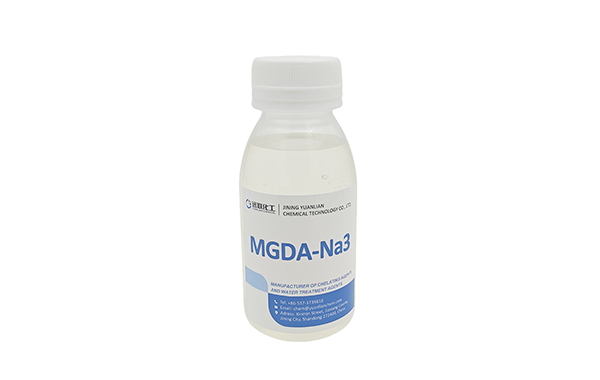
Known commercially as MGDA-Na3, this compound (CAS 164462-16-2) has gained traction across electroplating, textile processing, pulp bleaching, and oilfield chemistry. Formulators who need to phase out NTA without sacrificing process performance are switching to it. The molecular formula C7H8NO6Na3 and molecular weight of 271.1 tell you it is a compact chelator that reacts quickly with metal ions in solution.
How Trisodium Dicarboxymethyl Alaninate Compares to NTA and EDTA
The structural similarity to NTA is what makes this compound interesting to formulators. Both molecules are small, nitrogen-centred chelators with carboxymethyl arms. The key difference is that Trisodium Dicarboxymethyl Alaninate carries an extra methyl group on the nitrogen backbone. This seemingly minor change alters the metabolic pathway, allowing microorganisms to break the molecule down efficiently.
Property | Trisodium Dicarboxymethyl Alaninate | NTA | EDTA |
Toxicity classification | None | Carc. Cat. 2 (ECHA) | None (but persistent) |
Biodegradability | Readily biodegradable | Poorly biodegradable | <20% in 28 days |
Chelation strength | Strong (comparable to NTA) | Strong | Very strong |
Regulatory status in EU | No SVHC listing | SVHC since 2023 | Under assessment |
pH working range | 2 to 13 | 3 to 11 | 3 to 11 |
The comparison matters because many companies face dual pressure. They need to remove NTA for worker safety compliance, and they want to avoid EDTA because of its environmental persistence. Trisodium Dicarboxymethyl Alaninate addresses both concerns in a single switch.
Chelation Control in Electroplating and Electronics Manufacturing
Electroplating baths rely on chelating agents to control metal ion concentration and prevent premature precipitation. NTA has been a standard choice for decades. As European plating shops move away from NTA under REACH obligations, Trisodium Dicarboxymethyl Alaninate fills the gap.
Copper and Nickel Plating Baths
In copper electroplating, the chelator maintains a stable free-ion concentration so that deposition occurs evenly across the workpiece. Trisodium Dicarboxymethyl Alaninate forms stable complexes with copper(II) ions across the pH range of 8 to 12, which covers most alkaline plating conditions. Formulators report that switching from NTA requires minimal bath chemistry adjustment because the chelation constants fall in a similar range.
For nickel plating, the compound prevents nickel hydroxide precipitation at elevated pH. This matters for bright nickel baths where pH drift can cause rough deposits and reject rates.
Printed Circuit Board Manufacturing
PCB fabrication uses chelated metal solutions for etching and surface finishing. The industry has been under pressure to eliminate NTA from wastewater streams. Trisodium Dicarboxymethyl Alaninate offers a drop-in replacement because it complexes copper and iron effectively, and its biodegradability means wastewater treatment plants can handle it without special processing.
Chelating Solutions for Textile Dyeing and Finishing
Textile processing consumes large volumes of chelating agents. Water hardness, metal-catalysed dye degradation, and peroxide stabilisation all depend on effective metal ion control.
Dye Bath Stabilisation
Metal ions in process water cause colour shifts in reactive and direct dyeing. Iron and copper catalyse oxidation reactions that fade dyes before they fix to the fibre. Trisodium Dicarboxymethyl Alaninate sequesters these metals in the dye bath, preserving colour consistency across production runs. Unlike EDTA, which can strip metal-complex dyes of their chrome centres, this compound shows better selectivity and leaves pre-metallised dyes intact.
Peroxide Bleaching Stabilisation
Hydrogen peroxide bleaching requires stabilisers to prevent catalytic decomposition by trace metals. Iron and copper ions in the bleaching bath cause rapid peroxide breakdown, resulting in fibre damage and uneven whiteness. The chelator binds these catalytic metals and stabilises the peroxide throughout the bleaching cycle. Cotton mills switching from NTA-based stabilisers report comparable whiteness values with no increase in cellulose damage.
Learn more about chelating agents in textile processing from this Wikipedia overview.
Pulp and Paper Bleaching
The pulp industry uses hydrogen peroxide for brightening mechanical and chemical pulps. Metal ions, particularly manganese and iron, catalyse peroxide decomposition and reduce bleaching efficiency.
Metal Ion Management in Pulp Mills
Trisodium Dicarboxymethyl Alaninate chelates the transition metals responsible for peroxide loss. Mills typically add it in a pre-bleach chelation stage (Q stage) before the peroxide stage (P stage). The chelator removes manganese and iron from the pulp fibre matrix, so the peroxide stage runs at full efficiency.
Compared to DTPA, which is the traditional chelator for pulp bleaching, Trisodium Dicarboxymethyl Alaninate offers better biodegradability. DTPA persists in mill effluent and has been detected in receiving waters near pulp mills. Regulatory agencies in Scandinavia have pushed mills to reduce DTPA loads. Switching to a biodegradable alternative helps mills meet effluent permit limits without changing their bleaching sequence.
Oilfield Scale Control
Oil production faces severe scale problems. Formation water contains high levels of barium, strontium, calcium, and iron. When pressure and temperature change during production, these ions precipitate as sulphate and carbonate scales in tubing, valves, and injection wells.
Barium Sulphate Scale Prevention
Barium sulphate scale is one of the hardest deposits to remove in oilfield operations. Traditional scale inhibitors like phosphonates work preventively but face discharge restrictions in offshore environments. Trisodium Dicarboxymethyl Alaninate offers a greener profile for scale control programs where operators must minimise environmental impact.
The compound complexes calcium and barium ions in produced water, reducing the supersaturation that drives scale formation. For offshore platforms operating under OSPAR Convention discharge limits, a biodegradable chelator simplifies environmental compliance compared to phosphonate-based alternatives.
Product Specifications and Formulation Data
The standard industrial grade comes as a pale yellow clear liquid with a minimum solid content of 55 per cent. The pH measures 8.5 or above, and the density is 1.20 grams per cubic centimetre at 20 degrees Celsius. These properties make it easy to pump and dose in automated process systems.
Packaging options include 25-kilogram, 250-kilogram, and 1,250-kilogram plastic drums. Custom packaging is available for bulk consumers. Store the product sealed in a dry, ventilated warehouse, away from acidic materials and direct sunlight.
As an alkaline product, standard handling precautions apply. Avoid skin and eye contact. Rinse with plenty of clean water if contact occurs.
Evaluating Trisodium Dicarboxymethyl Alaninate for Your Process
Switching from NTA or EDTA requires a structured evaluation. Start by testing chelation capacity at your process pH and temperature. Compare metal ion binding against your current chelator using the same metal concentrations your process actually encounters. Check compatibility with other additives in your formulation. Run wastewater biodegradability testing if your discharge permit requires it.
Request a free sample, the full technical data sheet, and safety data sheet for your evaluation. Samples of 200 to 500 grams are available for laboratory testing. Contact [email protected] or call +86-537-3739818 to discuss your application and request documentation.
Latest News


Need help
Prefer speaking with a human to filling out a form? call corporate office and we will connect you with a team member who can help.