05 Mar
The Environmental Revolution in Dishwashers: How GLDA Turns Every Dish Cleaning Session into a Burden Reduction for the Earth
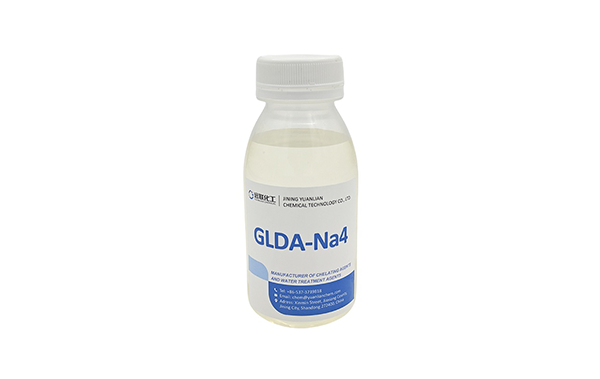
When you press the start button of your dishwasher and watch grease dissolve in the flowing water, you may never have thought that this "little cleaning expert" in the kitchen is quietly discharging non-degradable chemical residues into water bodies. Components like phosphorus and EDTA in traditional dishwasher detergents take decades to decompose in nature. However, the emergence of Tetrasodium Glutamate Diacetate (GLDA) has transformed dish cleaning from an "invisible pollution source" into a daily act of protecting the Earth.
The Overlooked "Dishwashing Pollution": A Chain of Harm from Kitchens to Lakes
You might not know that a dishwasher used by a family of four discharges approximately 300 grams of chemical chelating agents into water bodies every month. EDTA, a component in traditional detergents, has a 28-day biodegradation rate of only 6%. Long-term accumulation of EDTA leads to heavy metal enrichment in water bodies, damaging the gill function of fish. Moreover, phosphorus-containing components trigger the overgrowth of algae, turning lakes into "dead zones" — globally, the amount of freshwater polluted by dishwasher wastewater each year is equivalent to the capacity of 1 million standard swimming pools.
The "hidden environmental costs" of using dishwashers lie in the details:
In hard water areas, to combat limescale, it is necessary to frequently add special salt. Excessive sodium chloride seeping into the soil reduces crop yields by 15%;
To achieve effective cleaning, high-concentration surfactants in detergents flow into rivers with wastewater, inhibiting the photosynthesis of aquatic plants;
Residual chemicals accumulate in groundwater, causing the content of "environmental hormones" in tap water to exceed the standard, threatening human health.
GLDA: Green Technology That Makes Dishwashing Water "Come and Go Without a Trace"
The birth of GLDA has completely rewritten the opposing relationship between dishwasher detergents and environmental protection. This green chelating agent, made from corn starch fermentation, is like a "well-mannered cleaning butler" — it can efficiently break down grease and limescale while quickly "disappearing" in nature.
Sustainability of raw materials: Moving away from petroleum-based chemical raw materials, GLDA uses renewable L-glutamic acid as its core. Producing 1kg of GLDA reduces carbon emissions by 4.2kg compared to traditional chelating agents, which is equivalent to the carbon sequestration capacity of planting 2 trees.
Marine-friendly degradability: Certified by OECD 301B, GLDA has an impressive 28-day biodegradation rate of 98.5%. After entering water bodies, it decomposes into water and carbon dioxide, and even the coral reef ecosystems, which are most sensitive to chemicals, can tolerate it. In contrast, EDTA takes 100 years to fully decompose.
Efficient and low-consumption cleaning logic: Its chelating capacity is twice that of traditional components. In hard water areas, it can reduce the usage of special salt by 50%. Cleaning a single glass only requires 1/3 of the usual dosage, reducing chemical discharge by approximately 2.4 kilograms throughout the year — equivalent to installing a "wastewater purifier" in the home.
Environmental Practices in Kitchen Scenarios
Families with babies can best feel this change: using dishwasher detergents containing GLDA to clean baby bottles can not only accurately remove calcium and magnesium ions from milk stains but also, with a near-neutral pH value (9-10), eliminate the need for additional rinsing to avoid chemical residues. Experiments show that the teratogenic rate of its wastewater on zebrafish embryos is reduced by 92%, truly achieving "cleaning without traces and environmental protection without burden".
Users in hard water areas can feel an even bigger difference: in the past, 1.2 liters of dishwasher salt were consumed every month, but now detergent tablets added with GLDA only require half the amount. After cleaning, the glasses are so transparent that they can reflect the clouds outside the window, reducing sodium chloride entering groundwater by 5 kilograms per year.
Even changes are taking place in the back kitchens of restaurants: after a chain restaurant adopted commercial detergents containing GLDA, the COD (Chemical Oxygen Demand) value of the dishwasher wastewater decreased by 60%, and the cost of sewage treatment was reduced by 35%, achieving a dual optimization of "cleaning efficiency and environmental protection costs".
Every Choice You Make Is a "Burden Reduction Commitment" to the Earth
The European Union has long listed GLDA as the "preferred component for eco-labeled dishwasher products". After the canteen of BMW's Leipzig factory adopted detergents containing GLDA, the monthly wastewater treatment volume was reduced by 2.4 tons. The choices of every family are also accumulating the power of change: if 100 million families across the country switch to dishwasher detergents containing GLDA, the reduction in water pollution each year will be equivalent to purifying 1,000 urban inland rivers.
When GLDA molecules capture calcium and magnesium ions in the dishwasher, break down grease on the surface of tableware, and finally decompose quietly in nature, we can finally say: dish cleaning is no longer a burden on the environment, but a way to reconcile with the Earth.
Now, choose dishwasher detergents containing GLDA, and let every renewal of clean tableware become a green note written to nature.
Latest News



Need help
Prefer speaking with a human to filling out a form? call corporate office and we will connect you with a team member who can help.