09 Mar
Phosphate-Free & Biodegradable: The Strategic Shift to GLDA and MGDA in Sustainable Formulations
The different kinds of chelating agents:
Chelating agents are divided into two categories: organic and inorganic. Organic compounds are the main ones. Commonly used chelating agents include polyphosphates, aminocarboxylic acids, hydroxycarboxylic acids, etc. In recent years, with the increasingly stringent environmental supervision, the application of phosphorus-containing chelating agents has been restricted. At the same time, the market demand for efficient and green new chelating agents has been released. As a new generation of degradable green chelating agents, tetrasodium glutamate diacetate has broad market development space.
As a professional green readily biodegradable chelating agents manufacturer from China, Shandong Yuanlian Chemical is a leading phosphate free chelating agents manufacturer, welcome your inquiry about our products !
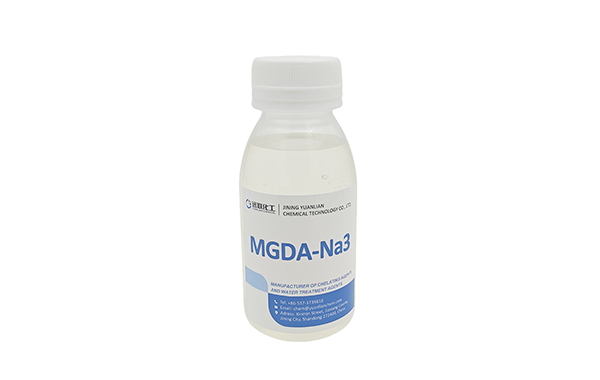
The difference between MGDA-3Na and NTA-3Na
Both MGDA-3Na (trisodium methylglycine diacetate) and NTA-3Na (trisodium hypotriacetate) are excellent chelating agents. The main difference lies in their molecular structure (MGDA has an extra methyl group in its side chain, making its structure asymmetrical) and performance. MGDA-3Na has a wider pH range (2-14), stronger biodegradability, and better dissolving power for calcium scale, tea stains, etc., making it widely used in the cleaning industry. It is an upgrade or replacement for traditional NTA, especially in detergents and cleaning agents with high environmental protection requirements.
But the NTA molecule contains a nitrogen atom and a carboxyl group. In the environment and in organisms, it can react with nitrites (from fertilizers, water quality, or food processing). This reaction produces a variety of N-nitroso compounds, some of which (such as N-nitrosodiethylamine) have been proven to be potent carcinogens.
The difference between HEDP and ATMP
ATMP exhibits stronger chelating ability, particularly with metal ions such as calcium, magnesium, and iron. It contains three phosphonic acid groups and one amino group, making it perform exceptionally well in environments with high metal ion content.
ATMP: In high-hardness water and high-temperature environments, ATMP offers superior scale prevention, making it suitable for demanding applications such as high-pressure boilers and high-temperature industrial processes.
HEDP: HEDP exhibits excellent scale prevention performance under medium and low temperature conditions, especially in cooling water systems and medium hardness water treatment.
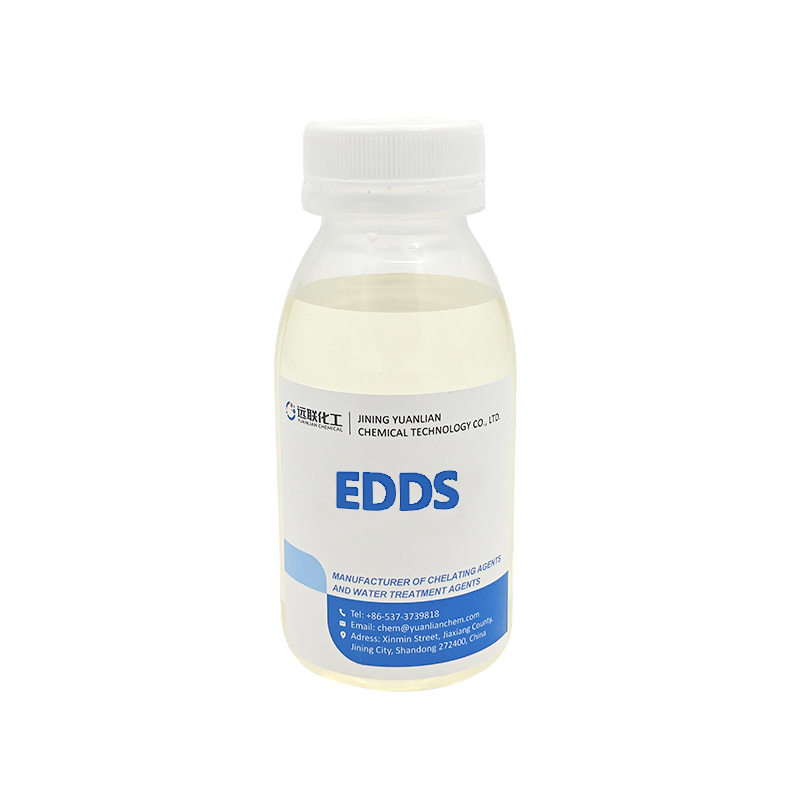
The difference between EDDS and EDTA
EDDS-3Na (trisodium ethylenediamine disuccinate) and EDTA-4Na (tetrasodium ethylenediaminetetraacetate) are both highly efficient metal chelating agents. The main differences lie in their molecular structure and pH. EDTA-4Na has four carboxyl groups, exhibiting strong chelating ability and good water solubility, resulting in a strongly alkaline solution. It is widely used in detergents, textiles, and water treatment. EDDS-3Na (or EDDS) is a biodegradable, green chelating agent, typically used in sodium salt form (e.g., EDDS-3Na). It is more environmentally friendly and performs well at higher pH levels, often used in eco-friendly detergents and personal care products as a replacement for traditional EDTA. It also possesses good biodegradability.
As a professional green readily biodegradable chelating agents manufacturer from China, Shandong Yuanlian Chemical is a leading phosphate free chelating agents manufacturer, welcome your inquiry about our products !
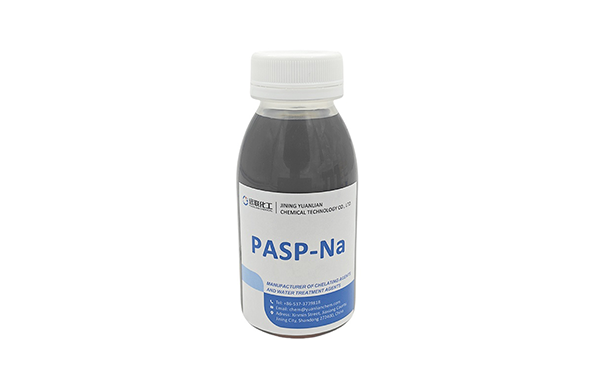
The difference between ASDA and PASP
Tetrasodium aspartate diacetate (ASDA) and sodium polyaspartate (PASP) are both amino acid derivatives, but one is a small-molecule chelating agent (the tetrasodium salt of aspartic acid), while the other is a polymer (the sodium salt of polyaspartic acid). The key difference lies in whether they are monomers (ASDA) or long-chain polymers (PASP), resulting in different structures and applications: ASDA is a green chelating agent derived from aspartic acid, used to replace EDTA, and is environmentally friendly and efficient; while PASP is a biodegradable polymer, commonly used in agriculture for water retention and scale inhibition. Both are representatives of "green chemistry."
As a professional green readily biodegradable chelating agents manufacturer from China, Shandong Yuanlian Chemical is a leading phosphate free chelating agents manufacturer, welcome your inquiry about our products !
Why you need a phosphate free chelating agents
There are many phosphate agents in the market, most of them are also biodegradable. But they are not friendly to enviroment.
The biggest impact of phosphorus-containing chelating agents on the environment is exacerbating eutrophication, as the phosphorus they release promotes excessive growth of algae and other aquatic plants, disrupting the balance of the aquatic ecosystem. Although phosphorus is essential for life, excessive phosphorus can lead to hypoxia in water bodies, affecting the survival of aquatic organisms. Therefore, choosing chelating agents with low phosphorus content or developing phosphorus-free alternatives is crucial to reducing environmental pressure.
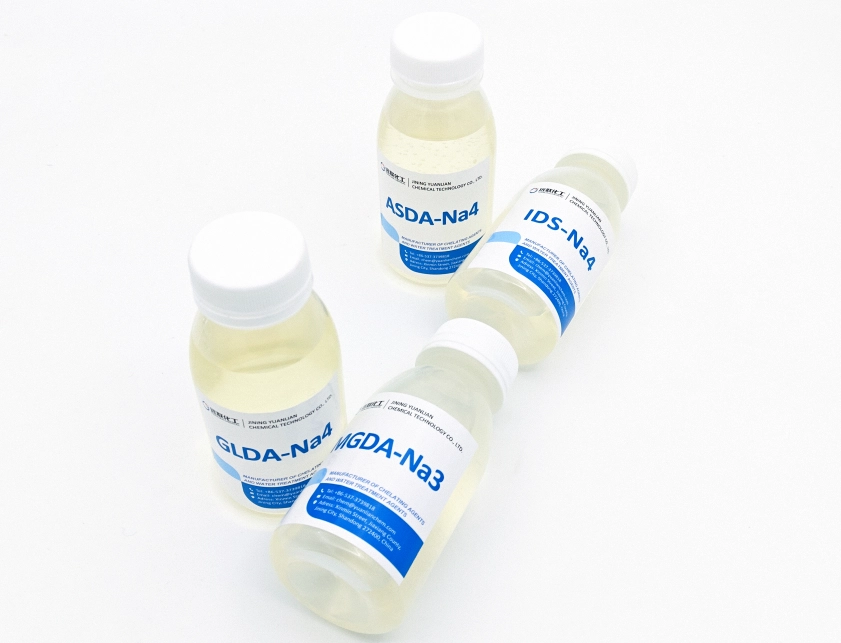
Shandong Yuanlian Chemical is a leading phosphate free chelating agents manufacturer, we mainly manufacture GLDA, MGDA, IDS and PASP. Welcome your inquiry at any time.
Why NTA-3Na is dangerous ?
The potential carcinogenic risk of trisodium nitrilotriacetate (Na3NTA) lies primarily in its potential degradation in the environment to form nitrosamines, which are known carcinogens. However, NTA itself can only be formed under specific conditions (such as reaction with amines), and its degradation pathway in the environment is complex, making its carcinogenicity assessment complicated.
NTA is used as a chelating agent in industries such as detergents and textiles. Its safety is a major concern, mainly because under certain conditions, it can react with nitrites or amines to form sodium nitrosonitrite, which can then be converted into the potent carcinogen nitrosamine, such as dinitrosoethylamine (NDEA).
The application for IDS-4Na used in TextSile auxiliaires
Tetrasodium iminodisuccinate (IDS-4Na) is an environmentally friendly green chelating agent, mainly used in the textile auxiliaries industry as an oxygen bleaching stabilizer and dyeing auxiliary agent. It effectively chelates metal ions in hydrogen peroxide, preventing their decomposition and improving bleaching uniformity. In dyeing, it can replace EDTA in soaping, controlling silica scale, complexing iron and copper ions, and solving problems such as uneven color and poor color fastness, thus achieving cost reduction, efficiency improvement, and green production.
Principle: During oxygen bleaching of textiles, trace amounts of iron, copper, and other metal ions in hydrogen peroxide catalyze its decomposition, leading to uneven bleaching and decreased whiteness. IDS-4Na can efficiently complex these metal ions, stabilizing hydrogen peroxide, improving bleaching efficiency and whiteness, and resulting in more uniform bleaching.
Advantages: More environmentally friendly than traditional phosphorus-containing or toxic stabilizers, it is easily biodegradable, meets environmental protection requirements, and is an ideal alternative.
Shandong Yuanlian Chemical is a leading phosphate free green biodegradable chelating agents manufacturer, we mainly manufacture GLDA, MGDA, IDS and PASP. Welcome your inquiry at any time
Latest News



Need help
Prefer speaking with a human to filling out a form? call corporate office and we will connect you with a team member who can help.