10 Mar
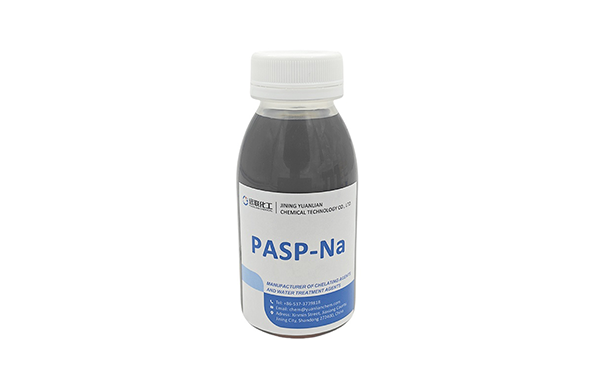
Application of Polyaspartic Acid (Sodium) (PASP) in the Textile Dyeing and Printing Industry
The textile dyeing and printing industry often faces challenges such as poor water quality, low dye utilization rate, and high environmental pressure. Polyaspartic acid (sodium) (PASP), with its properties of chelation, dispersion, and corrosion inhibition, provides an effective solution to these problems. It is of great significance for improving production efficiency, enhancing product quality, and meeting environmental protection requirements.
PASP is a water-soluble polymer containing carboxyl and amide groups in its molecular structure. It is polymerized from aspartic acid, and its properties can be adjusted by controlling reaction conditions. Its core properties include:
Chelating property: Forms stable complexes with metal ions such as Ca²⁺ and Mg²⁺, reducing their interference in dyeing and printing processes.
Dispersing property: Adsorbs on the surface of particles to prevent agglomeration, ensuring uniform dispersion.
Corrosion inhibition property: Forms a film on metal surfaces, reducing the corrosion rate of equipment.
Biodegradability: Can be decomposed by microorganisms into harmless substances, conforming to the trend of environmental protection.
Applications of PASP in Various Processes of Textile Dyeing and Printing
Pretreatment Process
Desizing and scouring: Chelates hard water ions to avoid the formation of dirt and improve the capillary effect of fabrics.
Bleaching: Inhibits the catalytic decomposition of hydrogen peroxide by metal ions, enhances bleaching effect, and reduces fiber damage.
Dyeing Process
Reactive dye dyeing: Chelates metal ions, stabilizes the dye bath, and improves dye uptake and uniformity.
Disperse dye dyeing: Prevents dye agglomeration, enhances dyeing depth and color fastness.
Package yarn dyeing: Inhibits equipment scaling, ensures dye bath circulation, and improves dyeing uniformity.
Post-finishing Process
Soaping: Disperses unfixed dyes to prevent staining and improve color fastness.
Softening finishing: Forms a film on the fiber surface, reduces friction, and improves hand feel.
Antistatic finishing: Adsorbs moisture to form a conductive film, reducing static electricity.
Wastewater Treatment Process
Removal of metal ions: Chelates heavy metal ions to form precipitates, reducing the heavy metal content in wastewater.
Color reduction: Destroys dye chromophores to reduce wastewater chromaticity.
Improvement of biodegradability: Decomposes macromolecular organic substances, enhances the biodegradability of wastewater, and facilitates biological treatment.
Advantages of PASP Application
Environmental protection: PASP is phosphorus-free and biodegradable, so it will not accumulate in the environment or cause problems such as water eutrophication. Its application fully complies with international environmental regulations such as the EU's OEKO-TEX® standard and ZDHC MRSL, helping textile dyeing and printing enterprises produce more environmentally friendly textiles, enhance their product competitiveness in the international market, and promote textile exports.
Performance improvement: PASP plays a positive role in all links of textile dyeing and printing, effectively improving product quality. For example, in the dyeing process, it can improve dye uptake, dyeing uniformity, and color fastness; in the pretreatment and post-finishing processes, it can enhance the capillary effect, softness, and antistatic properties of fabrics. Especially under hard water conditions, its ability to chelate metal ions can ensure the stability of dyeing and printing effects.
Economic benefits: In the long run, the application of PASP can bring certain economic benefits to enterprises. On the one hand, it can reduce the frequency of equipment cleaning due to scaling, lower cleaning costs and equipment maintenance expenses, and reduce energy consumption; on the other hand, it can improve product quality, reduce losses caused by defective products, and lower production costs. In addition, compliance with environmental regulations can help enterprises avoid risks such as fines and production suspension due to environmental issues.
Conclusion and Outlook
PASP has shown significant effects in various processes of textile dyeing and printing, improving product quality while having environmental protection advantages. In the future, Yuanlian Chemical will continue to work hard to develop low-cost synthesis processes, optimize application technologies, and develop functional derivative products to promote the green development of the industry.
Latest News



Need help
Prefer speaking with a human to filling out a form? call corporate office and we will connect you with a team member who can help.