06 Feb
Unlocking Soil Potential: The Strategic Role of Chelating Agents in Modern European Agriculture
In the face of the European Green Deal’s ambitious targets for nutrient loss reduction, the efficiency of mineral fertilization has become a focal point for agronomists and fertilizer manufacturers alike. The primary challenge remains: how to deliver essential micronutrients to the plant in an environment—the soil—that is often chemically hostile.
The answer lies in the sophisticated use of Chelating Agents. These molecular "carriers" are essential for ensuring that micronutrients like Iron (Fe), Zinc (Zn), Manganese (Mn), and Copper (Cu) remain bioavailable, especially in the diverse and often challenging soil profiles across Europe.
1. The Chemistry of Chelation: A Molecular "Escort" Service
The word "chelate" is derived from the Greek chēlē (claw). In a chemical context, a chelating agent is a molecule that wraps around a metallic ion, protecting it from unwanted reactions.
In European soils—ranging from the acidic podsols of the North to the highly alkaline calcareous soils of the Mediterranean—free metal ions quickly react with hydroxides or phosphates to form insoluble precipitates. Once precipitated, these nutrients are "locked" and inaccessible to the plant.
Chelating agents prevent this by:
Sequestration: Encapsulating the nutrient to prevent it from bonding with soil antagonists.
Solubilization: Keeping the nutrient in a water-soluble form that can move through the soil solution to the root zone.
Facilitated Uptake: Delivering the nutrient directly to the root plasma membrane for efficient absorption.
2. Enhancing Rhizosphere Efficiency and Crop Yield
The primary benefit of chelating agents is the dramatic improvement in Nutrient Use Efficiency (NUE). By protecting the integrity of the micronutrients, chelates ensure that even small doses of fertilizer result in significant physiological responses.
Key Physiological Impacts:
Prevention of Chlorosis: Chelated Iron (Fe) is the gold standard for treating leaf yellowing in viticulture and fruit orchards, ensuring optimal chlorophyll synthesis.
Stimulation of Enzymatic Activity: Zinc and Manganese chelates serve as co-factors for enzymes responsible for protein synthesis and CO2 fixation.
Root System Development: Chelated nutrients promote deeper root penetration, which increases the plant's resilience to the heatwaves and droughts becoming more frequent in Southern Europe.
3. The Shift Toward "Green" Chelates: GLDA & MGDA
While traditional agents like EDTA have been the industry workhorse for decades, European regulatory pressure (such as REACH and the Circular Economy Action Plan) is driving a shift toward biodegradable alternatives.
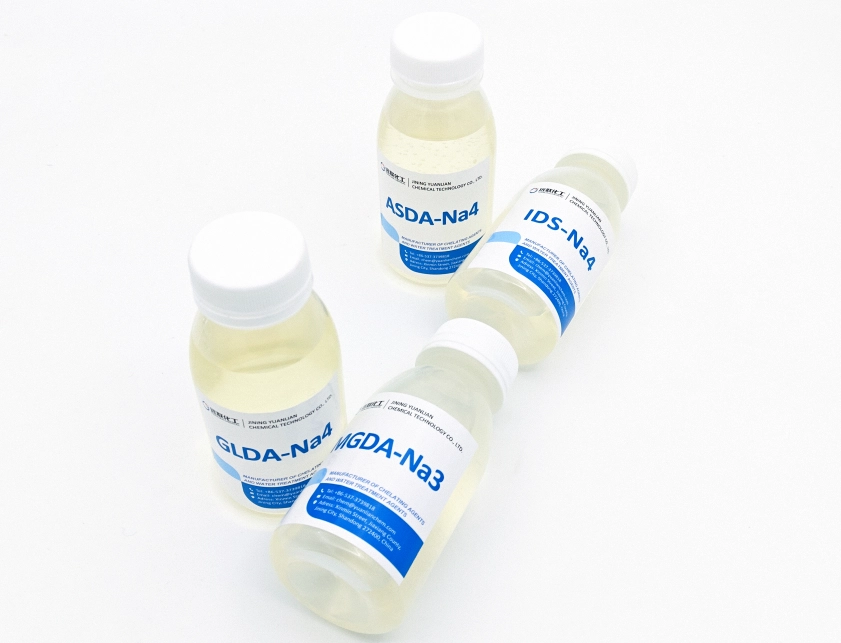
Yuanlian Chemical is a pioneer in this transition, specializing in high-performance green chelating agents:
GLDA (Tetrasodium Glutamate Diacetate): Primarily derived from natural L-glutamic acid, it offers an excellent ecological profile with high biodegradability (OECD 301B).
MGDA (Trisodium Methylglycine Diacetate): Known for its compact structure and immense stability, particularly in high-pH environments where other agents fail.
These "Green Chelates" provide the same—if not superior—stability as traditional synthetic agents while ensuring compliance with the strictest EU environmental standards.
4. Why Choose Yuanlian Chemical for Your Formulations?
As a strategic partner for the European fertilizer industry, Yuanlian Chemical bridges the gap between chemical innovation and sustainable farming. Our products are engineered for maximum compatibility in:
Advanced Fertigation: Perfectly soluble for drip irrigation systems.
Precision Foliar Sprays: Rapid leaf penetration without phytotoxicity.
Hydroponics: Maintaining nutrient balance in closed-loop systems.
By integrating our PASP, IDS, GLDA, or MGDA series into your product portfolio, you are ensuring your fertilizers are "Future-Proof"—high-performing, environmentally responsible, and regulatory-compliant.
5. Conclusion: A Data-Driven Future for Crop Nutrition
The integration of advanced chelating agents is no longer a luxury—it is a requirement for competitive, sustainable agriculture. For manufacturers looking to lead the market, the choice of chelating agent is a choice about the future of European soil health.
Consult with Our Experts
Explore how Yuanlian Chemical can optimize your nutrient delivery systems.
Brand: Yuanlian Chemical
Technical Support: +86-537-3739818
Expertise: Sustainable Chelates (GLDA, MGDA), PASP, and IDS Series.
Latest News



Need help
Prefer speaking with a human to filling out a form? call corporate office and we will connect you with a team member who can help.