16 Apr
An Overview of EDDS: Properties, Applications, and Sustainable Advantages
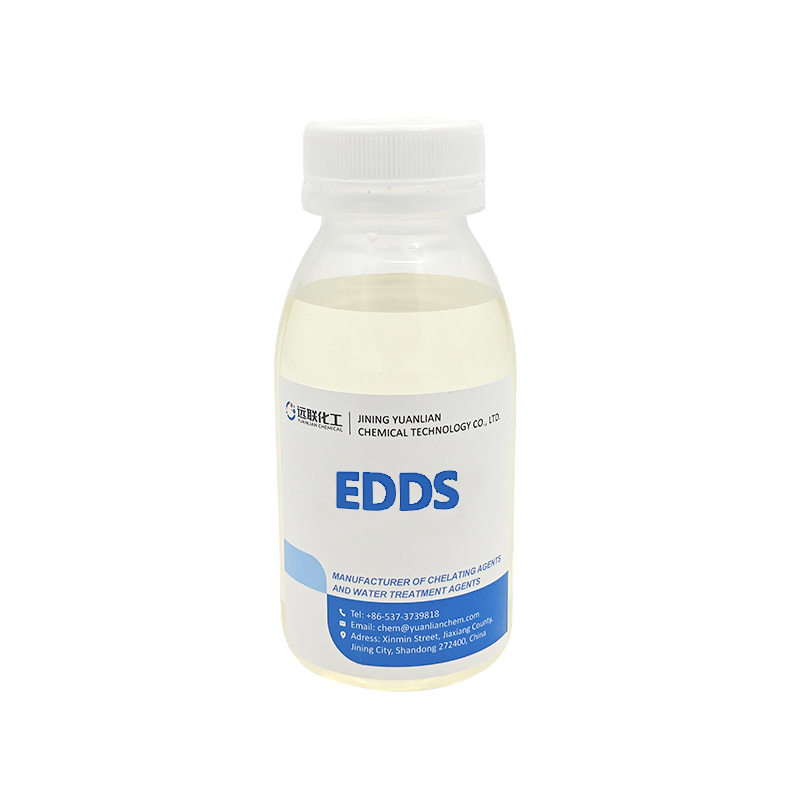
Ethylenediamine-N,N'-disuccinic acid (EDDS) is a naturally derived, biodegradable chelating agent that has emerged as a promising alternative to traditional synthetic chelators like EDTA and DTPA. This article provides a comprehensive overview of EDDS, focusing on its chemical properties, key applications, and the environmental benefits that drive its growing adoption.
I. Chemical Properties and the S,S-Isomer Chelating Mechanism
EDDS (chemical formula: C10H16N2O8) is a polyaminocarboxylic acid that forms stable, water-soluble complexes with metal ions including Ca2+, Mg2+, Fe3+, and Cu2+.
A key distinguishing feature of EDDS is its chirality. Among its three stereoisomers, the S,S-isomer is the naturally occurring form produced by microorganisms like Bacillus subtilis. It exhibits the highest biodegradability and chelating efficiency. Unlike EDTA, which is inert to microbial breakdown, EDDS is degraded into harmless byproducts like ammonia and CO2 within weeks, even in oxygen-limited environments.
II. Key Applications of EDDS Across Industries
1. High-Performance Detergents and Cleaning Products
EDDS acts as a builder in laundry detergents, chelating hard water ions to prevent mineral scaling. It is particularly valuable in phosphate-free formulations mandated to reduce eutrophication. In industrial settings, its ability to dissolve rust and metal oxides makes it ideal for cleaning boilers and food processing equipment without leaving toxic residues.
2. Sustainable Agriculture and Micronutrient Nutrition
In agriculture, EDDS serves as a vital carrier for micronutrient fertilizers. It forms soluble complexes with iron, zinc, and copper, making them readily available for plant uptake even in alkaline soils.
Iron Deficiency Chlorosis (IDC): EDDS-iron complexes are highly effective at correcting IDC in crops like soybeans and citrus.
Phytoremediation: EDDS enhances the extraction of heavy metals from contaminated soils, allowing plants to absorb lead or cadmium for safe removal.
3. Personal Care and "Clean Beauty" Cosmetics
EDDS stabilizes skincare and hair care formulations by chelating metal ions that degrade active compounds like vitamins and antioxidants. In hair care, it prevents the oxidation of dyes and protects surfactants from hard water interference. Its low toxicity aligns perfectly with the global "Clean Beauty" trend.
4. Advanced Water Treatment and Scale Control
In drinking water treatment, EDDS sequesters heavy metals leached from plumbing. In industrial cooling towers, it prevents scaling and corrosion. Unlike persistent chelators, EDDS biodegrades before entering natural water bodies, ensuring zero environmental impact.
III. Environmental Advantages and Global Regulatory Status
The primary driver of EDDS adoption is its sustainability profile. While EDTA persists for years, EDDS biodegrades by 80–90% within 28 days (OECD 301F).
Human Health: It has low acute toxicity and is non-irritating to skin and eyes.
Regulatory Approval: EDDS is classified as a "green chemical" under EU REACH and is approved by the U.S. EPA’s Safer Choice program. It is also listed on positive lists for food contact materials in multiple jurisdictions.
IV. Challenges and Future Directions in Green Chemistry
Despite its benefits, EDDS faces challenges such as a higher production cost compared to commodity EDTA. However, increasing regulatory pressure on persistent chemicals is driving economies of scale.
Future research is focused on expanding EDDS into:
Renewable Energy: Enhancing battery and fuel cell performance.
Bioremediation: Cleanup of radioactive contaminants.
Advanced Materials: Acting as a green cross-linking agent for biodegradable polymers.
V. Conclusion: Leading the Paradigm Shift in Chelating Technology
EDDS represents a shift toward a circular economy where performance and sustainability go hand in hand. As global industries move away from persistent synthetic chemicals, EDDS is poised to become a central pillar of responsible manufacturing and agricultural development.
Latest News



Need help
Prefer speaking with a human to filling out a form? call corporate office and we will connect you with a team member who can help.