11 Aug
Biodegradable Chelating Agents in Detergent Formulations: What Works Where
Hard water ruins a detergent before the consumer ever notices. Calcium and magnesium ions grab onto surfactants, form insoluble soap scum, and leave behind the grey film that makes laundry look dirty even after a full wash cycle. Biodegradable chelating agents in detergent formulas solve this at the molecular level, binding those metal ions so surfactants can do their job. This guide explains which chelator belongs in which detergent, backed by formulation chemistry rather than marketing claims.
European formulators face a tighter set of constraints than their counterparts elsewhere. Phosphates are banned in consumer laundry and dishwashing products. EDTA sits on restricted substance lists at multiple retailers. The detergent still needs to clean in hard water and remain stable on the shelf for 18 to 24 months. Finding the right biodegradable chelating agent for your detergent means matching the chelator to the specific conditions your product faces on the shelf and in the wash.
How Chelating Agents Actually Work in a Detergent
A surfactant molecule has a water-loving head and an oil-loving tail. In soft water, the tail grabs soil and the head pulls it into the wash liquor. In hard water, calcium and magnesium ions attach to the head first, neutralising the surfactant before it ever reaches the soil. The detergent loses cleaning power, and the consumer blames the brand.
A chelating agent wraps itself around these metal ions like a claw, forming a stable ring structure that keeps calcium and magnesium away from the surfactants. The chelated metal stays dissolved in the wash water until it goes down the drain. This sounds simple, but the details of pH, temperature, and ion type change which chelator works best.
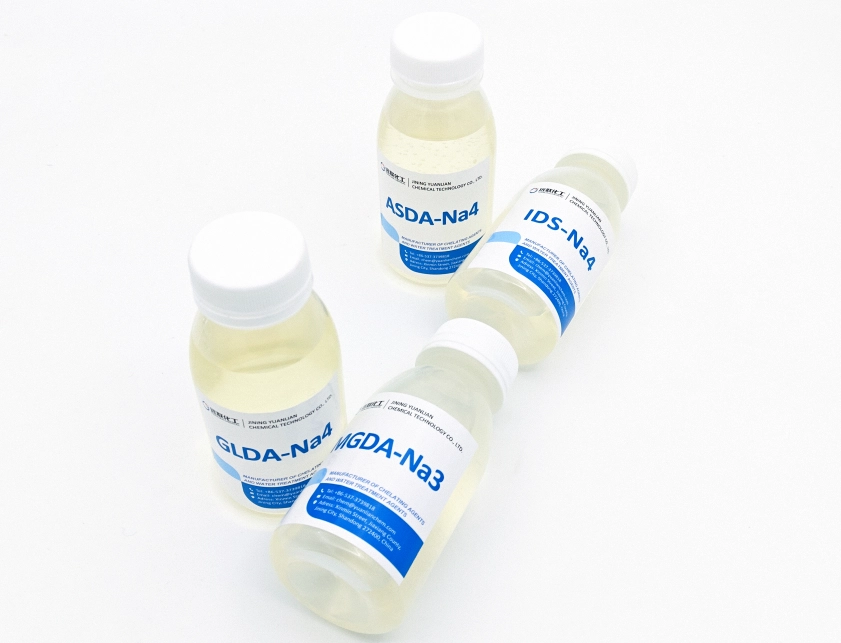
For example, a laundry liquid running at pH 9 with moderate calcium hardness needs GLDA-Na4. The same laundry liquid in an area where magnesium dominates the water supply might need a GLDA-MGDA blend instead. A dishwasher tablet running at pH 12 and 65 degrees Celsius needs MGDA-Na3, because GLDA loses binding strength at that pH and temperature combination.
Which Biodegradable Chelating Agent for Which Detergent Type
The table below matches each detergent format to the chelator that performs best under its operating conditions.
Detergent Type | pH Range | Wash Temperature | Main Hardness Ion | Recommended Chelator | Alternative |
Liquid laundry | 7.5–9.5 | 20–40°C | Ca, Mg | GLDA-Na4 | GLDA+MGDA blend |
Powder laundry | 10–11 | 30–60°C | Ca, Mg | GLDA-Na4 | MGDA-Na3 |
Dishwasher tablet | 11–12.5 | 50–70°C | Mg | MGDA-Na3 | MGDA+GLDA blend |
Dishwasher gel | 9–11 | 45–65°C | Mg, Ca | MGDA+GLDA blend | MGDA-Na3 |
I&I kitchen cleaner | 10–13 | 40–80°C | Ca | GLDA-Na4 | MGDA-Na3 |
I&I floor cleaner | 8–11 | Ambient–40°C | Ca | GLDA-Na4 | IDS-Na4 |
Hand dishwash | 6–8 | Ambient–40°C | Ca | GLDA-Na4 | ASDA-Na4 |
These recommendations come from bench trials at typical European water hardness levels of 200 to 400 ppm. Your local water chemistry may shift the choice, so always confirm with a test at your target hardness.
Laundry Detergents: Why GLDA Leads the Pack
Laundry liquids present the mildest conditions for a chelating agent. The pH stays below 10, the temperature rarely exceeds 40 degrees Celsius in European washing machines, and the contact time is long enough for the chelator to bind calcium and magnesium before the surfactant gets consumed. GLDA-Na4 handles this job well and brings two extra benefits that laundry formulators value.
First, GLDA carries an ISO 16128 natural-origin index of 0.56, which supports clean-label positioning. Second, it does not interfere with enzymes, which many modern laundry liquids include for stain removal. EDTA can bind the calcium ions that enzymes need as co-factors, reducing enzyme activity. GLDA shows less interference, so the stain-fighting enzymes stay active alongside the chelator.
Powder laundry detergents run hotter and more alkaline than liquids. GLDA still works at pH 10 to 11, but if the wash programme hits 60 degrees Celsius or above and the water carries a heavy magnesium load, replacing part of the GLDA with MGDA improves the overall result. A 70:30 GLDA-to-MGDA ratio covers most European powder laundry conditions.
Automatic Dishwashing: MGDA Owns This Space
Dishwasher detergents chew through chelating agents the way a hot wash chews through food residue. The pH runs from 11 to 12.5, the temperature sits at 50 to 70 degrees Celsius, and magnesium from hard water attacks glassware with every cycle. The result without a strong chelator: white filming on glasses, spots on cutlery, and a consumer complaint.
MGDA-Na3 excels under these conditions because its magnesium binding stays strong at pH levels where other chelators lose grip. Since the EU banned phosphates in dishwasher tablets in 2017, MGDA has become the standard replacement for STPP in this category. Every major European dishwasher brand now uses MGDA or an MGDA-based builder system.
A typical dishwasher tablet formula runs MGDA at 15 to 30 per cent of the total weight, combined with sodium carbonate, sodium percarbonate, and a bleach activator. The MGDA locks up magnesium while the percarbonate whitens and the enzymes tackle starch and protein. At these use levels, the cost per tablet stays within brand budget while the cleaning performance matches or exceeds the old phosphate formulas.
Industrial and Institutional Cleaning: Higher Demands, Same Chemistry
I&I cleaning runs hotter, longer, and harder than consumer products. Kitchen degreasers operate at pH 12 and above. Floor cleaners need to work fast with short contact time. Hospital disinfectants must stay stable alongside aggressive oxidising agents.
GLDA-Na4 covers most I&I kitchen and floor applications because its thermal stability reaches 170 degrees Celsius, well above any wash temperature. For I&I laundry in facilities with very hard water, blending GLDA and MGDA gives the broadest ion coverage. For peroxide-based disinfectants, IDS-Na4 stabilises the peroxide while binding the iron and copper that would otherwise catalyse its decomposition.
The key difference between consumer and I&I formulations is the dose. Consumer products use chelators at 0.5 to 2 per cent. I&I products sometimes push to 5 per cent or more because the soil load is heavier and the water in institutional laundries often exceeds 500 ppm hardness. Testing at your facility's actual water chemistry is essential before locking the formula.
Cost Considerations That Formulators Should Know
A biodegradable chelating agent per kilogram of active content costs more than EDTA. Nobody disputes that. The relevant comparison is cost per wash cycle or cost per cleaned square metre, not cost per kilogram. Because GLDA and MGDA bind more calcium and magnesium per gram than EDTA, the effective dose is often lower. A formula that used 1.0 per cent EDTA might use 0.8 per cent GLDA and deliver the same or better cleaning.
The avoided costs also add up. No phosphate surcharges on effluent discharge. No reformulation scramble when a retailer adds EDTA to its restricted list. No customer audit failure because the environmental data is missing. Formulators who weigh these avoided costs against the raw material price difference usually find the green chelator comes out ahead on total formulation cost.
A practical approach is to start with a partial replacement. Run 50 per cent of the old chelator dose alongside 50 per cent of the new one, measure the cleaning performance, and adjust from there. Most formulators land on a full replacement within two or three trial rounds.
For the chemistry behind how surfactants and builders interact in detergent systems, see this resource from the American Cleaning Institute.
For specifications, samples, and technical support on biodegradable chelating agents for your detergent formulation, visit the Yuanlian Chemical product centre and request a free evaluation sample for your bench trial.
Latest News




Need help
Prefer speaking with a human to filling out a form? call corporate office and we will connect you with a team member who can help.