13 Mar
IDS: A New Green Booster for Agricultural Production
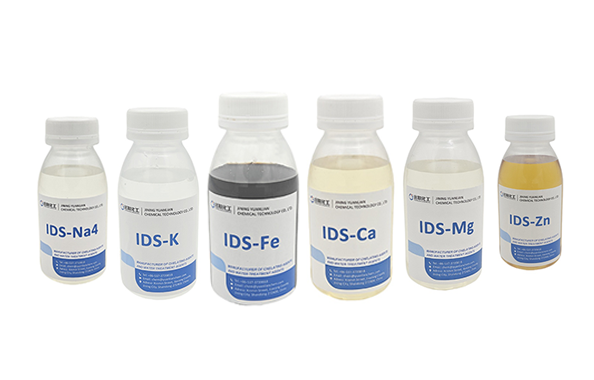
In agricultural production, we constantly face various challenges. Issues like declining soil quality, insufficient nutrient absorption by crops, and increased environmental pollution risks persistently trouble farmers and constrain the sustainable development of agriculture. Now, a substance called IDS (Iminodisuccinic Acid) is quietly entering the agricultural field, bringing new hope for solving these problems.
Improving Soil Quality and Remediating Contaminated Soil
Under the dual impact of modern industrial and agricultural activities, heavy metal contamination in soil has become increasingly severe. Heavy metals like lead, cadmium, and mercury are not only toxic to plant growth but also threaten human health through the food chain. One of IDS's key agricultural applications is improving soil quality. IDS can undergo chelation reactions with these harmful heavy metals, forming stable complexes. To illustrate, it's like wrapping heavy metals in an “isolation suit,” reducing their activity and toxicity in the soil. Relevant studies indicate that through oscillating leaching experiments, under certain conditions, IDS can effectively remove some heavy metals from soil, reducing environmental risks and restoring soil vitality for better crop growth. This soil remediation capability lays a solid foundation for sustainable agriculture. For instance, in farmlands surrounding areas with severe industrial pollution, the use of soil remediation products containing IDS has led to a significant reduction in soil heavy metal content and markedly improved crop growth conditions.
Supplementing Crop Trace Elements and Enhancing Fertilizer Efficiency
The vigorous growth of crops relies on various nutrients, among which trace elements like iron, zinc, and copper play a crucial role despite their low demand. However, in actual agricultural production, factors such as soil pH and redox conditions often reduce the availability of these trace elements, making them difficult for crops to absorb and utilize. The emergence of IDS ingeniously addresses this issue. IDS possesses a unique chemical structure that forms water-soluble complexes with trace elements, significantly enhancing their solubility and mobility. This is akin to equipping trace elements with “tiny wings,” enabling smoother absorption by plant roots. Experiments at Shandong Agricultural University demonstrated that in saline-alkali soil with a pH of 8.2, plants showed a 27% higher zinc absorption rate when using IDS-chelated zinc fertilizer compared to traditional EDTA-chelated zinc fertilizer. This data vividly demonstrates IDS's powerful capability to ensure efficient trace element absorption by plants under complex soil conditions. Furthermore, as IDS chelates are transported with soil solutions to the crop rhizosphere, they precisely release metal ions according to crop demand, preventing nutrient waste and loss. In comparative trials conducted by the Xinjiang Production and Construction Corps in cotton fields, cotton treated with IDS chelated fertilizer exhibited a 41% higher chlorophyll content in leaves compared to conventional fertilizer. Flower bud and boll drop rates decreased by 19%, resulting in significant improvements in both cotton yield and quality.
Regulating Plant Growth and Enhancing Crop Stress Resistance
IDS also plays a crucial role in agriculture by regulating plant growth and development. Particularly in fruit and vegetable cultivation, IDS functions as a growth regulator, helping synchronize plant growth rhythms for more coordinated and orderly development, thereby boosting crop yield and quality. Additionally, when applied as a foliar fertilizer, IDS promotes nutrient absorption and strengthens plants' inherent resistance, helping crops better withstand pest and disease attacks. For instance, in orchards where IDS-enriched foliar fertilizers are sprayed, fruits exhibit more uniform size, brighter coloration, and improved taste. Simultaneously, trees demonstrate enhanced resistance to common pests and diseases, reducing pesticide usage.
Green and Eco-Friendly, Pioneering New Directions in Agriculture
Compared to traditional chelating agents like EDTA, IDS offers unparalleled environmental advantages. Traditional chelating agents exhibit poor biodegradability, resisting decomposition in the environment and accumulating over time, causing long-term pollution to ecosystems such as soil and water bodies. IDS, however, is a fully biodegradable eco-friendly chelating agent that decomposes rapidly in natural environments without burdening the ecosystem. As environmental regulations tighten, IDS's green credentials make it a rising star in agriculture. The EU has restricted traditional chelating agents, while IDS aligns perfectly with the future of green, sustainable farming.
With its outstanding performance in improving soil quality, supplementing crop trace elements, regulating plant growth and development, and its eco-friendly attributes, the chelating agent IDS demonstrates immense application potential in agriculture. We believe that with ongoing research and broader adoption, IDS will bring more surprises to agricultural production, propelling us toward greener, more efficient, and sustainable agricultural development. Let us collectively anticipate IDS shining even brighter on the grand stage of agriculture, creating greater value for our farming friends.
Latest News



Need help
Prefer speaking with a human to filling out a form? call corporate office and we will connect you with a team member who can help.