10 Aug
IDS-Na4 in Bleaching, Cleaning and Agriculture
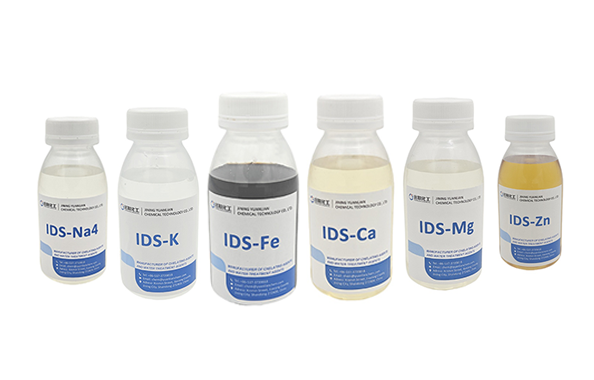
IDS-Na4 applications centre on peroxide bleaching, metal-ion control and micronutrient delivery. This amino-polycarboxylate chelates copper and iron with high selectivity while biodegrading completely, which EDTA cannot do. Formulators value it because it meets the clean-label and discharge limits that European buyers now expect.
What Sets IDS-Na4 Apart in Chelation
IDS carries CAS 144538-83-0 and belongs to the biodegradable chelators built to replace EDTA, DTPA and NTA. Its structure gives strong copper binding even at low pH, where many chelants lose grip. That selectivity is why IDS earns a place in processes that EDTA handles poorly from an environmental view. That environmental edge is why IDS appears in reformulation plans wherever EDTA faces restriction. The copper focus also means lower dose than a broad-spectrum chelant in copper-driven processes.
IDS-Na4 Applications in Pulp and Paper Bleaching
In peroxide bleaching, copper and iron catalyse bleach breakdown. IDS ties up those metals, lifting brightness and cutting bleach use. It also reduces silica scale when blended with sodium silicate, addressing peroxide loss and equipment fouling together.
IDS-Na4 Applications in Textile Dyeing
Metal traces in process water shift dye shades and catalyse oxidation. IDS complexes those metals so fabric leaves the line in the correct colour, without the batch variation that contamination causes. It also acts as a soaping aid after dyeing, helping remove unfixed colour.
IDS-Na4 Applications in Cosmetics and Personal Care
Unsaturated oils and fats oxidise in the presence of metal ions, causing rancidity and colour change. IDS chelates the catalysts and extends stability, which suits natural and clean-beauty formulas. Its biodegradability also appeals to brands marketing ecological products.
IDS-Na4 Applications in Industrial Cleaning
IDS works with surfactants to clean hard surfaces and remove iron sulphide or rust from pipework. In natural gas pipeline cleaning it dissolves iron deposits without the corrosion risk of acid. It is effective in neutral pH cleaners where other chelants weaken.
IDS-Na4 Applications in Agriculture and Fertigation
Trace elements such as iron, zinc, copper and manganese react with phosphate in soil and become unavailable. IDS chelates them, keeping them soluble for root uptake. IDS-chelated micronutrients appear in foliar feeds, soil products and water-soluble blends, and help prevent scaling in fertigation lines.
IDS-Na4 Applications in Water Treatment
In circulating water, IDS acts as a softener and scale inhibitor with full biodegradability. It handles calcium and magnesium and supports environmentally sensitive sites where persistent chelants are restricted. Its alkaline stability keeps it working in demanding circuits.
How IDS-Na4 Binds Copper and Iron
IDS wraps the metal in a stable ring through its imino and carboxylate groups. This bond holds at low pH, where EDTA and others slip, and stays intact under the heat and alkalinity of bleaching. These IDS-Na4 applications rely on that stable bond at low pH. Because the chelate is stable, surfactants and peroxide keep performing instead of being tied up by hardness.
Formulation Tips: Dose and pH Window
Start at the low end and raise only if metal load demands. IDS performs across pH 2 to 12, with strongest effect above pH 4. Run a bench trial at your actual metal level and temperature before scaling up, because small dose changes often deliver the result and overshooting wastes product.
Compatibility with Other Green Chelants
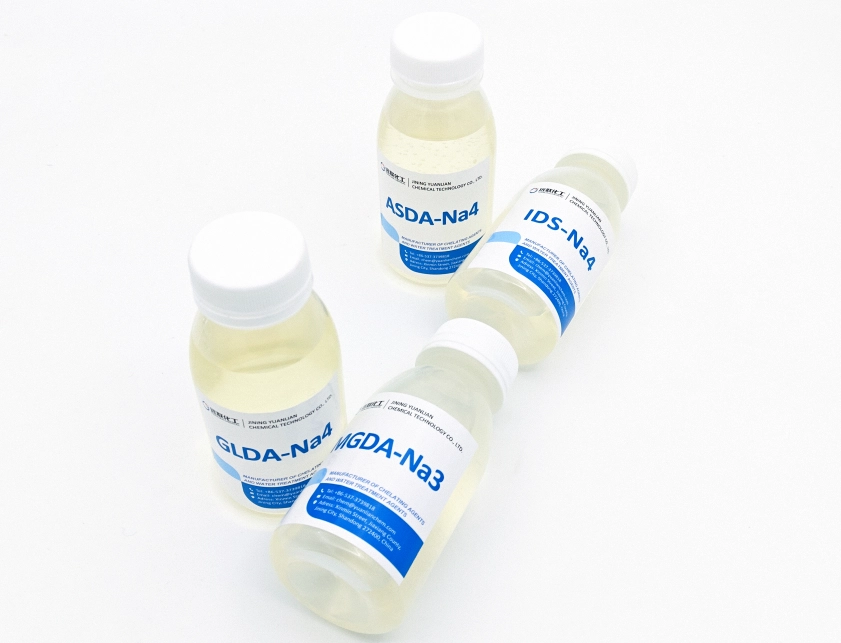
IDS pairs with GLDA-Na4 and MGDA-Na3 for broad coverage, and with PASP-Na for dispersed solids. Across IDS-Na4 applications, one qualified source covers the full metal spectrum. This reduces paperwork and simplifies substitution. For IDS-Na4 applications in bleaching, the same source also stocks MGDA-Na3, which covers magnesium and high-pH needs in one order. Most substitutions start with a bench trial at the real metal level.
IDS-Na4 vs EDTA: A Practical Comparison
EDTA binds metals well but resists degradation, which is why many retailers list it for phase-out. IDS matches it on copper and iron while breaking down in wastewater. The trade-off is price and slightly narrower peak at extreme pH, so most switches are staged rather than straight swaps. Where EDTA is already restricted, the switch is less a choice than a deadline, so planning the trial early protects supply. Documentation such as OECD 301 data supports the case to regulators. Field teams also report fewer film and spotting issues, because the soft chelate complex rinses away rather than baking on surfaces. That practical gain tends to matter more on the line than the headline number.
Property | IDS-Na4 | EDTA |
Origin | Amino acid (aspartic) | Petrochemical |
Biodegradation | >90% in 28 days (OECD 301) | Persistent |
Copper binding | Selective, low pH | Broad |
Peroxide stability | Strong | Weak |
Storage and Handling Notes
Liquid IDS-Na4 ships in 25 kg and 250 kg drums; powder in moisture-proof bags. Store sealed, away from light, at room temperature; keep liquid above 5°C to avoid crystallisation. As an alkaline product, avoid skin and eye contact and follow the safety data sheet.
Regulatory Context for European Formulators
EDTA faces growing restriction because it persists, while IDS meets the same metal-control need with full biodegradability. The EU direction on discharge and clean-label pushes formulators toward chelants like IDS. Importers should prepare REACH and CBAM files as rules tighten. Buyers who keep biodegradability proof on file shorten their own approval cycles and avoid border delays. REACH and CBAM papers should travel with the goods from the start.
Frequently Asked Questions
Can IDS-Na4 replace EDTA in bleaching?
Yes, in most peroxide bleaching and cleaning uses, with verified biodegradability as the main gain. A staged trial confirms the dose for your system.
Does IDS-Na4 work at low pH?
It keeps strong copper binding at low pH, which is why it suits acidic processes where many chelants lose effect.
For the chemistry of chelation, see this overview on Wikipedia.
Explore the Full Product Range
IDS-Na4 is one of several biodegradable chelants in the Yuanlian range. To review specifications, request a sample or discuss a substitution project, visit the Yuanlian Chemical product centre. Our technical team supports bench trials and supplies import documentation.
Latest News



Need help
Prefer speaking with a human to filling out a form? call corporate office and we will connect you with a team member who can help.