10 Aug
PASP-Na in Water Treatment, Agriculture and Cleaning
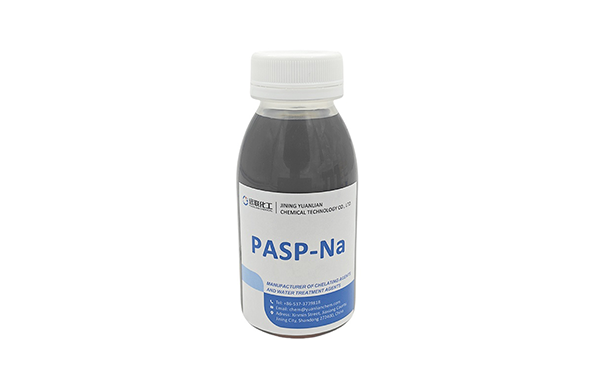
PASP-Na applications cover cooling water, boilers, reverse osmosis, agriculture and detergents. This phosphorus-free polymer chelates calcium and magnesium, distorts scale crystals and disperses particulates. Formulators use it because it biodegrades completely while meeting the discharge limits that retailers and regulators in Europe now expect.
What Makes PASP-Na a Useful Scale Inhibitor
PASP-Na is a polyamino acid whose peptide backbone breaks down through fungal and microbial action. It works through three mechanisms: chelation of hardness ions, a threshold effect that blocks crystal nucleation at low dose, and lattice distortion that turns hard scale into soft deposits. Together these let you treat water at lower chemical load than stoichiometric chelation alone. Because the polymer is non-toxic and phosphorus-free, it fits formulators moving away from phosphonates and polyacrylates for environmental reasons. The three-way action also means a single product can replace two or three separate additives in some programmes.
PASP-Na Applications in Cooling Water Systems
Cooling towers concentrate dissolved minerals through evaporation. PASP-Na inhibits calcium carbonate and calcium sulphate scale, with strong performance against sulphate scale. It also pairs with phosphonates such as HEDP, letting operators cut phosphorus loading while holding scale control. Typical dosing is 2 to 10 ppm.
PASP-Na Applications in Boilers and RO Membranes
Boilers run hot and pressurised, where thin scale wastes fuel. PASP-Na stays stable at temperature and keeps inhibiting scale on tubes. In reverse osmosis, it prevents hardness deposits on membranes, extending cleaning intervals and membrane life. Both uses reduce maintenance and downtime.
PASP-Na Applications in Agriculture and Fertigation
PASP-Na chelates iron, zinc and copper so plants keep access to them. It also lifts phosphorus availability, which helps in alkaline soils where phosphate locks up with calcium. In drip systems it stops emitter blockage while acting as a fertiliser synergist. Growers report better yields in vegetables, fruit and flowers.
PASP-Na Applications in Detergents and Cleaning
As a phosphate-free builder, PASP-Na softens water and disperses soil, preventing redeposition on fabric. It resists alkali and electrolytes, fitting liquid laundry, dish and institutional cleaners. Its non-toxic, biodegradable profile supports ecological positioning without reformulation.
PASP-Na Applications in Cosmetics and Personal Care
PASP-Na binds trace metals in cosmetic and personal care formulas, protecting oils and fragrances from oxidation. It also acts as a mild humectant that supports skin feel. Because it is non-toxic and biodegradable, it fits clean-beauty lines that avoid persistent chelants.
PASP-Na Applications in Oilfield and Desalination
Produced water in oilfields carries high salinity that scales injection wells. PASP-Na inhibits that scale and also lowers drilling-fluid viscosity. In seawater desalination, it controls scale in multi-stage flash and RO trains running at high recovery. Its thermal stability suits these demanding conditions.
How PASP-Na Prevents Scale Formation
Scale starts when dissolved minerals exceed solubility and crystallise on surfaces. PASP-Na binds the ions, blocks nucleation at sub-stoichiometric dose, and deforms any crystal that forms. The result is soft, non-adherent deposit that washes away, rather than hard scale that needs acid cleaning. These PASP-Na applications need less acid clean-in-place as a result.
Formulation Tips: Dose and Molecular Weight
Start low and raise only if hardness demands. Cooling water commonly uses 2 to 10 ppm. Pick molecular weight by goal: 3,000 to 4,000 Da for scale inhibition, 7,000 to 8,000 Da for pigment and dye dispersancy. Run a jar test at your real water before scaling up, because small dose changes often deliver the result.
Compatibility with Other Green Chemicals
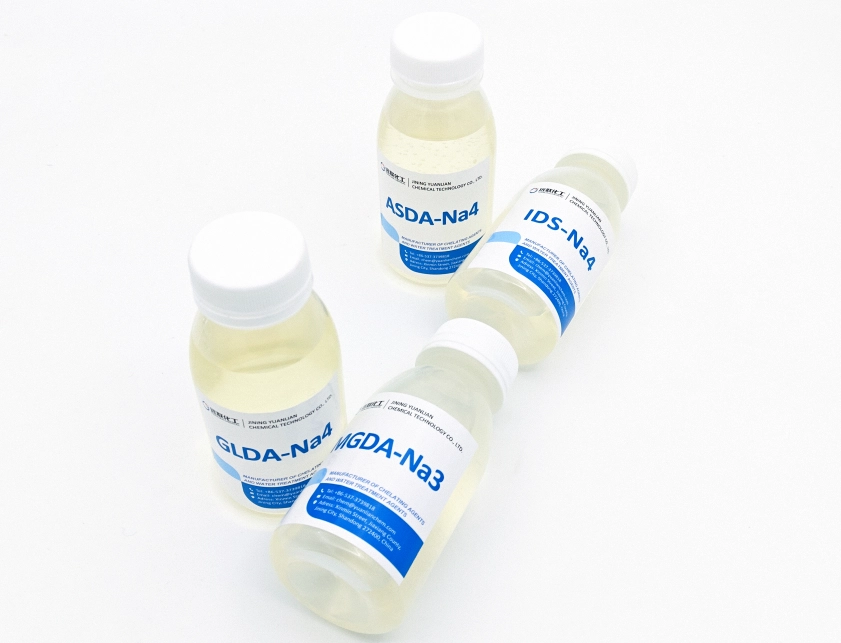
PASP-Na blends with HEDP and PBTCA, with partial phosphonate replacement cutting phosphorus discharge. It also pairs with GLDA-Na4, MGDA-Na3 and IDS-Na4 from one source, covering calcium, magnesium, iron and copper from a single qualified supplier. This simplifies substitution and paperwork. For PASP-Na applications in detergents, the same single source covers the chelant need alongside GLDA-Na4, which shortens the supplier list. Most substitutions start with a side-by-side jar test before plant scale-up.
PASP-Na vs Polyacrylate: A Practical View
Polyacrylates disperse well but resist degradation, which raises eutrophication concerns. PASP-Na matches dispersancy while biodegrading fully. The trade-off is price and slightly narrower peak performance at extreme conditions, so most switches are staged rather than straight swaps. Where eutrophication rules are strict, the biodegradability case often decides the choice even when polyacrylate is cheaper up front. Life-cycle cost, including discharge fees, usually favours the greener polymer. Field results also show fewer complaints about film and spotting, because soft deposit rinses away instead of baking on. That practical gain often matters more to operators than the lab number.
Storage and Handling Notes
Liquid PASP-Na ships in 25 kg, 250 kg and 1,250 kg drums; powder in bags. Store sealed, away from light, at room temperature. As an alkaline product, avoid skin and eye contact and follow the safety data sheet.
Regulatory Context for European Buyers
The EU limits phosphorus in detergents and tightens discharge rules for water systems. PASP-Na answers both pressures as a phosphorus-free, biodegradable polymer. Importers should prepare REACH files as requirements spread across markets. Some regions now ask for biodegradability proof at tender stage, so keeping the OECD 301 data on file shortens the approval cycle. Importers who prepare early avoid delays at the border.
Frequently Asked Questions
Does PASP-Na work in high-salinity water?
Yes. It stays stable at high hardness and temperature, which suits cooling water, oilfield and desalination use where many polymers lose effect.
How do I choose the right molecular weight?
Match it to the job: 3,000 to 4,000 Da for scale inhibition, 7,000 to 8,000 Da for dispersancy. A jar test at your water confirms the choice.
For the chemistry of scale, see this overview on Wikipedia.
Explore the Full Product Range
PASP-Na is one of several biodegradable specialities in the Yuanlian range. These PASP-Na applications show how one polymer serves water, soil and cleaning. To review specifications, request a sample or discuss a substitution project, visit the Yuanlian Chemical product centre. Our technical team supports bench trials and supplies import documentation.
Latest News



Need help
Prefer speaking with a human to filling out a form? call corporate office and we will connect you with a team member who can help.